


 Live Score
 Cricket Teams
 Cricket Players
What India must do to make it to the semi-finals of T20 World Cup 2026 after getting thrashed by South Africa
India's 76-run loss to South Africa has intensified the Super 8 Group 1 competition, leaving them with only two matches to secure their position.

 Prefer HTon Google


India’s 76-run loss to South Africa in Ahmedabad has turned Super 8 Group 1 into a proper scrap, and also stripped India of the one luxury they usually carry into the second round: time. South Africa put up 187/7 and then bowled India out for 111 in 18.5 overs, a defeat big enough to dent both confidence and net run rate (a staggering -3.8) in one hit. With only three games per team in the Super 8s, India now have just two matches left to fix everything — points, momentum, and the numbers that decide ties.
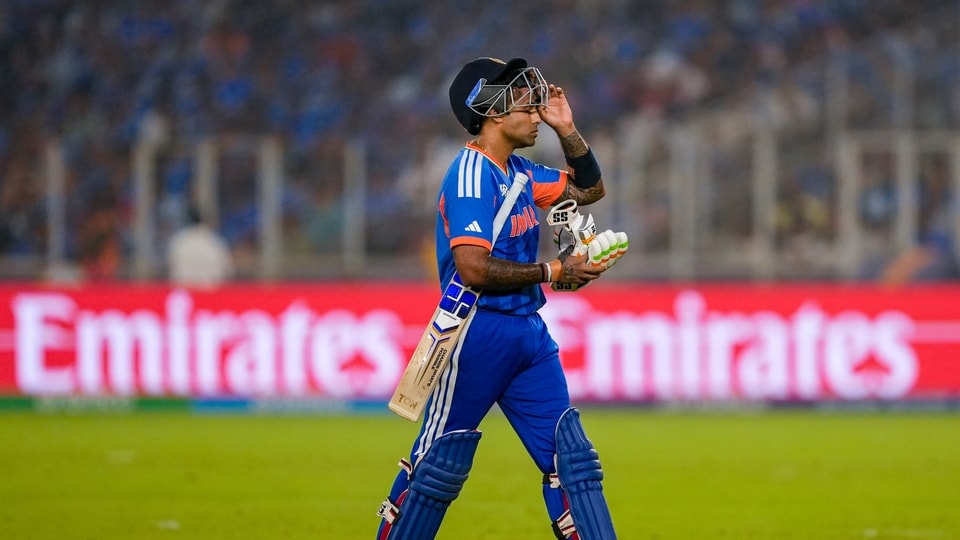
What India must do to still make the semi-finals
Start with the blunt truth: India can no longer aim for two wins and see. They need to behave like every remaining game is an elimination match — because practically, it is.
First, India’s ceiling is now clear. With one loss already, the best they can finish with is 4 points (two wins from the last two games). That immediately makes the path simple on paper: beat Zimbabwe in Chennai on February 26, then beat West Indies at Eden Gardens on March 1. Anything less and India will be relying on multiple results going their way, plus net run rate chaos. In a four-team group, that’s a thin rope to walk.
Two wins might not be enough
Second, even two wins might not be comfortable unless India repair their net run rate damage. A 76-run defeat is the kind that lingers on the table, especially if the group compresses into a 4-point tie. And a tie is very much possible because South Africa still play West Indies (Feb 26, Ahmedabad) and Zimbabwe (March 1, Delhi), while Zimbabwe play West Indies (Feb 23, Mumbai). If South Africa win one more, they’ll be hard to catch. If West Indies or Zimbabwe go on a run, India could find themselves in a points tie for second place even after winning twice.
So India’s job is not only to win — it’s to win in a way that cleans the spreadsheet. That means: chase quickly when batting second, and when defending, squeeze games into big margins. Professional wins won’t cut it after a thrashing like this; India need at least one statement result to drag their NRR back into a safe zone.
Finally, selection and approach have to become venue-specific. Chennai and Kolkata are different exams, and India can’t afford to carry passengers or play safe phases. If India want the semi-finals after this punch, the mandate is simple: two wins, and at least one of them loud enough that net run rate stops being the villain in the last week.
The ideal scenario for India would be to hope that South Africa beats Zimbabwe and the West Indies to win their remaining two fixtures - by a strong margin to improve their net run-rate – and make it to the semi-finals. That leaves Surya's unit to win against the Windies and Zimbabwe. That way, South Africa, with 6 points, and India, with 4, go through to the final four. Irrespective of the outcome of the West Indies and Zimbabwe clash, the winner would finish with four points, which won't be enough not enough to challenge India. If either the West Indies or Zimbabwe beats India or South Africa, that's when things get tricky.


