E-Paper



Forest fires pose grave threat to green cover in Uttarakhand
According to forest officials, over 90 % of the forest fires are man-made. The rest are due to lightning, friction caused by falling rocks and monkeys throwing stones that trigger sparks, resulting in forest fires.

 Prefer HTon Google


Over 44,554 hectares of forest area or roughly 61,000 football grounds worth forest area have been destroyed in forest fires ever since the formation of the state in 2000, leading to a total loss of over ₹185 lakh. An average football ground is around 0.72 hectares.
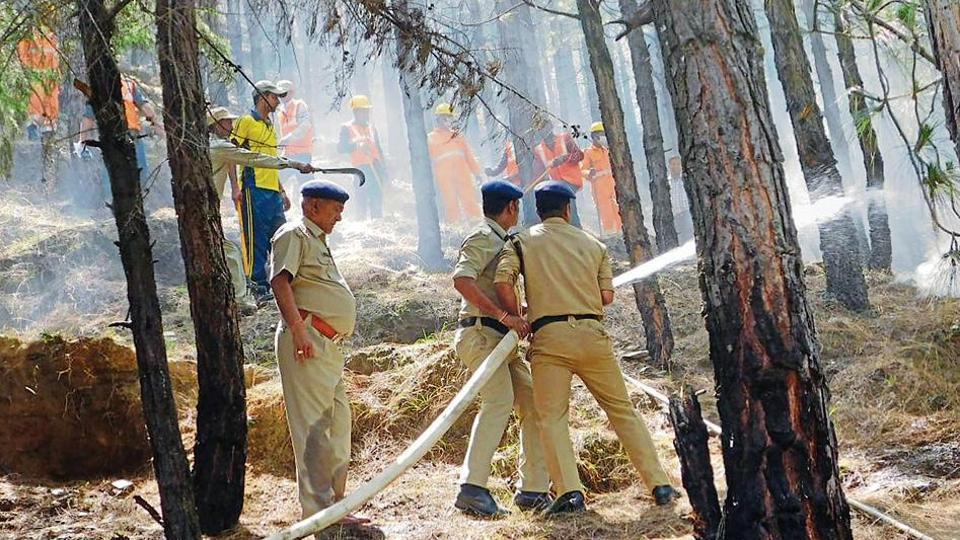
The information was provided in response to an RTI (right to information) query filed by Haldwani-based activist Hemant Gauniya. Gauniya had sought year-wise details of the damage caused by forest fires and the loss incurred since the formation of the state.
According to forest officials, over 90 % of the forest fires are man-made. The rest are due to lightning, friction caused by falling rocks and monkeys throwing stones that trigger sparks, resulting in forest fires.
Gauniya, however, feels the state has lost more forest area to fires than what is actually shown in the RTI response by the forest department. “Despite spending so much money on fire control, large chunks of forests get damaged every year. And according to their (forest department’s) RTI reply, they take action only against a handful of people for these fires”, he said.
Pramod Kumar Singh, chief conservator of forests (forest fires) denied the allegations and said the department has been taking lot of initiatives to check forest fires.
“Hadn’t we taken those steps, the damage from forest fires could have been much higher. We have ensured gaps in vulnerable forest areas; have set up water towers; hired locals as fire watchers in remote areas; initiated controlled counter fire strategies to ensure that the fire don’t spread and so on,” said Singh. The department also gets real-time alerts on forest fires, allowing the ground staff to act quickly, he added.
Singh said the forest department has around 174 watch towers and 1437 station crews across the state to keep a tab on forest fires and to take necessary steps to check them.
“Over 90 % of the forest fires in the state are man-made and not natural. So more awareness is required to encourage people not to indulge in activities that cause fires intentionally or unintentionally”, said Singh.
In May last year, the Uttarakhand high court while taking suo moto cognisance of forest fires in the state, had directed the state government to submit the details of forest fires, the nature of damage and what steps the government had taken to prevent them. The high court had also expressed shock when the government informed that 90 % of forest fires are caused by people. “How is it possible that 90% of the forest fires are man-made when people have migrated from thousands of villages”, said Pant.
Why Uttarakhand reports so many forest fires
Uttarakhand has a forest area of over 38,000 sq km which constitutes 71% of the total geographical area of the state. Forests with nearby human habitations have greater chance of forest fire
Given the diversity of forests in the state, Uttarakhand forests are more prone to forest fires. The state has tropical dry deciduous forest, subtropical pine forest, Himalayan moist temperate forest and tropical moist deciduous forest
Forest fires are usually reported from February to June with a peak in fire incidence between May and June.
Three types of forest fires are reported in the state: ground fires, surface fire and crown fires.