E-Paper



Mental healthcare poor, lone 30-bed hospital in Uttarakhand
The Uttarakhand high court may have given a landmark judgement to constitute State Mental Health Authority for surveying and rehabilitating those dealing with mental ailments. But, there’s hardly much with the government to offer to such patients. The lone hospital for such patients has only 30 bed and it is ailing with staff shortage and poor infrastructure.


The Uttarakhand high court may have given a landmark judgement to constitute State Mental Health Authority for surveying and rehabilitating those dealing with mental ailments. But, there’s hardly much with the government to offer to such patients.
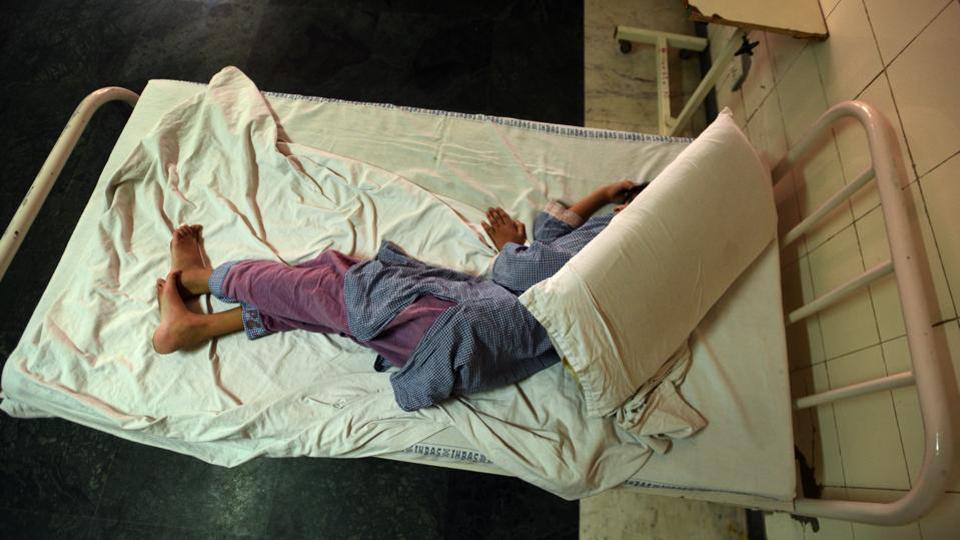
The lone hospital for such patients has only 30 bed and it is ailing with staff shortage and poor infrastructure.
However, the state government, a few days back, apprised the high court that there are 236 mentally disabled persons in Almora, 38 in Bageshwar, 187 in Champawat, 270 in Dehradun, 320 in Nainital, 106 in Pauri Garhwal, 313 in Tehri Garhwal, 1421 in Udham Singh Nagar and 164 in Uttarkashi.
Out of them, 44 persons have been found roaming on streets of Champawat and 4 persons in Nainital.
The HC directed the state government is to ensure that from now on, no mentally disturbed/retarded person is found on the streets.
The concerned SSPs have been directed to shift them to the nearest mental health institutions/place of safety.
The State Mental Health Institute, Selaqui has admitted just 106 patients in 2016 and 96 patients in 2017.
The patients with severe psychiatric problems from the all the three medical colleges - Doon, Srinagar and Haldwani - are referred State Mental Health Institute, Selaqui.
In a hilly state like Uttarakhand, it is difficult for poor people to take patients with mental ailments for treatment to far off places.
Referring to deficit mental healthcare infrastructure in the state, the court in its order advised the government to open more Mental Care Establishments taking into consideration the large number of persons suffering from mental illness for their proper treatment, protection and care.
Pointing out the district early intervention centres have been set up only in Almora, Roorkee, Haldwani and Dehradun. The court also directed the state government to open such early intervention centres in every district of the state within six months.
The HC, in its order, maintained: “Every person with mental illness is entitled to clean, safe and hygienic environment, adequate sanitary conditions, reasonable facilities for leisure, recreation, education and religious practices, food, proper clothing to protect such person from exposure of his body to maintain his dignity, and not be subjected to compulsory tonsuring (shaving of head hair), to be protected from all forms of physical, verbal, emotional and sexual abuse in any mental health establishments run by the State and granted permission by any private institution provided approval by it.”
Saroj Naithani, joint director of health (national programme), admitted that there were issues with the mental healthcare in the state, whether it was the number of psychiatrists or the infrastructure.
“However, a component in the national health mission has been started recently under which MBBS doctors are being trained in basic psychiatry. Five doctors have already been trained and they have gone back to their districts,” she said.
Naithani said the need of the hour was to address more severe cases where mentally challenged people are moving on the streets and roads, who can not only endanger their own lives but harm others as well.