
 E-Paper



Delhi’s illegal buildings get immunity till 2020 as Union cabinet clears draft bill
Illegal constructions in Delhi cannot be demolished or sealed till December 31, 2020.


The Union cabinet approved on Friday a bill extending the immunity to illegal constructions in Delhi, preventing their demolition or sealing till December 31, 2020.
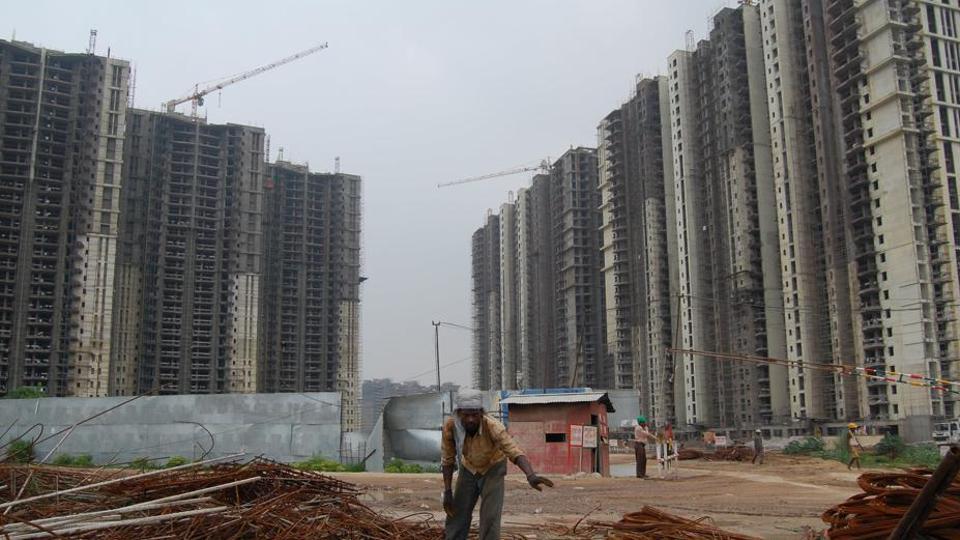
Constructions that came up between March 2002 and May 2014 were protected under a special provision law enacted in 2011 with a validity of three years.
Hindustan Times first reported that the law would be extended for a second time in a front-page report on December 8. Without the latest extension, the law would have lapsed on December 31, 2017.
Illegal constructions are rife in the National Capital, and while there are no recorded figures, officials in Delhi’s civic administration say the number can exceed a hundred thousand.
“The government has approved the introduction of the NCT of Delhi Laws (Special Provisions) Second (Amendment) Bill, 2017 during the forthcoming winter session of Parliament. The bill extends the provisions of the NCT of Delhi Laws (Special Provisions) Second Act, 2011 for a further period of three years from 1st January, 2018 to 31st December, 2020,” Union law minister Ravi Shankar Prasad told reporters at a cabinet briefing.
Some prominent illegal constructions include shops, eateries, high-end designer boutiques and furniture showrooms along the Mehrauli-Gurgaon Road and in neighbourhoods such as Shahpur Jat and Hauz Khas Village.
Others include slums, hospitals, schools and religious institutions.
Senior officials of the Union housing and urban affairs ministry, which is piloting the bill, said the extension beyond December 2017 was needed because the Delhi government, the Delhi Development Authority and the three municipal corporations in the city were yet to finalise policies and strategies to carry out redevelopment.
“These bodies are in the process of taking steps to carry out surveys, simplifying procedures, formulation of redevelopment plan, finalisation of policies, obtaining approvals, etc. in this regard. This process is likely to take some more time,” a ministry official said.
In 2014, when the law was extended for the first time, the then Union urban development minister M Venkaiah Naidu told Parliament the objective was not only to protect certain forms of unauthorised developments but also to provide for “opportunity to the government agencies to finalise the norms, policy guidelines and feasible strategies as well as the orderly implementation of the plan in this regard.”
Stay updated with all top Cities including, Bengaluru, Delhi, Mumbai and more across India. Stay informed on the latest happenings in World News along with Delhi Election 2025 and Delhi Election Result 2025 Live, New Delhi Election Result Live, Kalkaji Election Result Live at Hindustan Times.


