
 E-Paper



Nine fountains at Mughal-era tomb of Safdarjung spring up to former glory
Of the nine fountains which are now functional, four were missing when restoration efforts started. They have been replaced with new sandstone fountains constructed in the same Mughal era style.


The 18th-century tomb of Safdurjung has now got back a few of its lost glories. Nine fountains that lined the water channel between the tomb and its eastern gate have been restored and are functioning daily from 6am to 9am, and from 5pm to 9pm.
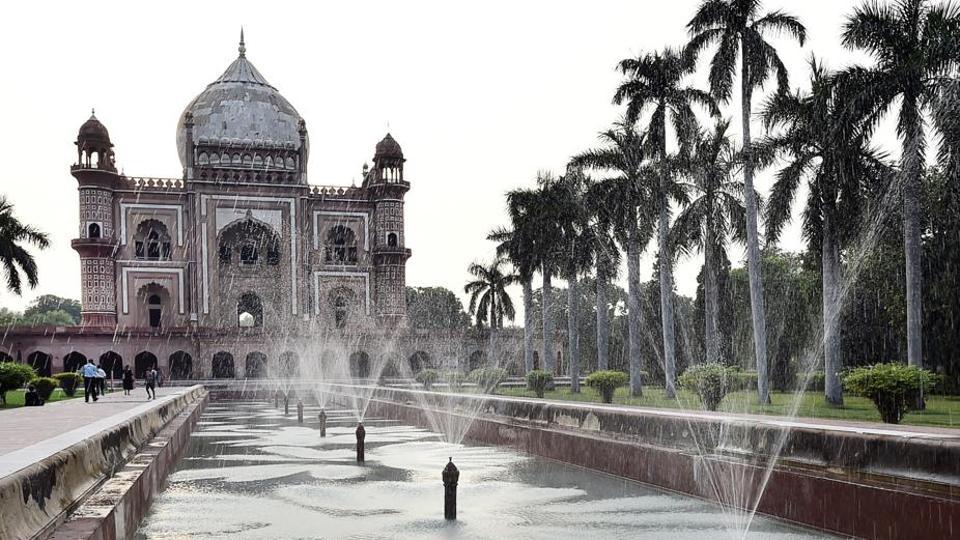
The water channels on all four sides of the tomb carry evidence of fountains built in the late Mughal architectural style. “We carried out a study of the fountains near the eastern gate and found that it was possible to restore them. Now, we will begin restoring fountains on the three other sides as well,” an official from the Archaeological Survey of India (ASI) minicircle said.
Of the nine fountains which are now functional, four were missing when restoration efforts started. They have been replaced with new sandstone fountains constructed in the same Mughal era style. New pipelines and nozzles have been installed, and re-plastering of the water channel has been done wherever necessary.
The entire project has been completed in an approximate budget of ₹6-7 lakh. Water used in the fountains is being channelled through a motor from an old well located at the corner of the tomb complex and will keep getting recycled to avoid wastage, the official said.
“The fountains are of a height of four to five feet. We cannot make it higher because as they are constructed with the technology of a bygone era,” the official said.
Explaining the history of fountains inside the tomb, another official from the ASI explained that “they must have been constructed a few years after the tomb was established”.
“We can estimate that they were built for aesthetic purposes when the surrounding multi-chambered pavilions — Moti Mahal (pearl palace), Badshah Pasand (King’s Favourite) and Jangli mahal (Sylvan Palace) — were built,” he said.
The Safdurjung Tomb was built in 1754 by Mirza Muqim Abul Mansur Khan, popularly known as Safdurjung, who was the ruler of Awadh and the viceroy of Mughal emperor Muhammad Shah. The monument was constructed at a time when Mughal rule in the subcontinent was on the decline and is frequently described as the “last flicker of the dying lamp of Mughal architecture in Delhi”.


