
 E-Paper



Sarvodaya Enclave loses 77 trees in 7 years
A survey showed that fully grown Ashoka, Amaltas, Neem, Bougainvillea, Saptaparni, Peepal trees had been lost.

 Prefer HTon Google


South Delhi’s upscale neighbourhood of Sarvodaya Enclave, which pioneered the Capital’s first tree census in 2012, has lost at least 77 fully grown trees, showed the second round of a year-long census. The total number of trees in the area has gone down from 787 to 731, despite the addition of 21 new trees.
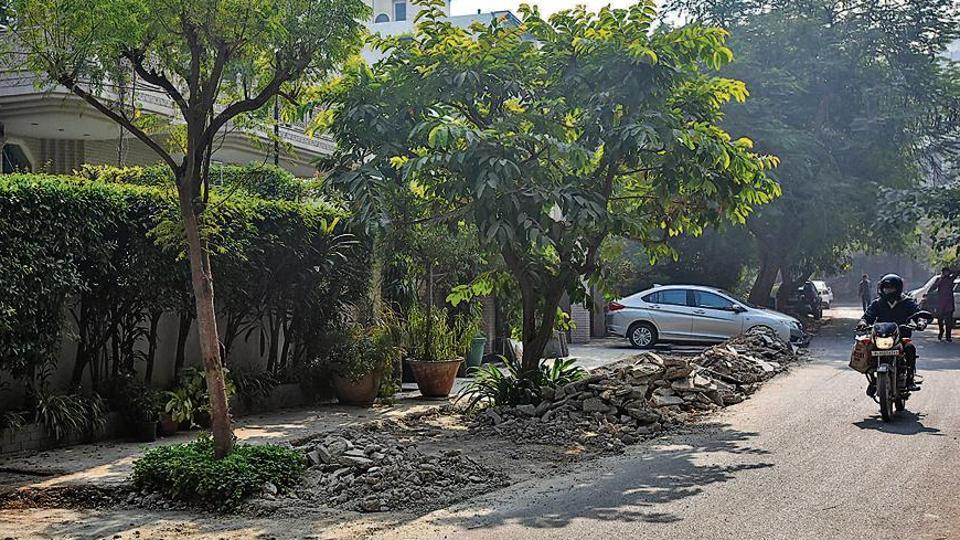
The second round of tree census conducted between 2018 and 2019 in the neighbourhood, the results of which were compiled this year, showed that 77 trees, which were recorded in the first survey in 2012, were not found in the area. Residents said that these trees were either lost to storms, construction activities, heavy concretisation or old age.
The survey showed that fully grown Ashoka, Amaltas, Neem, Bougainvillea, Saptaparni, Peepal, Harsingar, Ficus Benjamina, Semal and Yellow Oleander trees had been lost.
The list included around 15 Ashoka trees, six Mulberry trees, nine Frangipani, and seven Gulmohur trees among several others.
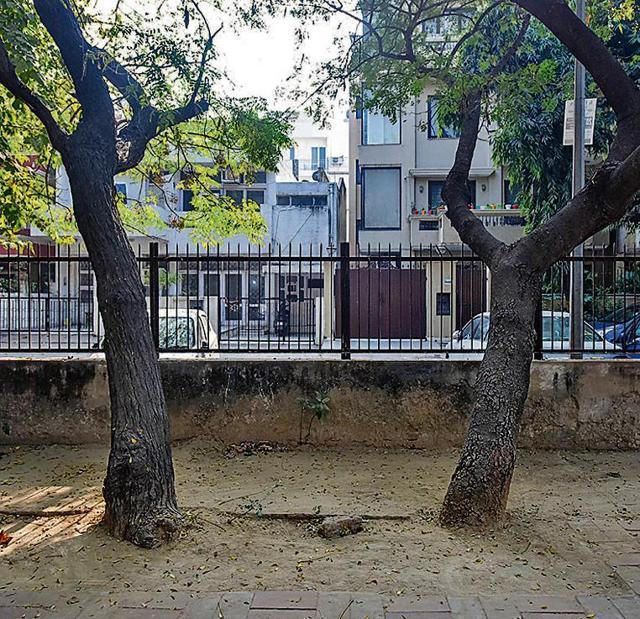
On December 8, environmentalist Bhavreen Kandhari sent a complaint to the deputy conservator of forests (south division), highlighting the loss of trees in the neighbourhood.
“Section 10 of the Delhi Preservation of Trees Act, 1994, imposes an obligation to plant trees by parties that have felled them. In Sarvodaya Enclave, 77 trees are missing and have not been replaced. This is in violation of aforementioned provisions and also hints towards the direction that these trees might have been illegally felled. A thorough investigation must be conducted to know what has happened to these trees and to identify parties responsible,” the complaint read.
Responding to HT’s query on the action initiated on the complaint, DCF (south) Amit Anand assured that the complaint will be looked into and necessary legal action will be taken against the erring parties.
Padmavati Dwivedi, an environmentalist who also spearheaded the first and second tree census in the area, said while some residents were alarmed at the large-scale felling of trees, most were not aware of the enormity of the situation because there was no data to record how many trees were lost all over the city.
“We are alarmed at large-scale felling of trees. When you take our case study, you realise that their [trees] losses are massive, that too from right under our noses in our own colonies. The only reason we take this lightly is because we don’t know how many are lost because there is no data.”
She added that a tree census was required in other areas of the Capital as well.
“Trees in proximity to homes are often overlooked. However, the maximum benefits one reaps from a tree depends on how close we are to it. Citizens’ tree census makes people not only notice but also record them. This results in greater involvement from their end in the protection of trees. (Tree) census ensures there is a permanent record of the tree therefore its importance cannot be overemphasised.”
CR Babu, an ecologist and professor emeritus at the Centre for Environmental Management of Degraded Ecosystem, Delhi University, said the tree census could provide an idea of how prepared the city is to fight pollution. He said that it will also help keep a check on illegal fellings and assess how many trees need to be planted in an area.
“The girth and canopy would help us know how much carbon is trapped in these trees, how much dust they can trap and how much pollution they can mitigate. It is definitely a good idea to have such census across the city,” Babu said.
Highlighting the need for such a local-level tree count, the residents of Sarvodaya Enclave said that since the survey was first conducted in 2012, people here have become more aware of the need for the preservation of trees in the colony.
Hindustan Times visited the residential colony on Friday and found that many residents had removed the cement and tiles that were choking the roots and trunk of trees from their driveways.
“Residents have definitely become more aware. When the survey was being conducted back in 2012, many were wary of why the volunteers were walking around with inch tapes and notebooks, clicking pictures of trees at their gates. We all want to do our bit for the environment, but many do not know that something as small as just allowing a tree to expand its roots by not concretising the area around it can help extend its lifespan,” said Meenal Sood,
a resident of the neighbourhood.
Tarun Kumar, who owns a daily needs shop in the colony, said that regular tree plantation drives are also now being organised by the residents here.
“Because people here are educated and involved, they have organised plantation drives in the area. Some saplings are planted in the park and some are planted in their gardens or outside their houses,” Kumar said.
Dwivedi also agreed that since the first survey, public awareness and acceptance of such a survey has increased.
“The second tree census involved more people. It got less resistance from the colony. It was also easier to get volunteers from across the city. However, the builders avoided planting saplings to replace those they removed. Both the RWA (residents’ welfare association) and horticulture department of the municipal corporation must ensure that the forest department does not give permission for tree felling unless a sapling is planted first,” she said.
A third survey is also likely to be conducted in the area sometime next year to maintain a regular count of trees and to ensure easy availability of data, Dwivedi added.


