
 E-Paper



Review: In the Realm of the Last Man by Francis Fukuyama
The American political thinker’s memoir revisits ‘the end of history’ in the shadow of Donald Trump’s return, asking why liberal democracy keeps producing people who want to tear it down

 Prefer HTon Google


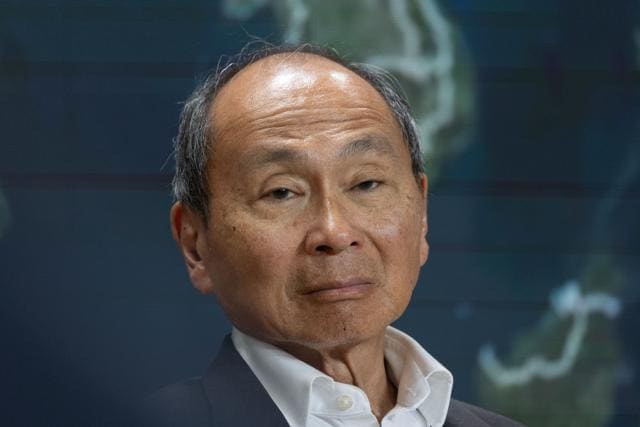
Francis Fukuyama, who will turn 74 this October, begins In the Realm of the Last Man: A Memoir on January 20, 2025, the day Donald Trump was sworn in as the 47th president of the United States. His second term, the American political scientist writes in the Preface, marked “a major shift in global politics”. Fukuyama accuses Trump of bypassing Congress through executive orders, issuing illegal or unconstitutional diktats, siding with Russia against liberal democracies and imposing arbitrary tariffs on friendly countries. Only months into the presidency, he writes, “It is hard not to recognize that he is trying to turn the United States into an authoritarian country”.
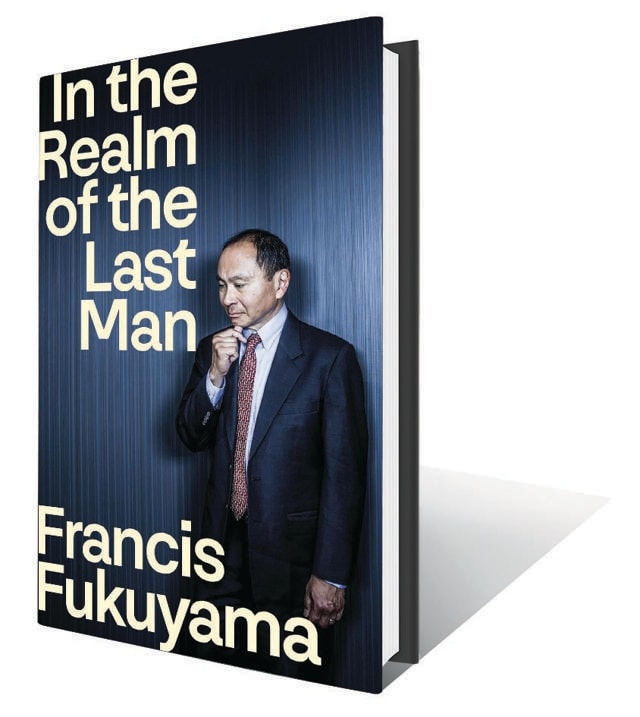
It is a revealing opening for the memoir of a man whose best-known work has haunted him for nearly four decades as accusation, joke and supposed proof of intellectual folly. Since his 1989 essay, The End of History? and the 1992 book, The End of History and the Last Man, every war and democratic collapse has been presented as evidence against him. “None of the individuals asking have read more than the title of my essay or book,” he complains. They missed the five concluding chapters, where he considered how liberal democracy might fail and suggested that “History, rather than ending, had simply paused on its way to an uncertain future”.
His original claim was narrower than its popular version. Drawing on Hegel through the Russian-French philosopher Alexandre Kojève, Fukuyama argued that liberal democracy might represent the “end point of mankind’s ideological evolution” and the “final form of human government”. History meant the development of political ideas. Events would continue and countries could return to dictatorship. No rival system, he maintained, had offered a better answer to the demand for liberty, equality and dignity.
The second half of the 1992 title mattered just as much. Fukuyama’s Last Man, taken from Nietzsche, is the person produced by a secure and prosperous liberal society. Materially comfortable, he has little appetite for risk or sacrifice. Fukuyama describes him as “a creature without pride or a striving to be something better, content with petty pleasures and material well-being”. Peace has removed the causes for which earlier generations fought, leaving him restless and short of purpose. At the centre of this argument is the struggle for recognition. People want their equal dignity acknowledged, a desire Fukuyama calls ‘isothymia’. Democratic rights answer it by giving citizens a voice and a share of political power. Equality does not satisfy everyone. Some seek superior recognition, or ‘megalothymia’. It can drive achievement and can also feed narcissists and tyrants. Resentment takes hold when people feel denied the respect they deserve.
Fukuyama sees populism as a revolt against the “flattened horizons” of liberal life. Material hardship exists, he accepts, but anger also grows from humiliation and the suspicion that educated elites look down on ordinary citizens. The man who appears to have everything may still want a battle. Fukuyama ended his 1989 essay with a line that now reads like forewarning: “Perhaps this very prospect of centuries of boredom at the end of history will serve to get history started once again.”
There is an element of self-defence in this reading. If every authoritarian reversal can be described as a pause, the end-of-history thesis becomes difficult to disprove. Liberal democracy can fail repeatedly while remaining humanity’s theoretical destination. The thesis shifts from historical prediction towards political conviction: no existing system is more desirable. Fukuyama’s claim that his critics failed to read him also dismisses serious objections from those who did.
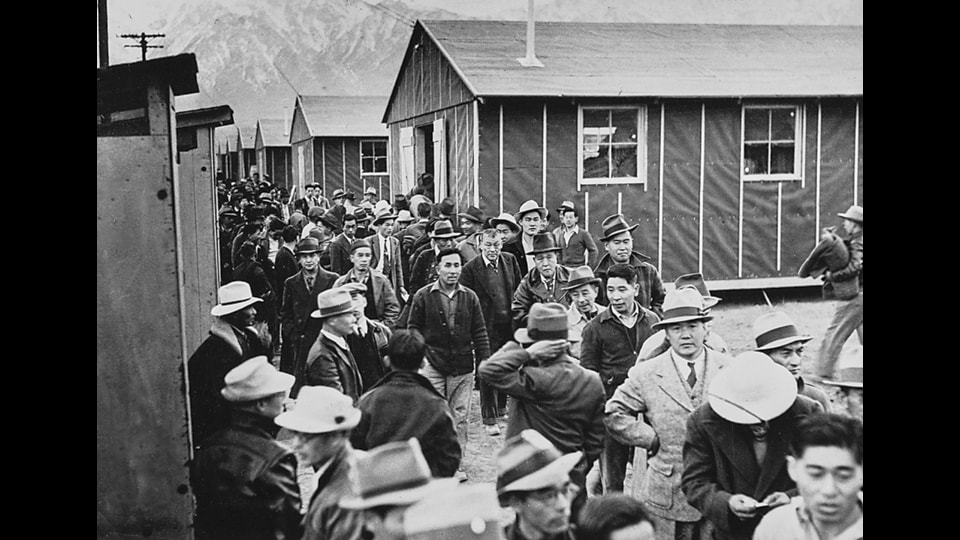
Early in the memoir, Fukuyama writes briefly about his family. His grandmother, Shizu Yokota, travelled from Japan to Los Angeles in 1920 as a 21-year-old “picture bride”, sent to marry a stranger ten years older. She played the piano and the Japanese koto, painted watercolours and ran a dressmaking business above her husband’s hardware shop. After Pearl Harbor, Fukuyama’s relatives were interned regardless of their American citizenship. The family lost its store and savings.
His uncle Hiroo wrote bitterly of having his freedom curtailed while possessions were confiscated: “gosh this is democratic.” Fukuyama’s father, Yoshio, and Aunt Kiku escaped internment after receiving college scholarships. Aunt Fumiko was sent to camp. On a segregated train, she followed Black passengers to the rear until an armed military policeman stopped her. She later rebuilt the family’s life in Los Angeles. “I have forgiven the insults of that period,” she wrote, “but have been unable to forget the humiliation.” Fukuyama closes the account: “Thus was America built.”
His defence of liberal rights grew in a family that had seen the state suspend those rights when fear made injustice convenient. Ronald Reagan later apologised for the internment and Congress paid restitution, but Fukuyama believes the lesson was never fully absorbed. In 2025, he writes, the government returned to mistreating suspected undocumented migrants whose rights should have been protected. His alarm about Trump consequently has a personal source.
Born in Chicago and raised in the New York City, Fukuyama drove an ageing Opel Kadett from Pennsylvania to California for an internship at the Rand Corporation in 1978. Early in the book, he writes about woodworking, Japanese blades, cameras and the peculiar freedoms of California. He went to Cornell University in 1970, where he fell under the spell of Allan Bloom, the professor who wrote The Closing of the American Mind (1987), and encountered the ideas of Bloom’s teacher Leo Strauss. Their critique of modern relativism shaped his doubts about whether Kojève’s “universal, homogeneous state” could satisfy human nature or would produce the spiritually empty Last Man. The memoir follows him as he gradually leaves their cultural pessimism and neoconservative politics behind.
His later books appear here as stages of the same inquiry. Trust (1995) and The Great Disruption (1997) argued that institutions depend upon social capital and unwritten cultural norms. Fukuyama came to see how the information economy could damage that fabric, although he failed to anticipate the hyper-polarised silos that followed. The 2003 Iraq War and the 2008 financial crash broke his faith in neoconservative intervention and laissez-faire economics. He admits that loyalty to friends delayed the break; ideas owe their genesis to friendships and places of belonging. My quibble is that Iraq remains chiefly an intellectual error from which Fukuyama learnt; its human cost stays too far from his reckoning.
In the Realm of the Last Man is an intellectual self-portrait rather than the traditional autobiography some readers may expect. That reserve keeps the book fixed on the argument Fukuyama wants to settle. He does not recant the end of history. Liberal democracy is now presented as a hard-won arrangement that can be weakened from within, even by the country that once claimed to lead the liberal world. The certainty surrounding 1989 has gone. What remains is his belief that equal rights and accountable government have no better replacement, and his fear that too many people have grown bored with them.
Nawaid Anjum is an independent journalist, translator and poet. He lives in New Delhi.


