
 E-Paper



Stray cattle foil plan to Europeanise Delhi’s Krishna Nagar
Krishna Nagar is the only market in trans-Yamuna area of Delhi which was chosen by the EDMC to be made ‘vehicle-free’ after orders from the Union ministry of home affairs (MHA) in April 2019.


In an attempt to turn their markets into “pedestrian shopping streets” akin to those in European cities, Delhi’s municipalities have run into a very Indian problem — stray cattle.
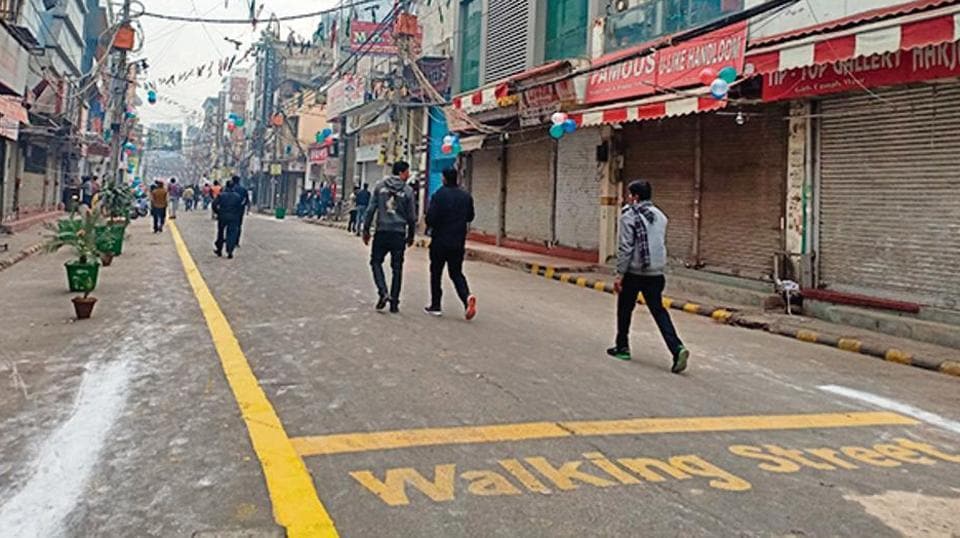
After two species of plants — areca palm and ficus benjamin — that East Delhi Municipal Corporation (EDMC) planted to decorate a newly pedestrianised road in Krishna Nagar were devoured by stray cows in October, the civic corporation tasked its officials to find a solution to the odd problem.
EDMC then consulted its horticulture experts, who identified a specific shrub — nerium oleander. The USP of this plant is: It is toxic and thus, instinctively avoided by cows and goats.
“We realised we have a bovine problem here after our potted plants on the 1.25 km-long stretch in Lal Quarter Market were found destroyed one morning. This was during our trial runs for pedestrianisation from October 7-11,” said assistant commissioner of EDMC Aman Rajput.
“We found that the cows let loose by dairy farmers in nearby Ghondly village had foraged on our ornamental plants. That is when we asked our horticulture department to suggest plant species that cows steer clear of, and they came up with nerium oleander. We will plant around 50 of these on the road soon,” said Rajput, who is also the nodal officer for the project.
RK Singh, EDMC’s horticulture chief, said this plant is favoured by many agencies across India due to its “animal-repelling” qualities.
“East Delhi has a lot of dairy farms due to the presence of urban villages in the area. Even the Central Public Works Department (CPWD) employs two varieties of this plant — laal kaner and pila kaner — across India on its dividers and roadsides. These shrubs are very hardy — they need very little water even in summer, they absorb dust pollution and the cow problem is ubiquitous in the country,” Singh said.
Krishna Nagar is the only market in trans-Yamuna area of Delhi which was chosen by the EDMC to be made ‘vehicle-free’ after orders from the Union ministry of home affairs (MHA) in April 2019.
The idea was to decongest and beautify some of the most popular and crowded markets like Kamla Nagar, Lajpat Nagar and Greater Kailash markets in Delhi. After removing vehicles from these roads, these streets are being enhanced with garden lamps, benches, flowerpots, open cafeterias and artwork like ‘pedestrian shopping streets’ in London, Paris and Copenhagen, officials said.
Experts said nerium oleander works in the kind of problem faced by officials in this case.
“This plant (nerium oleander) produces a white latex (milky fluid) which can make animals sick, so they consciously avoid it... Many civic and highway building agencies go for plants like harsingar (nyctanthes) and double chandni (tabernaemontana) as well for the same purpose. Besides, all three plants produce showy, colourful and fragrant flowers, which are good for recreational spaces,” said CR Babu, Delhi University professor emeritus and expert on degraded ecosystems.
Similarly, other municipal corporations in Delhi trying to beautify their pedestrianised markets have faced horticulture problems as well.
The North Delhi Municipal Corporation, recently, had to fight off vandalism of its flowerpots on pedestrianised Ajmal Khan Road in Karol Bagh Market. It had to put up boards on the pots saying, “Ye kachde ka dabba nahi hai,” (this is not a dustbin) after shoppers and visitors were found dumping paper tea cups, chips packets and other trash on the plumeria saplings.

Stay updated with all top Cities including, Bengaluru, Delhi, Mumbai and more across India. Stay informed on the latest happenings in World News along with Delhi Election 2025 and Delhi Election Result 2025 Live, New Delhi Election Result Live, Kalkaji Election Result Live at Hindustan Times.


