
 E-Paper



Is CNG worsening city’s air pollution? IIT to find out
The spurt in vehicles running on Compressed Natural Gas (CNG) may have contributed to the rise in particulate matter (PM) pollution in Delhi, especially particles of less than 2.5 microns in size.


The spurt in vehicles running on Compressed Natural Gas (CNG) may have contributed to the rise in particulate matter (PM) pollution in Delhi, especially particles of less than 2.5 microns in size.
A definite answer, however, will come when the Indian Institute of Technology completes its source appropriation study for Delhi by September this year.
The findings of the study may be interesting as the authorities have tried to avoid the issue of CNG’s contribution in the increase in pollution levels in Delhi.
The Central Pollution Control Board had done a study done a few years ago on CNG contributing to vehicular pollution in Delhi but its final findings were not made public because of outcry by environmental groups.
As the issue has not been debated, there has been negligible upgrade in CNG technology for vehicles.
Unlike many of the western cities like California and Beijing which has introduced CNG engines, India has not been able to develop engines that run on natural gas. Technology improvement in CNG can improve air quality in Delhi as every 10th vehicle on the road runs on natural gas, said a scientist with Central Road Research Institute (CRRI) that has done some road vehicle density studies in the Capital.
Both the cities had been able to reduce pollution from natural gas for vehicles through technology upgrade.
In 2010, the Central Pollution Control Board’s source appropriation for air pollution study attributed about 7% of particulate matter pollution from CNG-run vehicles. Of the total pollution PM load in the Capital, the study said 52% was because of dust.
The study said that CNG vehicles contributed to about 10% of the total nitrogen dioxide load in the capital.
“The CNG does not contribute much to PM 10 (which is widely monitored). But it plays an important role in the circulation of smaller particulate pollution of 2.5 and 1 microns. These facts are known in the scientific community but have not been disseminated to people,” said a senior CPCB scientist.
The PM 2.5 is monitored only at few locations in Delhi and PM 1 is not monitored. The CPCB 2010 study had said small particulate matter penetrate deep into the lung and can reach the alveolar region causing heart ailments. These fine particles cover a large surface area, absorbs toxic compounds such as heavy metals and Polycyclic Aromatic Hydrocarbons (PAH) organic compounds containing high content of carbon, the study said.
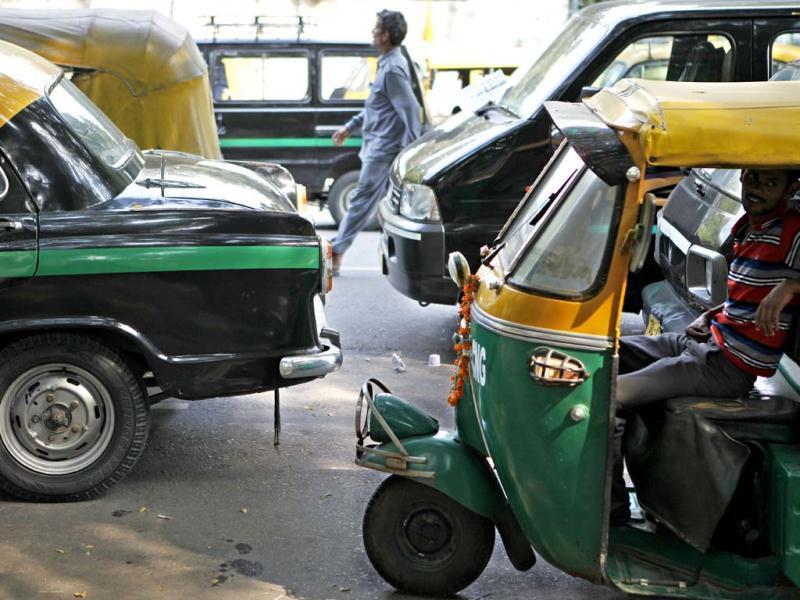
Since 2010 when the CPCB study was done, Delhi has witnessed increase in CNG vehicles, especially small commercial cargo and passenger vehicles, popular known as Gramin Seva vans providing last-mile connectivity.
As many as 6,153 CNG vans have been registered in Delhi since 2010 under the gramin seva category and another 6,460 under the phatphat seva.
About one-third of 80,000 passenger auto-rickshaws in Delhi are post 2010 era. In addition, about 62,000 three-wheeler light commercial vehicles running on CNG have been registered mostly after 2010, the transport department data shows.

Stay updated with all top Cities including, Bengaluru, Delhi, Mumbai and more across India. Stay informed on the latest happenings in World News along with Delhi Election 2025 and Delhi Election Result 2025 Live, New Delhi Election Result Live, Kalkaji Election Result Live at Hindustan Times.


