
 E-Paper



A deep, stable partnership
India and Australia have common economic and strategic interests. The 2+2 dialogue in Delhi has further cemented the ties

 Prefer HTon Google


Few relationships have transformed as dramatically in the past decade as the one between New Delhi and Canberra. Despite having no real structural bilateral conflicts, India and Australia remained strategically distant for much of their history, largely a function of the wider global environment of the Cold War. Even in the 1990s, as Delhi began investing in ties with the West in general and the United States (US) in particular and started looking East, Canberra remained somewhat neglected. Australia didn’t work hard enough to understand a changing India, its complex neighbourhood and its security needs.
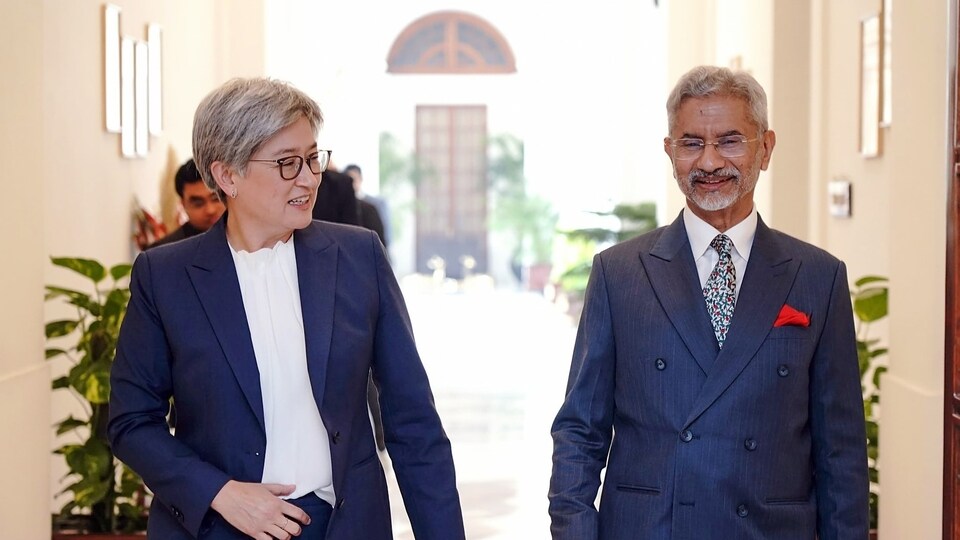
But in a process that began haltingly in the 2000s but achieved unprecedented momentum after 2014, both the westward and eastward tracks of Indian foreign policy finally converged in Australia. As the anxieties about China’s behaviour grew, Delhi’s strategic community woke up to the fact that Australia was both an Asian power with serious equities in the Indo-Pacific maritime theatre and a key western power by virtue of its historical and racial links as well as its integration into the US-led political and security architecture. This unique combination gave it more strategic weight. For Australian foreign policymakers, as China began explicitly interfering in its domestic politics and weaponising economic linkages, India’s value as a strategic partner grew. Delhi’s growing proximity with Washington DC enhanced trust levels. The presence of the Indian diaspora in Australia made it incumbent on the foreign office to understand India better. And for both countries, trade opportunities beckoned as supply chain diversification (away from China) and partnerships became the mantras of international politics.
To get a sense of the qualitative shift in recent years, consider these. One, there is more high-level political engagement than there has ever been. Two, leaders have developed trust levels where conversations can work through differences. Three, the two countries work together in Quad. Four, India and Australia have a substantive even if interim trade pact. Five, they have a shared interest in keeping the Pacific Islands and East Asia peaceful, and stable. And six, the defence relationship has got a boost with Australia’s participation in the Malabar exercises. The 2+2 dialogue involving the foreign and defence ministers this week in Delhi consolidated all these trends, opened new avenues of cooperation, and further cemented a critical partnership.


