
 E-Paper



A new low in India-Pakistan ties
Hostile comments by Pakistani minister are unprecedented and signal more trouble ahead

 Prefer HTon Google


Long-simmering tensions between India and Pakistan erupted this week at the United Nations (UN) in New York with a showdown between external affairs minister S Jaishankar and his Pakistani counterpart, Bilawal Bhutto Zardari. While participating in two high-profile events organised during India’s presidency of the UN Security Council (UNSC) for December – also the final month in India’s current stint in the Council – Dr Jaishankar raised the contemporary challenge of terrorism in the country’s neighbourhood and the misuse of multilateral platforms to “justify and protect” perpetrators. Though Dr Jaishankar did not name any countries, his remarks were clearly aimed at Pakistan, which continues to be the home base for anti-India terror groups such as Lashkar-e-Taiba (LeT) and Jaish-e-Mohammed (JeM), though they may have adopted a lower profile in recent years because of global pressure, and at China, which has blocked five attempts to sanction Pakistani terrorists at the UNSC this year alone. The minister’s remarks were in line with India’s aim of forging a more collective global response to terrorism, as reflected by hosting a special meeting of the UN’s Counter-Terrorism Committee (CTC) in October and the No Money For Terror ministerial conference in November.
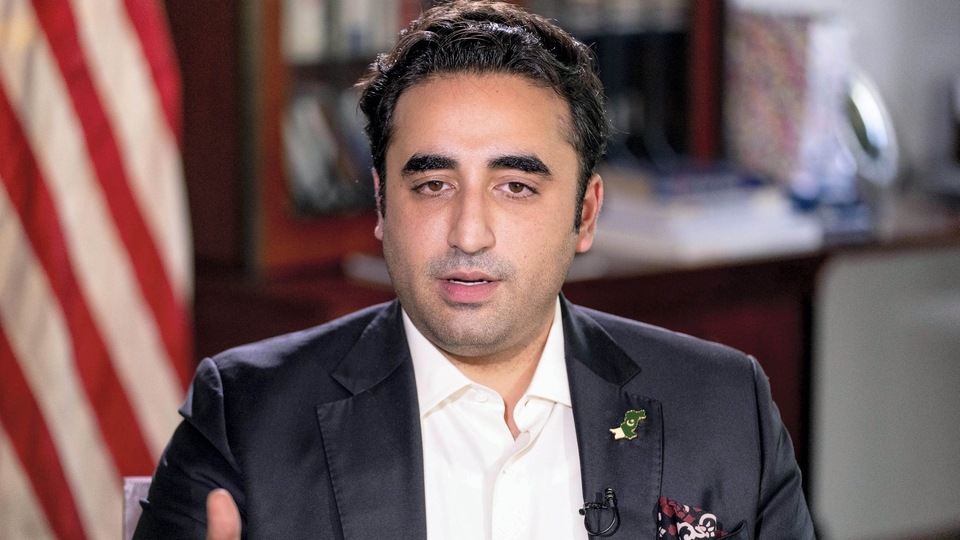
Mr Zardari, in keeping with the long-stated position of his Pakistan People’s Party, raked up the Kashmir issue. He opposed any expansion of the permanent membership of the UNSC and stated any engagement between India and Pakistan to address each other’s concerns on terrorism would be possible only if the Indian side reviews its decision to scrap the special status of Jammu and Kashmir in August 2019. But it was his “uncivilised outburst” against Prime Minister Narendra Modi that triggered a strong response from India, which highlighted Pakistan’s continuing mistreatment of religious minorities, its harbouring of 126 terrorists and 27 terror groups designated by the UNSC, and the Pakistani fingerprint in terror attacks as far afield as Mumbai, New York and London.
India has rightly decried the unusually hostile and personal remarks by Mr Zardari. But they paint a worrying picture and mark a new low in already frayed India-Pakistan ties and raise doubts whether this is mere rhetoric or a portend of instability and political pressures – especially when New Delhi is locked in an intensifying standoff with a belligerent China on its eastern border. If a besieged Pakistani government is trying to shore up its domestic standing with condemnable tactics, it will spell trouble for South Asian stability.
For many Pakistan watchers, a great concern remains the lack of an official channel to address the tensions. The Pulwama attack brought the two countries to the brink of war, and it was only a series of backchannel contacts between Indian and Pakistani security officials that resulted in the revival of the 2003 ceasefire on the Line of Control (LoC) in Kashmir last year. These backchannel contacts have reportedly continued in a limited fashion but can be no substitute for a structured dialogue between the political leaderships. For this, however, the onus clearly is on the Pakistani side. No matter how glibly Mr Bhutto Zardari may present the case for his country being a victim of terrorism, there is no getting away from the fact that Pakistan’s military establishment has been deeply invested in the terrorist infrastructure. Only a clean break from this sordid past can lead to a fresh start between New Delhi and Islamabad.


