
 E-Paper



India-US ties get an iCET injection
Sullivan’s visit was proof that India and the US remain focused on the foremost strategic challenges, notwithstanding other irritants

 Prefer HTon Google


This week, US national security adviser (NSA) Jake Sullivan and deputy secretary of state Kurt Campbell met India’s NSA Ajit Doval for the annual meeting of the initiative on critical and emerging technologies (iCET). Sullivan also held talks with foreign minister S Jaishankar and called on Prime Minister Narendra Modi. As HT anticipated in January 2023 during iCET’s launch, this has been a game-changer in the relationship. It is clearly driven by the need to counter China’s growing edge and capabilities in the tech domain. But the mechanism is also driven by a positive agenda that’s based on India and the US leveraging each other’s comparative advantages and building capabilities.
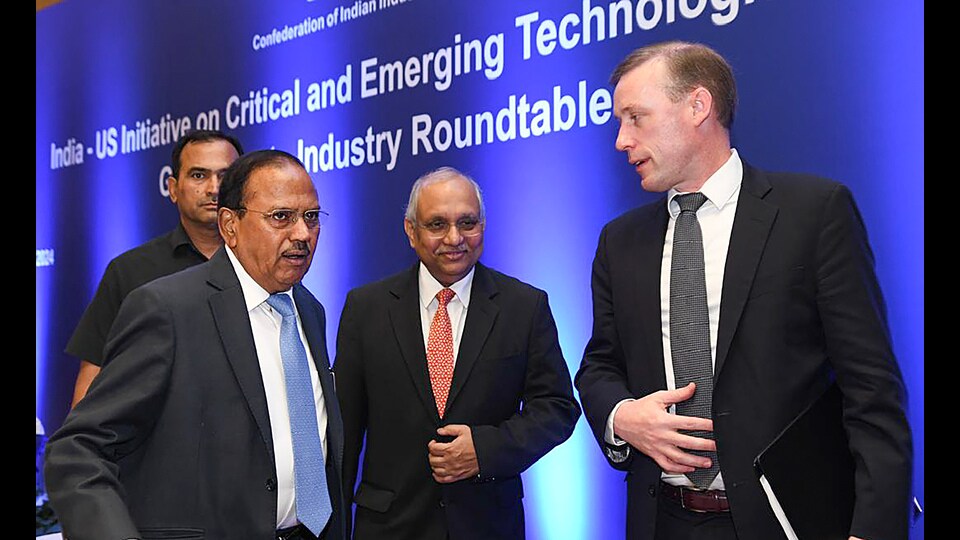
Six features of iCET stand out. One, it is run by the two NSAs, lending it tremendous political weight and pushing the rest of the system and the bureaucracies in both countries to fall in line. Two, it is focused on qualitatively transforming the defence relationship by shifting the conversation to co-production and co-development, of which the GE jet engine deal is the clearest example as is the Indus-X initiative to help startups. Three, it is laser-focused on diversifying supply chains in critical technologies and ensuring a growth in Indian capabilities in this regard, of which the Micron semiconductor plant in Gujarat is proof as are new partnerships that have been announced. Four, it is focused on technologies of the future, from AI to quantum, all of which require deep knowledge partnership between universities and scientific research bodies; the announcement of a $90 million fund for such collaborative projects as well as the role of the US’s National Science Foundation in engaging with a range of Indian ministries indicate progress in this regard. Five, in this edition of iCET, the two countries have taken ambitious steps in biotech and biomanufacturing cooperation, including diversifying supply chains for active pharmaceutical ingredients. And finally, though iCET is led by governments, it sees industry bodies, private sector players, academic institutions and think tanks as vital stakeholders.
Sullivan’s visit is also an important signal of the political commitment to the India-US relationship. Controversies such as the allegations of an Indian government official being involved in an assassination plot of an American citizen in New York — a man India considers a terrorist — have affected ties; indeed, just this week, American law enforcement officials made it clear they won’t tolerate any attempt to silence or harm their citizens, and an accused, Nikhil Gupta, was extradited to the US from the Czech Republic. Both governments, to their credit, have compartmentalised the issue and not let it affect the wider strategic relationship. It’s important to retain that focus.


