
 E-Paper



Ram to rashtra, journey begins
In Ayodhya, PM Modi links the temple with national transformation, laying out a road map that will need the Constitution as a guide

 Prefer HTon Google


It could not have been grander than this. Prime Minister (PM) Narendra Modi, with the RSS chief Mohan Bhagwat and UP chief minister Yogi Adityanath beside him, consecrated the Ram Mandir in Ayodhya on Monday. An invited audience of 8,000 people, including the country’s business tycoons, film stars, sporting icons, politicians, sadhus, and achievers across sectors, witnessed the ceremony marked by religious fervour. Millions watched live on televisions, mobile phones, laptops, and even LCD screens mounted at street corners.
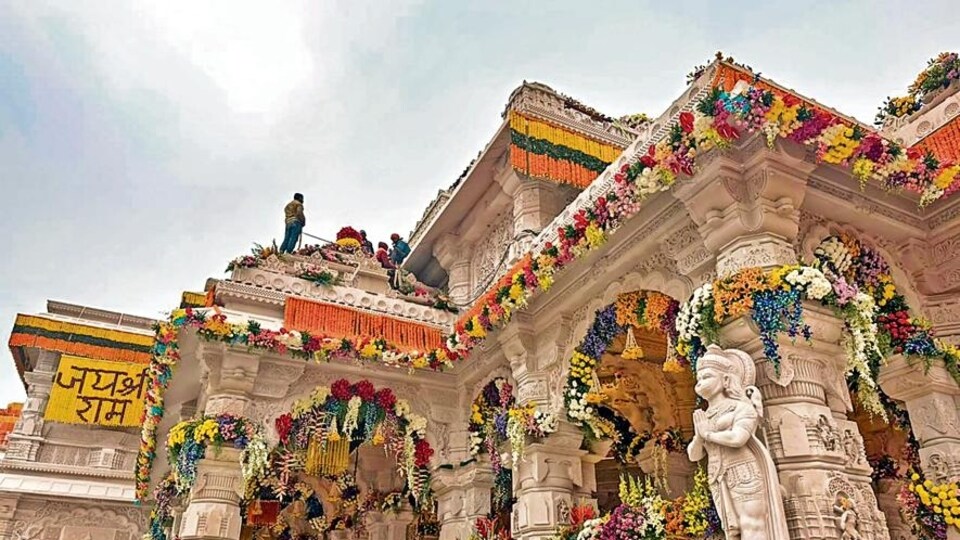
The religious part of the function over, the PM addressed the gathering to remark that the Ram Mandir marked the beginning of a new kal chakra, a new cycle of time. This era, he said, would herald a new prosperous India. He encapsulated a vision of national rejuvenation in the mantra, “Dev se desh; Ram se Rashtra” (from God to country, and from Ram to nation). In that sense the pran pratishtha (consecration), he said, was of Indian civilisational values and humanity. “We have to vow to build a samarth (capable), saksham (able), bhavya (grand) and divya (divine) Bharat,” the PM said. He reminded the audience that this was a moment of not just “vijay (victory)” but also “vinay (humility)”, and reached out to political opponents to visit the Ram temple, and “experience the feeling”. Ram, he said, is oorja (energy), not aag (fire), not vivaad (dispute) but samadhan (solution). The PM invoked a Ram who was not just the Lord of Ayodhya, but a “timeless” entity, who belonged to everyone.
The PM, therefore, linked faith with a promise of future progress; and this invocation of an inclusive, omnipotent God, a just ruler who saw praja kshema as raj dharma, could not have come at a better time. The Ram Mandir marks the culmination of a project that various Hindu organisations championed for decades. Senior BJP leader LK Advani’s rath yatra to Ayodhya in the early 1990s was a polarising event that left a trail of Hindu-Muslim riots. The demolition of the Babri Masjid by kar sevaks, despite the guarantee by then BJP CM of UP, Kalyan Singh, fractured the soul of the nation. The 2019 Supreme Court judgment in favour of the Hindu litigants marked a closure to the legal battle and the ground was ready for building the grand temple. The mandir now stands tall by the Saryu. The moment of vinay that the PM flagged could also be a moment for healing – the mandir movement was a bruising experience for a nation that was born in the aftermath of a bloody Partition.
Invoking faith for national rejuvenation, however, could also be a slippery slope. The nation’s charioteers on this journey have to be firm in being fair and just to all citizens and keep unruly elements in check. The Republic’s founding document, the Constitution, should be the guiding light as the nation enters an uncharted geography.


