
 E-Paper



Stubble burning, a festering problem
The World Air Quality Report found that Delhi was the world’s most polluted capital for the fourth consecutive year. This is indeed shameful, but worse is the government’s abject failure to devise a wholesome solution to tackle the issue

 Prefer HTon Google


The paddy fields of two neighbouring states of Delhi --- Punjab and Haryana --- are on fire, with farmers, especially in Punjab, intensifying the burning of stubble ahead of the wheat sowing season. As expected, Delhi and many neighbouring cities, are reporting a very poor air quality index (AQI). On Saturday, the Capital city’s AQI breached the severe level, with experts indicating that the intensity and frequency of fires could be much worse this season.
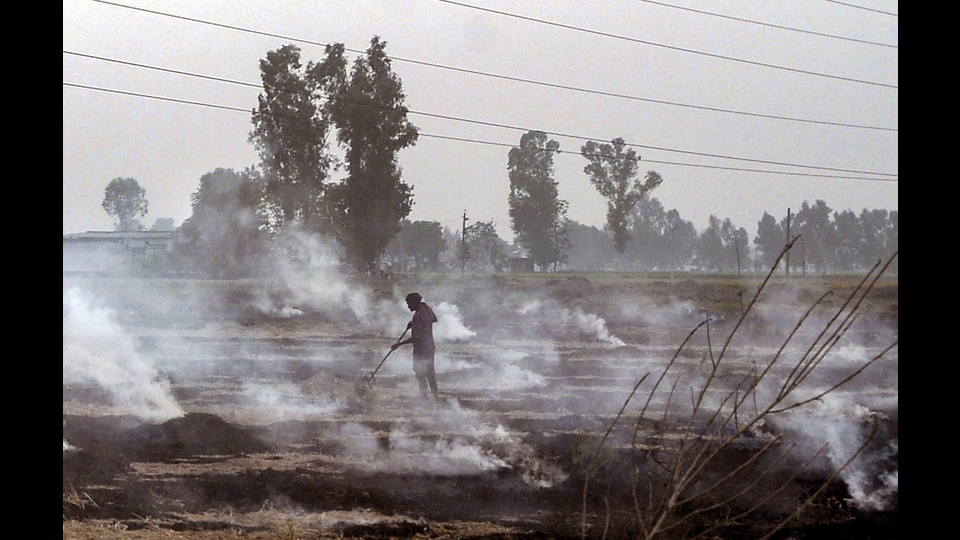
Farmers blame the delay in harvesting paddy (due to rains) and a shorter window for the sowing of wheat as the key reason for this spike. While it is true that climate crisis-induced erratic weather patterns are making the condition worse, stubble burning is a yearly health hazard because the state and central governments have failed to popularise and distribute crop residue management machines (CRMs), work out a cash incentive, explore methods to accelerate the enzyme treatment procedure to decompose stubble quickly, and implement a long-term plan to wean farmers away from a paddy-wheat cycle. A 2021 Council on Energy, Environment and Water offered two reasons why farmers are reluctant to use CRMs: Most aren’t trained to use these machines and are apprehensive of the impact on the wheat crop yields sowed by these seeders, and second, a substantial increase in diesel prices since fuel-related costs account for 25% of the operating cost of CRMs. Farmers also want to move out of the two-crop cycle, but diversification comes with risks many aren’t equipped to handle. Counter-productive government incentives for some crops don’t help. There’s also been no real effort to crack down on farmers burning their stubble — which is surprising because Delhi, the region most affected by the burning, and Punjab, the state responsible for the most fires, are now ruled by the same party, AAP.
The World Air Quality Report released in March found that 35 of the 50 cities in the world with the worst air quality are in India. Delhi was the world’s most polluted capital for the fourth consecutive year. This is indeed shameful, but worse is the government’s abject failure to devise a wholesome solution to tackle the issue, letting millions of Delhi’s citizens breathe in poisonous air.


