
 E-Paper



Tackling Delhi’s air pollution
Delhi is the most polluted Capital city globally. Transcend political differences and come up with a coherent and cohesive plan to manage the year-round crisis

 Prefer HTon Google


Delhi has been ranked the most polluted Capital city globally for the fourth consecutive year by the IQAir World Air Quality Report 2021, released on Tuesday. The annual average PM2.5 levels in the city rose by almost 15% in 2021 compared to 2020 — from 84.1 micrograms per cubic metre (mcm) to 96.4 mcm. The prescribed annual average limit for PM2.5 in India is 40 mcm, while the World Health Organization (WHO) standard is 5 mcm. The level of PM2.5, or particulate matter less than 2.5 microns thick, is a crucial metric of air quality because these particles cause lasting health damage. Other Indian cities have also performed poorly: 35 of the 50 top polluted cities in the world are in India.
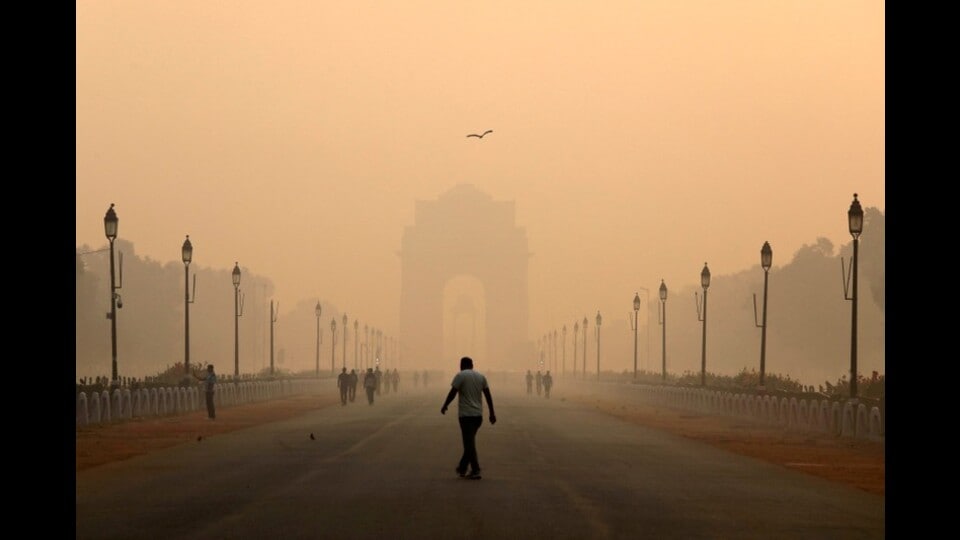
The report is disturbing but not shocking. While the rise in PM 2.5 levels in 2021 over 2020 was expected due to the unlocking of economic activities after the first phase of Covid-19, the report shows the failure of multiple governments -- at the Centre, in the Capital, and in neighbouring states -- to transcend their political differences and come up with an integrated and coherent approach to manage the air pollution problem. This inability to take an airshed approach becomes all the more evident during the pre-winter months, when factors such as farm fires, low wind speeds and temperatures converge to create a huge pollution challenge. Besides this yearly pollution-heavy season, Delhi-NCR has also failed to curb transport sector pollution. Many inventory and source apportionment studies over the past few years shows that on-road vehicular exhaust emissions account for 9% to 38% of PM2.5 emissions in Delhi.
But the good news is that there is still room to reverse the situation. According to the 2011 Census, the latest available data, most Indians still walk, cycle, and use public transport. But in Delhi, as in other parts of India, eco-friendly modes of transportation are under enormous stress, with a declining number of buses and inadequate mass transit systems. To tackle air pollution (and also show a cleaner pathway to other cities), Delhi must invest in green transport options and mass mobility, improve traffic flow through improved traffic engineering and street design, reduce demand for motorised transport, build designated pathways for cyclists and walkers, and reduce road dust by mechanised sweeping, stringent norms for construction sites, eliminating traffic movement on unpaved roads, increasing tree cover and use of sprinklers. The State must do more to control Delhi’s air pollution problem to ensure a better quality of life and health for its citizens, especially when it is abundantly clear that regions with high air pollution are also hit the hardest by pandemics such as Covid-19.


