
 E-Paper



The anarchy in the Congress | HT Editorial
The party’s rank and file cannot see a road map for the future


In the wake of the Congress’ second consecutive rout in the Delhi assembly election — it failed to win a single seat, slumped to its lowest vote share to just a little over 4%, and did not get the highest number of votes in even 1% of the booths — there is a war of words that has broken out within the party. From former finance minister P Chidambaram celebrating the defeat of the Bharatiya Janata Party (BJP) to Sharmistha Mukherjee (Delhi Congress leader and daughter of former president Pranab Mukherjee) asking him whether the Congress had outsourced the task of defeating the BJP to regional parties; from (former Delhi in-charge) P C Chacko implicitly blaming the loss on the late Sheila Dikshit to her aide and spokesperson Pawan Khera pointing out how the party had never fared as poorly under her; from former Mumbai unit chief Milind Deora praising the Aam Aadmi Party’s governance to former Delhi unit chief Ajay Maken suggesting that Mr Deora should leave the party, the battle is both public and bitter. This is extending to factionalism within other state units, with young leaders, in particular, expressing unhappiness.
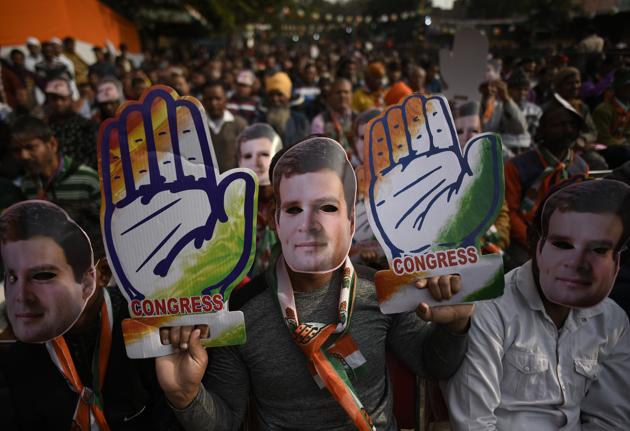
There is also a lack of coherence on policy issues with, for instance, Shashi Tharoor criticising the government for denying entry to a British Member of Parliament, and Abhishek Manu Singhvi supporting it. The party’s advocates may suggest this is a sign of internal democracy. But political parties work on the basis of a degree of coherence and discipline. Dissent is expressed within party forums. If there are grievances, the onus then rests on the leadership. What is happening in the Congress appears like anarchy.
There are two causes of this crisis. The first is the absence of an honest, introspective, internal review after its loss in the Lok Sabha elections. In its absence, the party is struggling to mount a united challenge, on a common ideological platform, against the BJP. The second is the weakness and the churn in the top leadership. Sonia Gandhi remains deeply respected, but has been unwilling or unable to assert her authority. The fact that she has made it clear that her presidency is only an interim arrangement leads to uncertainty. Rahul Gandhi’s decision to quit as president, his frequent absences, and his sporadic intervention in party affairs is not helping either — for there is a lack of clarity on whether he is going to return as president or has decided to narrow his role to merely that of an MP. All of this has caused anxieties among the party’s rank and file, which does not see a road map for the future. The party owes it to the over 110 million voters who reposed faith in it last year, as well as to Indian democracy, to get its act together.


