
 E-Paper



India is caught between geography, chemistry and economics of crude oil | Number Theory
.
Published on: Mar 17, 2026, 08:24:25 IST

 Prefer HTon Google
Share via


Copy link

Crude oil, to the layperson, is just crude oil which can be processed in a refinery to make a wide range of end-use fuels and other extremely important petrochemicals. But for someone in the business of actually refining crude oil, there is crude oil and there is crude oil. Energy market lexicon has terms such as sweet and sour and light and heavy for these varieties. What do these complexities mean for India, which is having to diversity its crude imports away from West Asia because of the ongoing war? Here is what an HT analysis shows.

India is caught between geography, chemistry and economics of crude
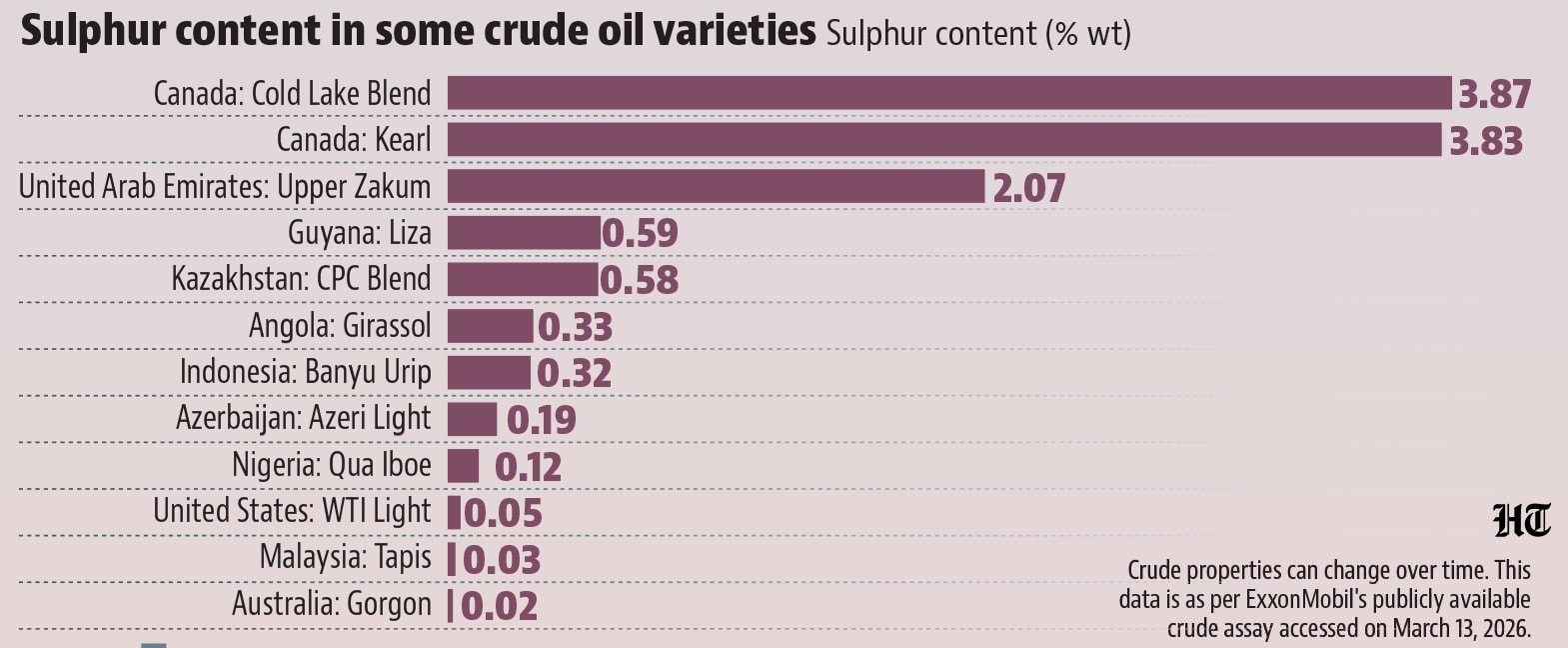
 Sulphur or lack of it makes crude oil sour or sweet and refining more or less expensiveAmong the most common impurities in crude oil are sulphur and metals. Sulphur is among the major pollutants from use of crude derived fuels – the Bharat Stage (BS) emission norms for example limit permissible Sulphur in auto fuels – but it also matters a lot for refineries processing crude oil. Similarly, metal impurities common in crude oil – nickel and vanadium – affect the life and function of processes that use catalysts (substances that increase the speed of reaction) for refining crude. There are processes to remove these impurities; and refineries are usually designed to handle a range . However, switching to a dirtier crude can lead to a range of problems, such as damage to machinery, higher catalyst requirement, or further processing for a useful output. These problems can affect refineries’ margins beyond the spike in oil price because of scarcity. This also means that refineries processing one kind of crude will face different economic/process constraints if they have to use another kind, which often entails a cost. Business Standard reported on February 14 that Indian refiners were seeking steep discounts on Venezuelan oil because it is more viscous (such liquids move slowly) and acidic, and hence difficult to process.
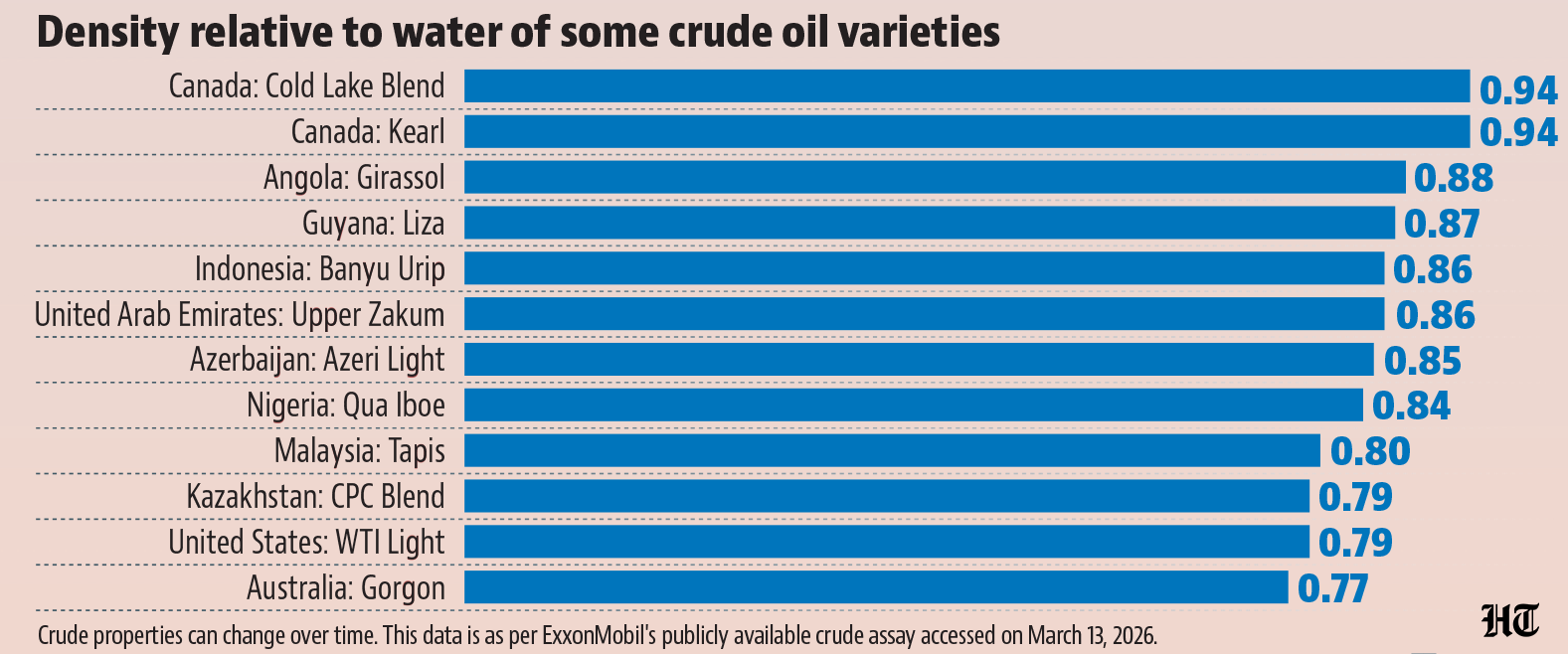
- Not all crude gives the same yield of different productsCrude quality is not just about impurities. Quality also affects yield of different products. In fact, there is a somewhat simple correlation. The lighter the crude (in terms of density) the easier it is to get compounds with fewer carbon atoms. For example, 3-4 carbon atom compounds make LPG, 6-10 carbon compounds make petrol, 11-12 carbon atom compounds make jet fuel and kerosene, and 13-25 carbon make diesel. To be sure, it is possible to get lighter compounds from heavy crude, but that involves processing the crude more. This means that getting the products India needs hassle-free, would require ideally getting a similar kind of fuel, such as West Asian or Russian crude, which our refineries are already processing. Getting either a crude too light or too heavy can affect the product yield India is used to. Heavier crude – such as the Canada Cold Lake Blend – is especially undesirable, as it also usually has more impurities.
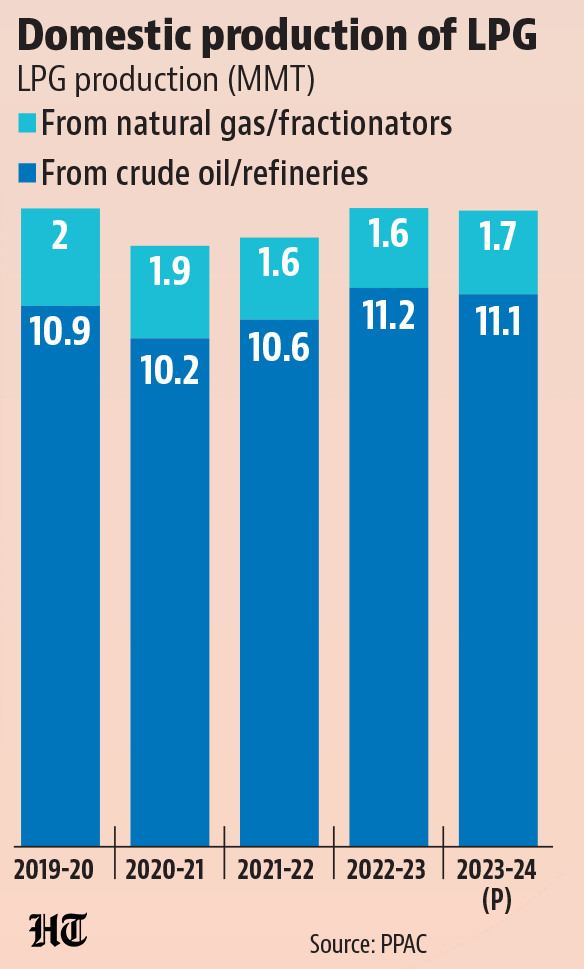
- But as long as any crude oil is available, refineries can help with even some natural gas deficitWhile India imports only around half of its natural gas requirements, what is critical is that 90% of the imports come via the Strait of Hormuz. Importing natural gas is also far more complex than importing crude oil because it needs to be liquefied. This is where crude oil availability can help to some extent. For example, the domestic production of LPG in India happens more through crude oil and refineries than natural gas. This is one reason refineries have been able to increase LPG output by over 25% quickly. Refineries can also help with fertilizer output to some extent, but it is not clear at the moment how much of that is practically possible. This is because some fertilizer plants that used naphtha – a refinery product – as an input instead of natural gas have been made to switch to natural gas. “While some units retain contingency capability to run on naphtha or fuel oil, policy and energy norms penalise such use; with priority APM gas and subsidies in place, such ‘oil switching’ occurs only during supply disruptions, not as a routine response to spot LNG price moves,” says an October 2025 report of The Oxford Institute for Energy Studies on natural gas use in the Indian fertilizer industry. To be sure, even such “oil switching” will not come without pain. Using more crude for LPG and urea production is bound to just shift the pain of import loss to some other parts of the economy.


Unlock a world of Benefits with HT! From insightful newsletters to real-time news alerts and a personalized news feed – it's all here, just a click away! -Login Now!


