
 E-Paper



Making journalism ‘great and humane’: An editor reflects on a century of the New Yorker
The new documentary, directed by Marshall Curry, follows Remnick’s team as it produces its 100th anniversary issue — which came out in February

 Prefer HTon Google


In a new Netflix documentary that was released last weekend, The New Yorker at 100, editor of the magazine David Remnick, 65, says that he wants The New Yorker to be two things: “Great and humane”. Remnick had already won the Pulitzer Prize for Lenin’s Tomb: The Last Days of the Soviet Empire in 1993 before he took over as editor in 1998. His predecessor, British editor Tina Brown, who established the credo of making “the sexy serious, and the serious sexy” for The New Yorker, hired Remnick among other young writers when she took over as editor in 1992.
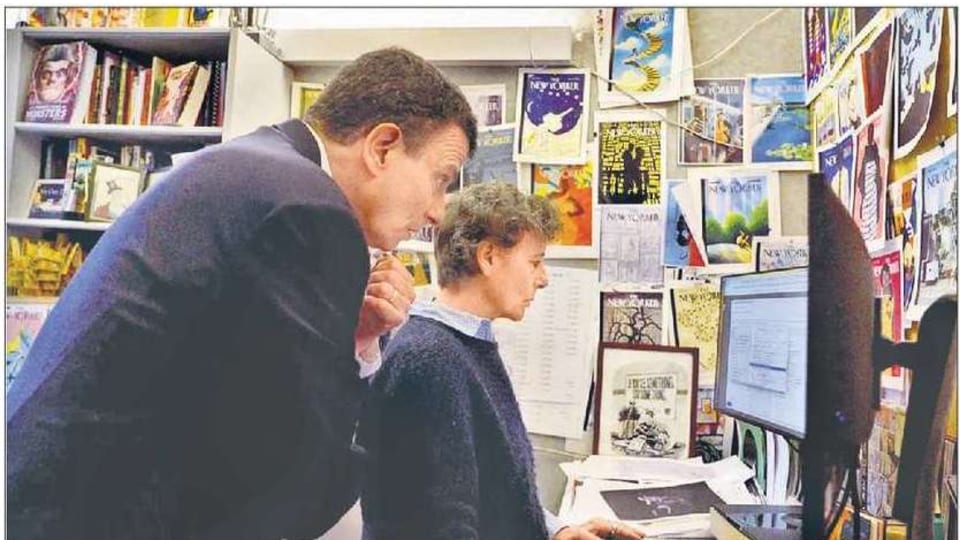
Remnick has overseen several milestones since then — bringing out The Complete New Yorker in 2005, a collection of all articles published in The New Yorker till then in (now redundant) CDs,and around a decade ago, reinventing The New Yorker for a changing digital-first world. On its 90th birthday, the magazine got its weekly online radio show, produced in conjunction with WNYC. Soon after, a series titled The New Yorker Presents, released on Amazon Prime.
The new documentary, directed by Marshall Curry, follows Remnick’s team as it produces its 100th anniversary issue — which came out in February; the documentary was shot earlier this year — and focuses on the personages who make up the newsroom. It also zooms in on Remnick’s personal history. He narrates his brush with “incredible strokes of luck and incredible strokes of bad luck” when he describes his childhood in New Jersey looking at New York across the Hudson with yearning, living with parents who had neurological disorders, and later, living in the city with his family, including his “profoundly autistic” daughter. Edited excerpts:
How did the idea of the documentary fructify?
The idea for a documentary was actually the idea of Ted Sarandos, who runs Netflix. From there, Jude Apatow and then Marshall Curry, who actually made the film, got involved.
What was it like being followed by a camera while you went about your work?
Nothing was staged. I must admit it took a while to get accustomed to the presence of cameras and microphones in the office.
You say in the film that you’ve always wanted ‘The New Yorker’ to be “great and humane”. Can you elaborate?
Well, what I mean is that I want the literary, journalistic, and artistic achievements of The New Yorker to be at the highest level, whether that is John Hersey, in 1946, writing about Hiroshima, or James Baldwin, in the 1960s writing about race, or Seymour Hersh and Ronan Farrow and Jane Mayer’s investigations in our day. At the same time, I want the magazine to speak with a sense of humanity, as well as rigour.
‘The New Yorker’ represents a sort of a unicorn, doesn’t it? What is the secret sauce?
The original idea of Harold Ross for the magazine remains eccentric, doesn’t it? [Founded during New York’s Jazz Age, the idea was to create a fizzy humour magazine.] And yet it works, even as it evolves. Print will last as long as readers, or some readers, want it in that form, but we are also very much a digital operation, as well as audio and video, as well.
What was the strategy with digital reinvention? Why do you think it worked well?
It took time. The New Yorker was, for decades, a rather stately weekly. And it took us time to discover how, at once, to continue doing those pieces that require a lot of time, but also add to the picture a sense of metabolism for more daily offerings, whether it’s about politics or the arts.
What would you tell newspaper and magazine establishments who want to adapt to the AI and Instagram age for the next generation?
To stick to your principles even as you are accommodating new technologies and making them work for you. But that is more easily said than done!
What is ‘The New Yorker’ mandate for the next decade?
See my previous answer! And that includes standing up to attempts by the government or anyone else to clamp down on our freedom to publish what we want.
There’s a rare personal moment in the documentary where you’ve talked about your parents and your child. How do you think experiences with illness and special abilities have shaped you as a person and a journalist/editor?
How could it not shape me profoundly? I hope it has made me more empathetic, but that’s for others to judge.


