
 E-Paper



Number Theory: In 2024, the Congress gained some and lost some
.
Updated on: Jan 2, 2025, 08:45:17 IST

 Prefer HTon Google
Share via


Copy link

2024 began on a very bleak note for the Congress party. In the penultimate election cycle before the 2024 general elections, it lost state governments in Rajasthan and Chhattisgarh and faced a crushing defeat in Madhya Pradesh. Congress’s losses in these three states eroded its bargaining strength in the INDIA alliance and gave a boost to the BJP’s aura of invincibility in the forthcoming national contest. By the time the 2024 general election results were declared, this narrative had changed significantly.
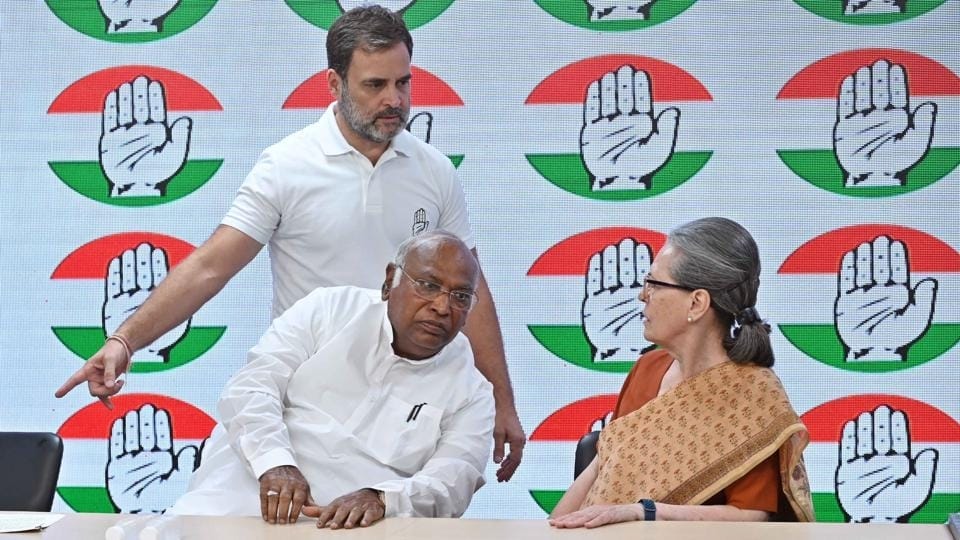
In 2024, the Congress gained some and lost some
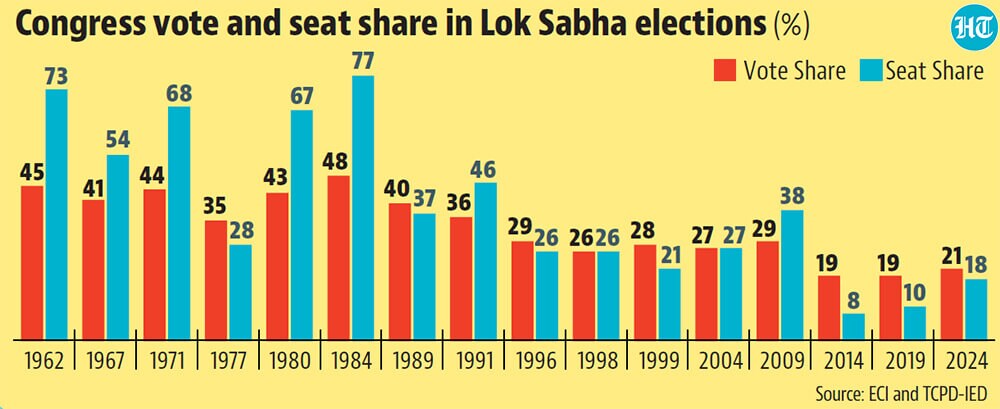
 Congress’s single largest achievement in 2024 was to establish itself as the leading opposition partyThe Congress last won a Lok Sabha majority in the 1984 elections. In the 9 national elections which have been held since 1989, it ended up as the single largest party in 3 elections in 1991, 2004, and 2009 respectively. While the Congress’s days of dominance in national politics were over decades ago, it sunk to a new low in 2014 and 2019 where it could not even win 10% of Lok Sabha seats which is the minimum to claim the leader of opposition’s (LoP) position. While the Congress was way behind the Bhartiya Janta Party (BJP) in terms of number of seats even in 2024, it won 99 parliamentary constituencies and has been able to claim the LoP’s post.
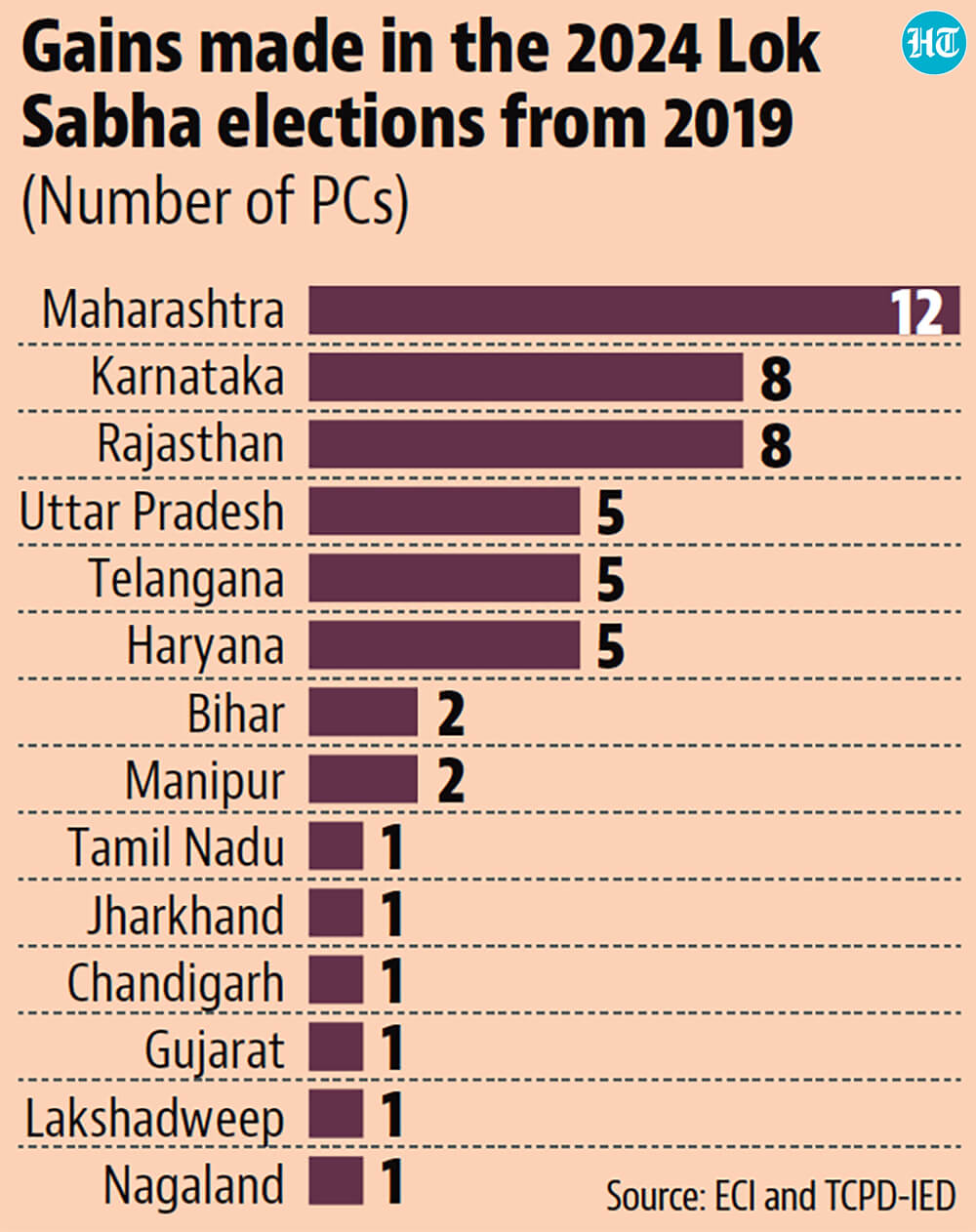
- Congress made gains in states where it contested on its own as well as a junior partnerCongress’s Lok Sabha tally increased from 52 to 99 between 2019 and 2024. A state-wise comparison of Congress’s 2019 and 2024 tally shows that the Congress’s tally increased in 12 states and two union territories states and went down in five states. It made the largest gains in the states of Maharashtra, Karnataka, and Rajasthan, Telangana, and Haryana. A classification of Congress’s gains between states where it contested on its own or as a senior partner and as a junior alliance partner of a regional party shows that it gained 32 PCs in the former category and 21 in the latter. The fact that Congress made gains in states such as Rajasthan, Haryana and Karnataka and Telangana on its own, suggested that it had rediscovered at least a part of its past mojo and also figured out a way to strike effective alliances.
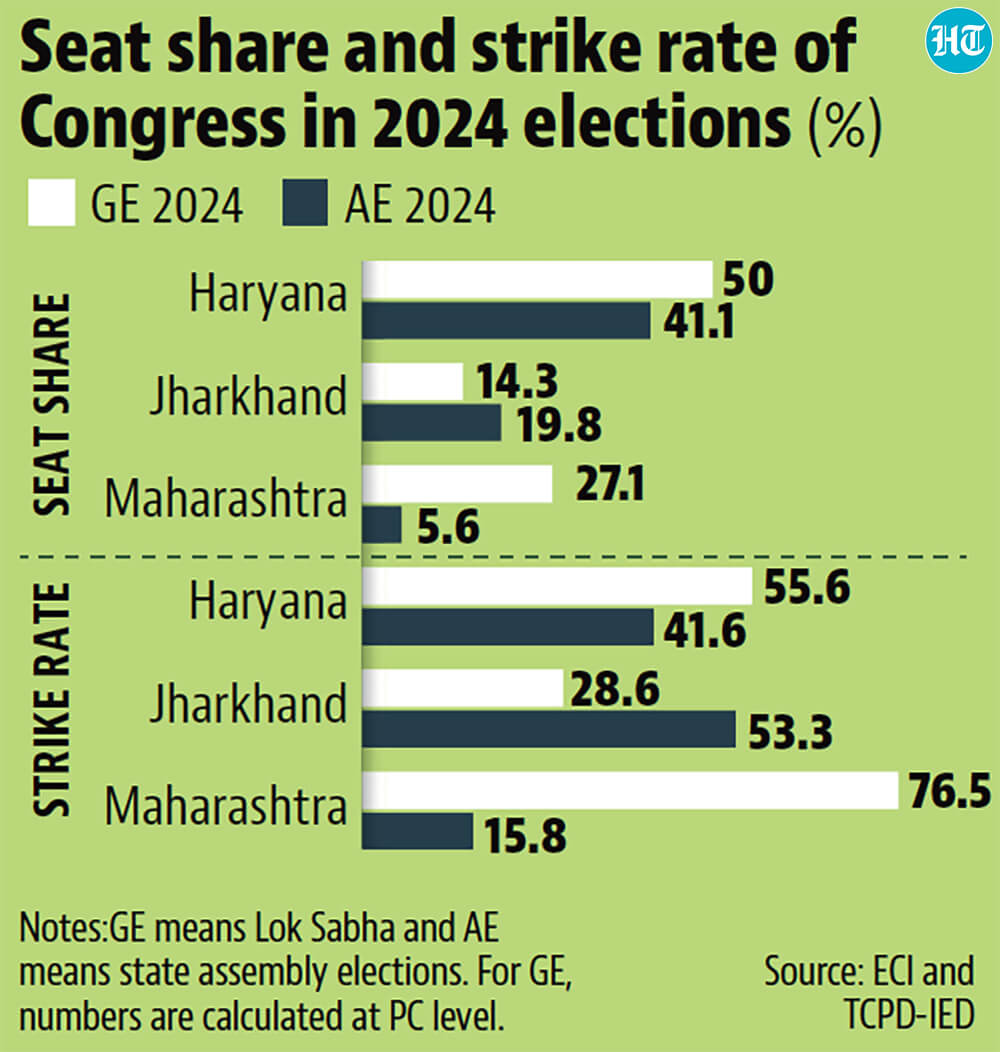
- But it frittered away its gains in two out three states that went to polls after the 2024 Lok Sabha electionsOn a PC-wise basis, the Congress had a seat share of 27%, 14% and 50% in Maharashtra, Jharkhand and Haryana in the 2024 Lok Sabha elections. Its strike rate in these three states was 76.5, 28.6 and 55.6 respectively. In the assembly elections which were held in the second half of the 2024, the Congress saw a large fall in its seat share in the states of Maharashtra and Haryana where it could win just 15.84% and 41.6% of the assembly constituencies it contested. In Jharkhand, the Congress’s seat-share increased but the victory has largely been attributed to the Jharkhand Mukti Morcha (JMM) which was leading the coalition in the state.
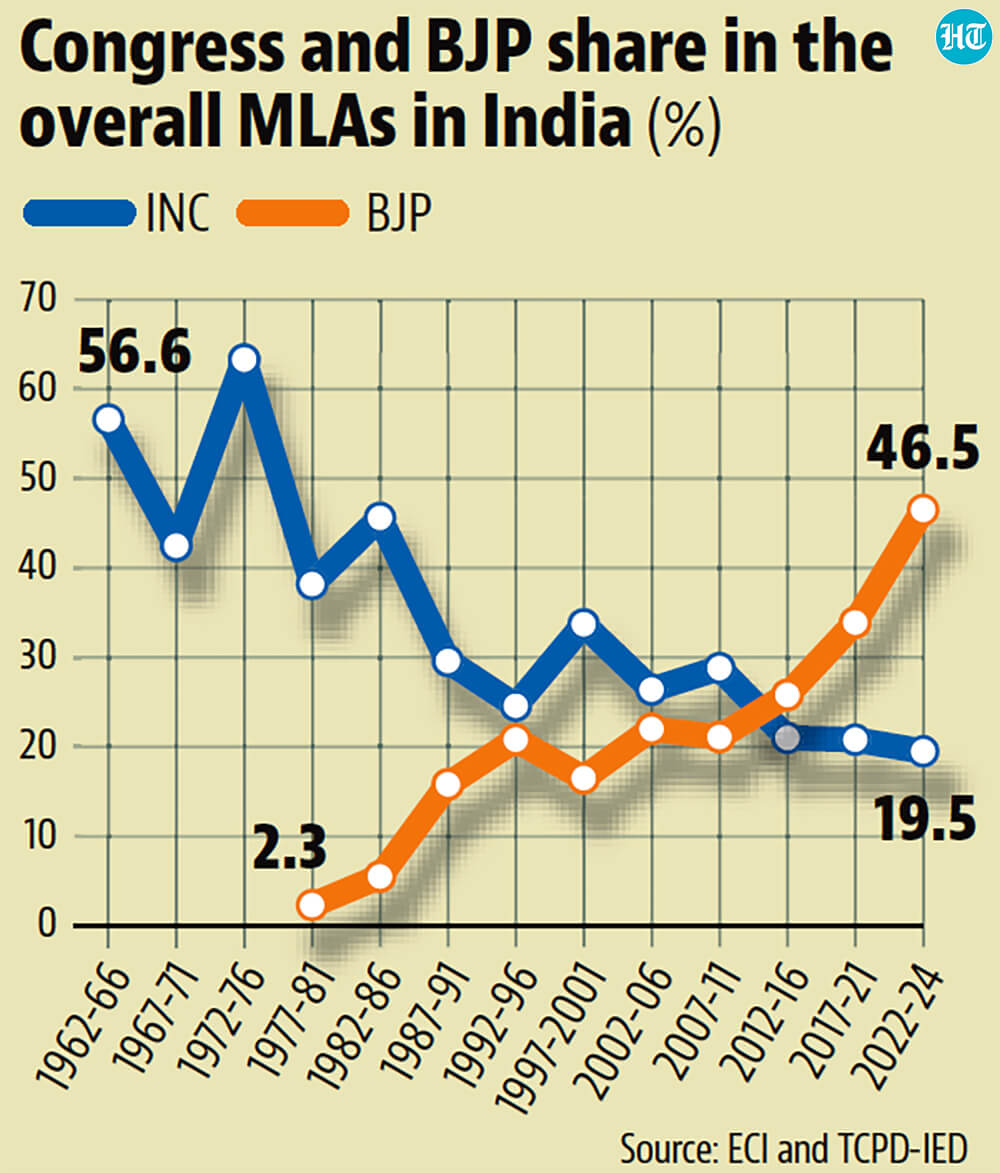
- Maharashtra and Haryana debacles resurrected theories of Congress’s long-term declineThe best quantitative metric of Congress’s long-term crisis is its falling share of MLAs in the country. HT has categorised all the state assembly elections between 1962 to 2024 in a period of five years starting from 1962-66 and ending in the period 2022-2024. Congress's share of MLAs was 19.4% during the period 2022-2024, the lowest for the party since 1962. Since 2002, the Congress MLA’s share has never crossed 30% while that of the BJP has always been more than 21.1%. That 2024 has ended with at least six INDIA block partners questioning the Congress’s leadership of the umbrella opposition grouping shows clearly that the Congress has frittered away the momentum it could have gained from the 2024 Lok Sabha results.



Unlock a world of Benefits with HT! From insightful newsletters to real-time news alerts and a personalized news feed – it's all here, just a click away! -Login Now!


