E-Paper



Number Theory: Piecemeal efforts and passing the buck won’t solve Delhi’s pollution – II
.
Updated on: Oct 25, 2024, 20:51:29 IST

 Prefer HTon Google
Share via


Copy link

The first part of this series argued that Delhi’s air pollution needs to be seen as a round-the-year north India problem than a Delhi winter problem and that the progressive deterioration in air quality must be seen in conjunction with rapid urbanisation and environmental destruction, especially in the areas adjoining Delhi. What can be done to solve this problem on a sustainable basis? Here is what the data suggests.
Lower economic activity can reduce pollution levels, but that is not feasible
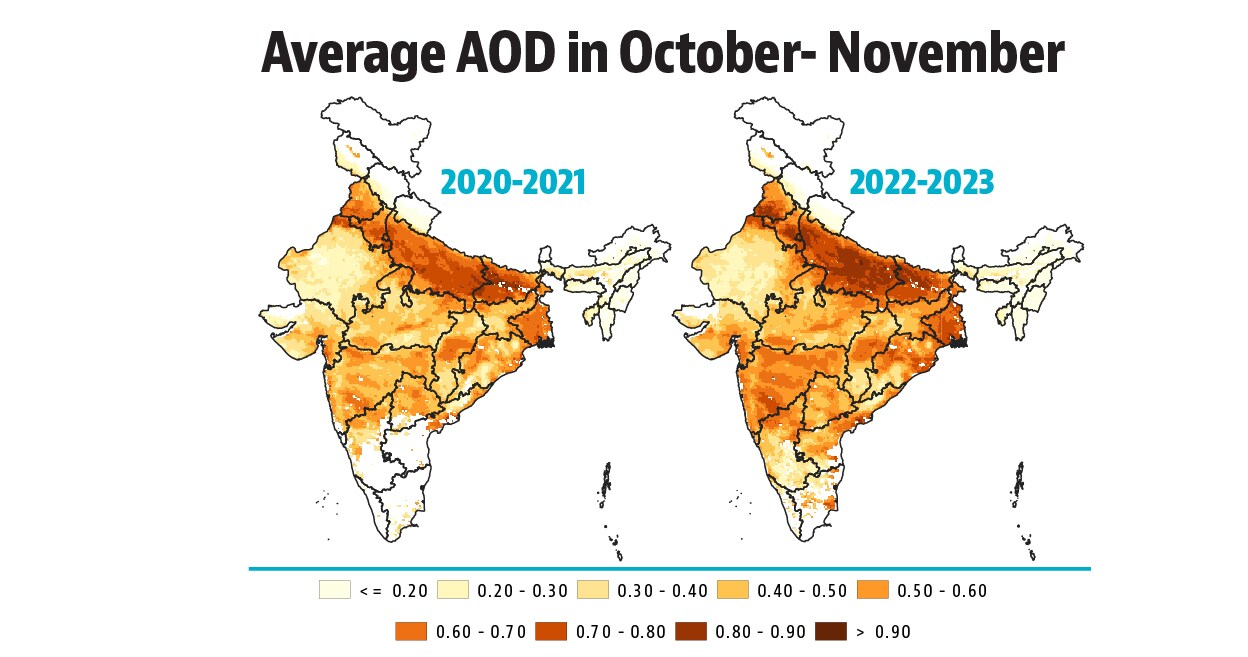
 Lower economic activity can reduce pollution levels, but that is not feasibleThis was established conclusively during the pandemic, especially the period of the lockdown when air quality improved drastically across the region. In fact, air quality was relatively better even during the cooler months of October-November in the pandemic years of 2020 and 2021 compared to the following two years , 2022 and 2023. Tempting as these statistics sound, cutting back on economic activity is not an option for India. The Indian economy suffered a contraction of 4.15% in 2020-21 and the economic scars of the pandemic have still not healed completely.
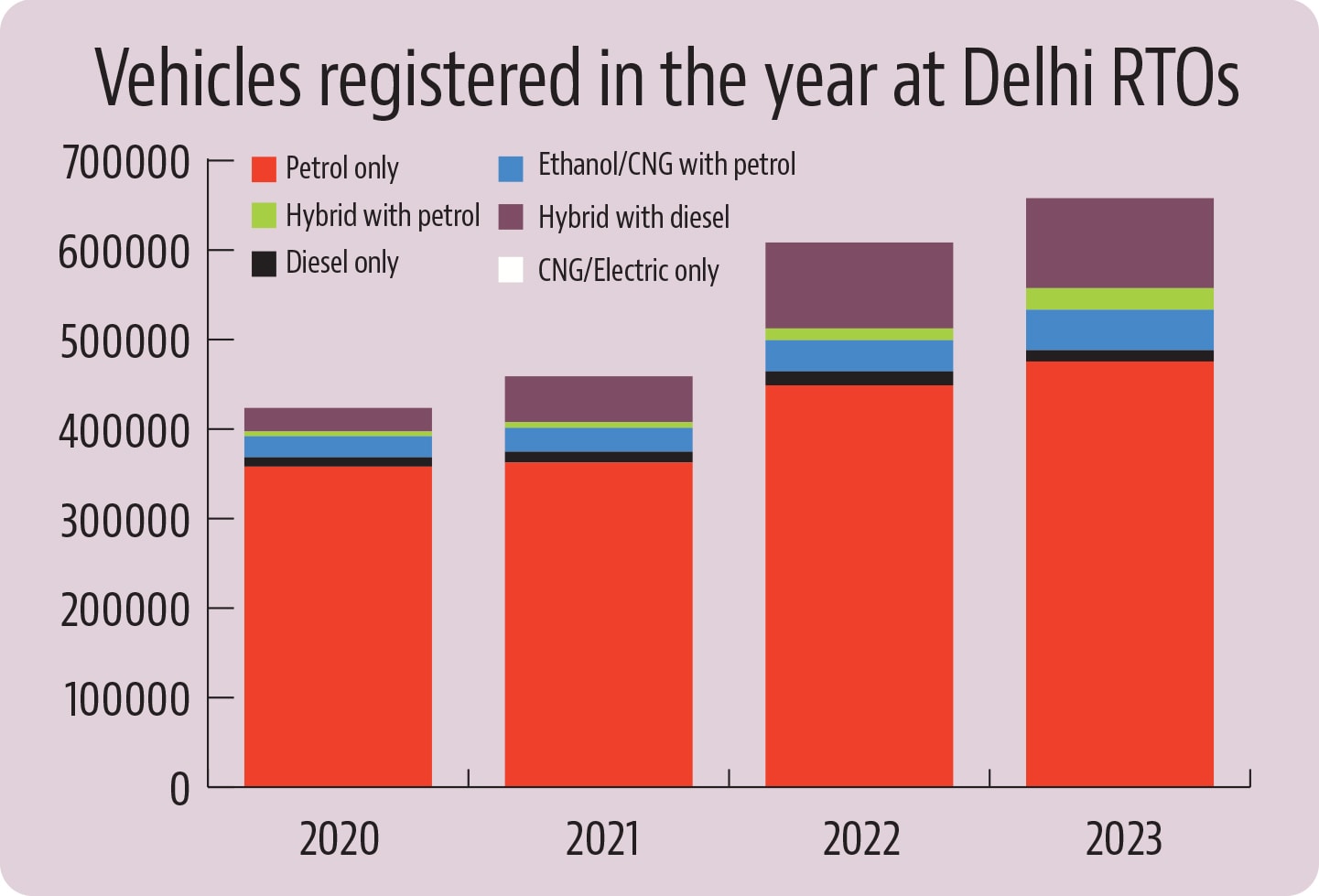
- Sources of pollution are rooted in economic activities of both the rich and poorThis is the most important thing to keep in mind while trying to solve the pollution problem. For example, the seasonal spike in air pollution because of stubble burning by paddy farmers is a direct fallout of farmers trying to save on labour costs and using mechanised methods to harvest their crops which leaves stubble, unlike the manual mode of harvesting crops (https://tinyurl.com/bdfmuxpw). It is not surprising that governments across Punjab, Haryana and Delhi keep fighting with each other who should pick up the bill for compensating farmers for not burning their paddy stubble and using more eco-friendly methods to prepare their farms for the next crop. On the other hand, rising well-being levels in cities such as Delhi have made a large contribution to the pollution problem by adding more and more vehicles. While Delhi has done well to add non-polluting modes of public transport – which now only run on electric or CNG – over the last two decades, an additional fleet of private vehicles added every year has more than neutralised these gains. Just from 2020 to 2023, Delhi RTOs (vehicles from neighbouring states can also travel to Delhi or register themselves in Delhi) have registered 424,000 to 658,000 vehicles every year, with the number increasing every year. This large number means that the absolute number of petrol and diesel vehicles registered also increased every year – from 368000 in 2020 to 488,000 in 2023 – despite their decreasing proportion in the total.
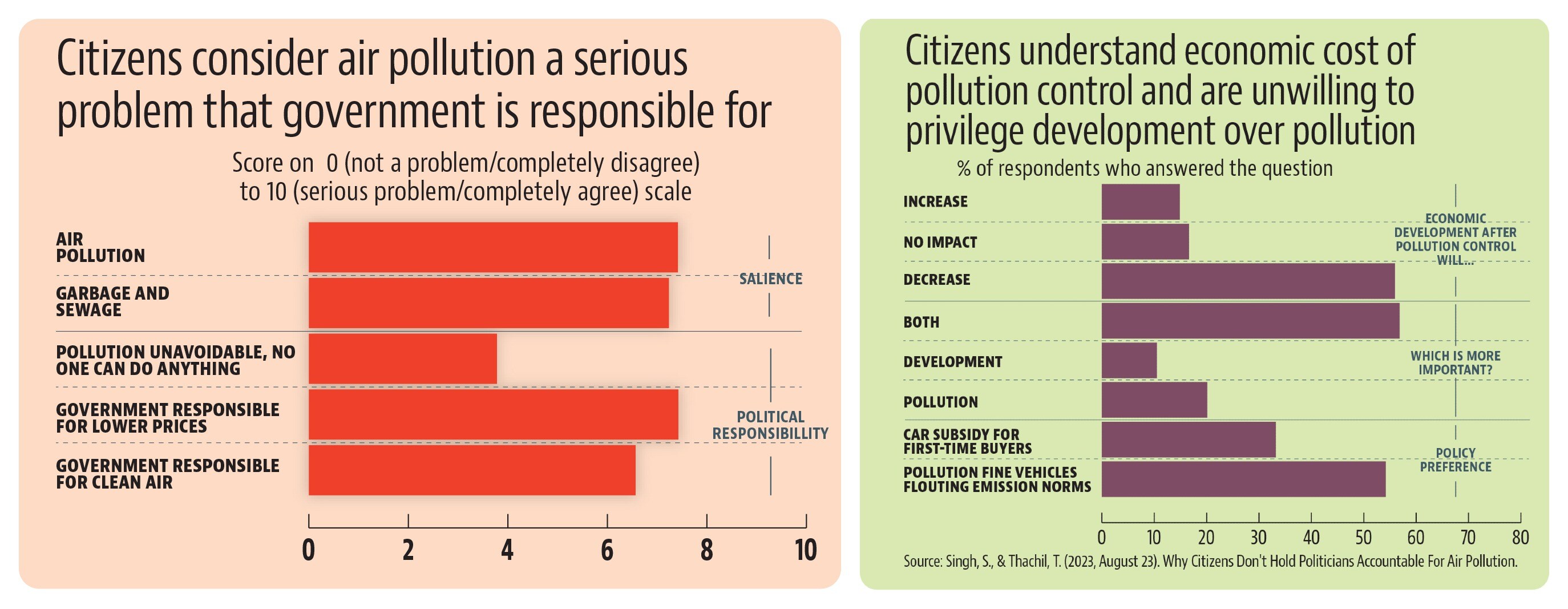
- Defeatism will not help fight pollutionThe way ahead must begin with an acknowledgement that looking at the pollution problem as a zero-sum game – where one side must lose for the other one to win – between farmers and city dwellers or rich and poor will not help. There also has to be an end to bizarre solutions such as smog towers or cloud seeding. Controlling air pollution for good would require taking consistent steps to control the factors which add to pollution in the first place rather than reactive doomed to fail strategies. Rather than the often-peddled cliché which suggests that India being a poor and democratic country unlike, say, China, which has managed to control air pollution levels in Beijing, cannot build effective strategies to deal with pollution, researchers have found that what we require are suitable democratic strategies rather than democratic defeatism to fight air pollution. A 2023 paper (https://tinyurl.com/bdfmmj79) by political scientists Shikhar Singh and Tariq Thachil which is based on a survey in Delhi found that citizens were aware of the pollution problem, blamed it to lack of government action, and were also aware of the economic costs to mitigate this crisis but were unwilling to trade off higher pollution for economic gains. To be sure, the paper does argue that voters were sensitive to personal costs of efforts to mitigate pollution and unwilling to make individual sacrifices to control the problem. “Public support for policies is however sensitive to personal costs. About 83% of surveyed citizens support car ownership caps, 62% support a ban on diesel cars but only 16% support a ban on motorcycles and bikes. 65% of the surveyed citizens own a bike or motorcycle but only 20% own a car”, the paper says.
- So, what is to be done?The paper suggests a way ahead. “As in wealthier settings, governments in LMICs (lower middle-income countries like India) will have to find ways to reduce personal mitigation costs to build support for policy actions. Countries like India provide a template of the digital infrastructure necessary to precisely and efficiently deliver such subsidies at scale in low-income settings. Future work can examine how such infrastructure can be deployed to offset mitigation costs, and the kind of targeted transfers that are most effective in reducing such costs”, it says. That no political party is offering support to help reduce the pollution problem shows that none of them are serious about controlling pollution.