
 E-Paper



Student suicides are worsened by institutional failure | Number Theory
What this crisis needs is not institutional faux-pas and shrill debates but a serious acknowledgement and sincere course-correction
Updated on: Sep 22, 2026, 06:34:58 IST

 Prefer HTon Google
Share via


Copy link

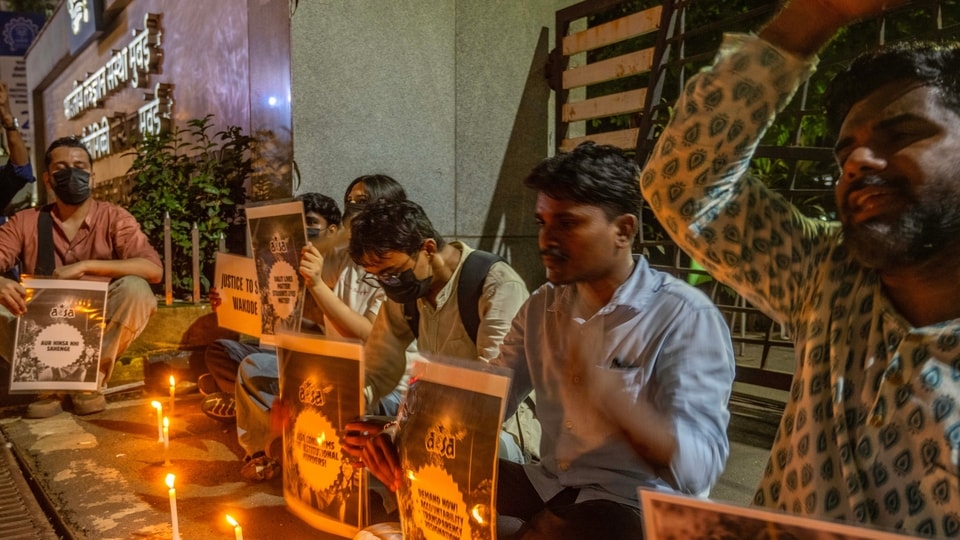
The death by suicide of an IIT Bombay student has once again brought to the fore a crisis which is getting worse in India. Extremely tragic as the incident is, IIT Bombay administration has made matters worse for itself by admitting that it erred by issuing a release with “details relating to the events preceding his demise before they had been duly established through the appropriate investigative process”. And a predictable debate over reservation has ensued on social media. What this crisis needs is not institutional faux-pas and shrill debates but a serious acknowledgement and sincere course-correction.
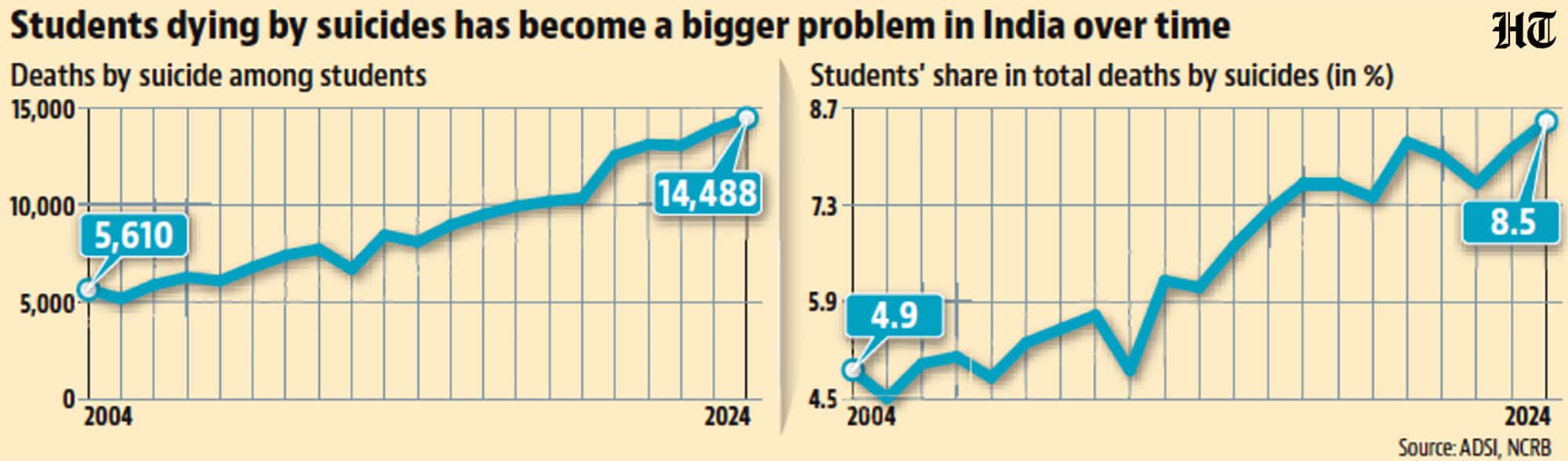
 Student suicides have been rising in IndiaData from the National Crime Records Bureau (NCRB), which works under the Union home ministry, shows that number of students who died by suicide has increased by 2.6 times between 2004 and 2024, significantly faster than the number of overall suicides in the country, which increased by 1.5 times. The share of students among those who died by suicides was rising slowly up to 2012. The trend picked up pace after that, taking this number from 4.9% in 2004 to 8.5% in 2024. Unfortunately, we do not have detailed data on the reasons for students dying by suicides in India. Anecdotal accounts suggest various reasons: from institutional high-handedness or insensitivity (such as a recent case in IIT Delhi) to inability to cope with pressure to do well in competitive exams (Kota suicides being the most macabre manifestation of this) to allegations of caste discrimination such as Rohith Vemula’s in Hyderabad Central University in 2016. While every death is a tragedy, preventing future deaths requires more information than we currently have.
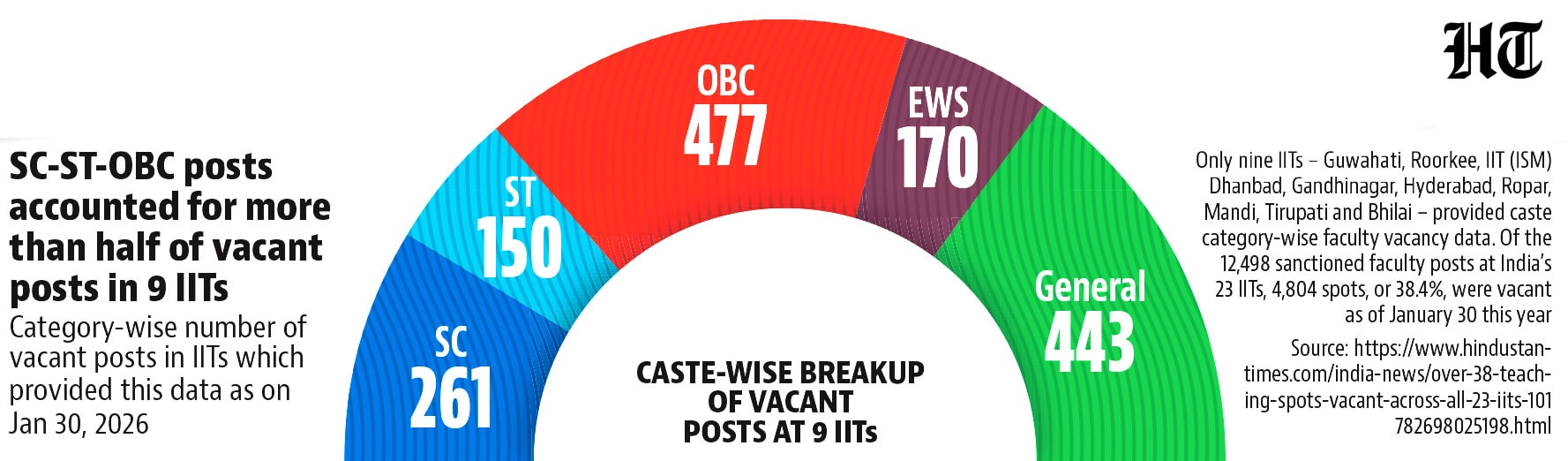
- Institutional oversight in campuses dilute their credentials to ensure no caste discriminationAnybody who believes that caste does not matter in shaping beliefs, hierarchies and outcomes in India is being economical with the truth. Had it not been for caste-based reservations, India’s higher educational landscape would be significantly more unequal than it is. Admission, however, is not a guarantee of fair treatment or even the ability to cope. Caste or rather caste blindness continues to shape behaviour and beliefs inside and outside educational campuses. This problem is made worse by either a lackadaisical or deliberate practice by many of India’s premier institutes such as IITs, which do not fulfil constitutionally mandated caste-based reservations in recruiting faculty. HT reported in June this year that while IITs had a generalised vacant post problem—a 38.4% vacancy on sanctioned faculty posts—the problem is more acute for reserved faculty posts. What makes the problem more damning is that many IITs did not even disclose caste-wise data on vacant posts. Such oversight only adds to trust deficit vis-à-vis institutional inability or, worse, unwillingness to do justice in cases of caste-discrimination.
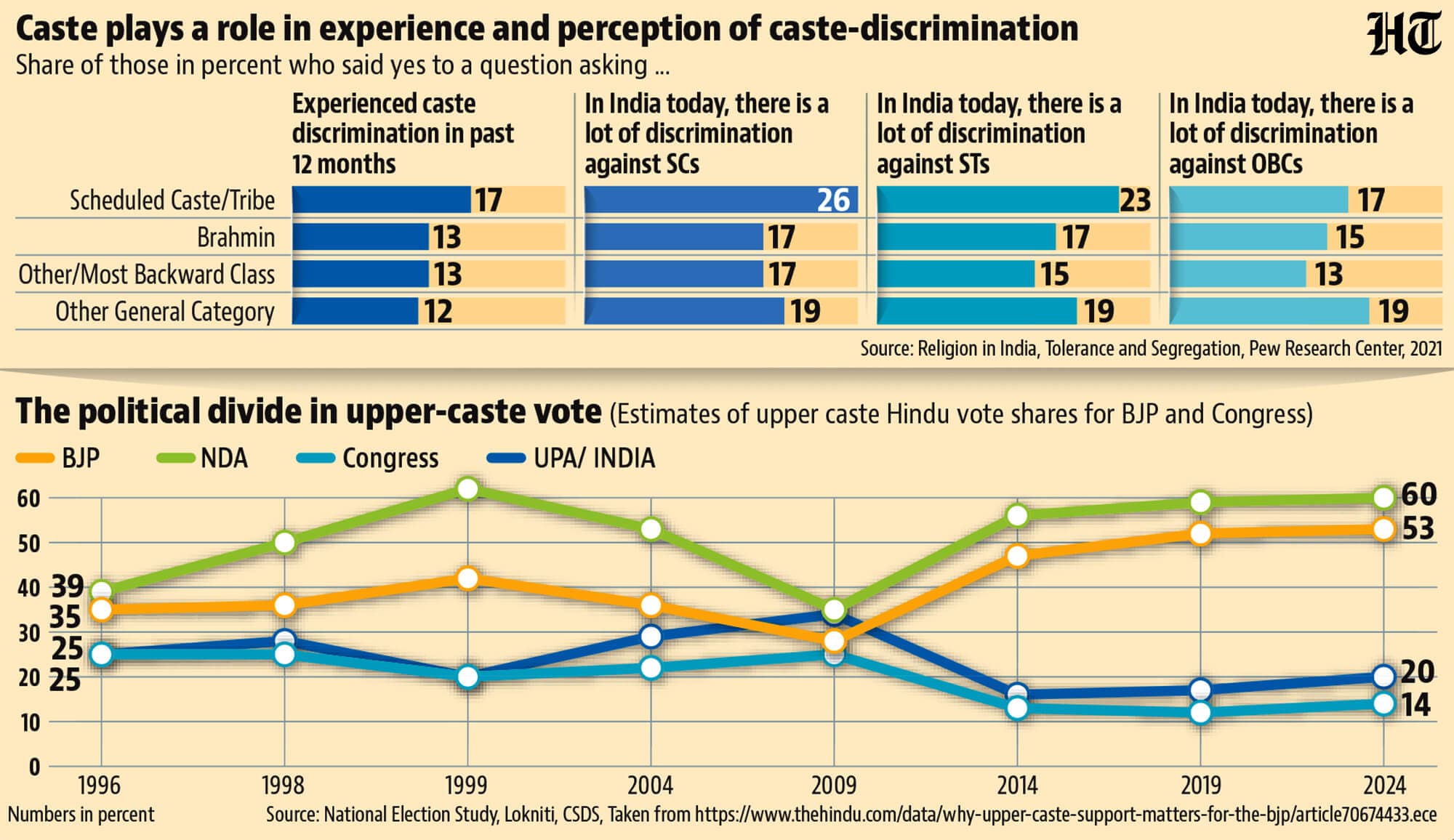
- What makes institutional failures even worse is the shrill politics around itAnybody following social media in the aftermath of the student’s death at IIT Bombay will understand this. While the institute itself has admitted that it erred in jumping the gun over the incident, political echo chambers are amplifying their own narratives. At the crux of the problem is a political and social asymmetry around caste-discrimination in India. Members of the so-called upper castes are less likely to agree that caste discrimination is a real-life problem. Upper castes also support the Bharatiya Janata Party disproportionately. These two socio-political skews compound the bias whenever there is a debate around political and institutional drivers of caste discrimination and its most tragic outcomes such as students killing themselves. These political beliefs have also shaped the debate on things such as debate on the now stalled UGC regulations around caste discrimination in educational institutions, which many upper caste groups believe is a recipe for their wrongful victimization and the weaker castes feel is a necessary intervention to prevent caste-discrimination on campuses.
- Endless rhetoric or shrill debates are not going to solve this problem. What it needs is an institutional reckoning which is not derailed by what clearly looks like institutional apathy. Only the highest levels of the political executive or judiciary can force this process. Right now, both are playing pass-the-ball over the issue, as is evident from the ongoing case on UGC regulations.


Unlock a world of Benefits with HT! From insightful newsletters to real-time news alerts and a personalized news feed – it's all here, just a click away! -Login Now!


