
 E-Paper



The contrast between men and women ODI cricket | Number Theory
Indian women play against England in the ongoing ODI world cup. In Australia, the Indian men’s team make a return to ODI cricket after a while.
Updated on: Oct 18, 2025, 12:24:26 IST

 Prefer HTon Google
Share via


Copy link

Sunday is a big day for one-day international (ODI) cricket for India. At Indore, in a crunch clash, Indian women play against England in the ongoing ODI world cup. In Australia, the Indian men’s team make a return to ODI cricket after a while, kicking off a mouth-watering series against Australia. Beyond that, the similarities dissipate.
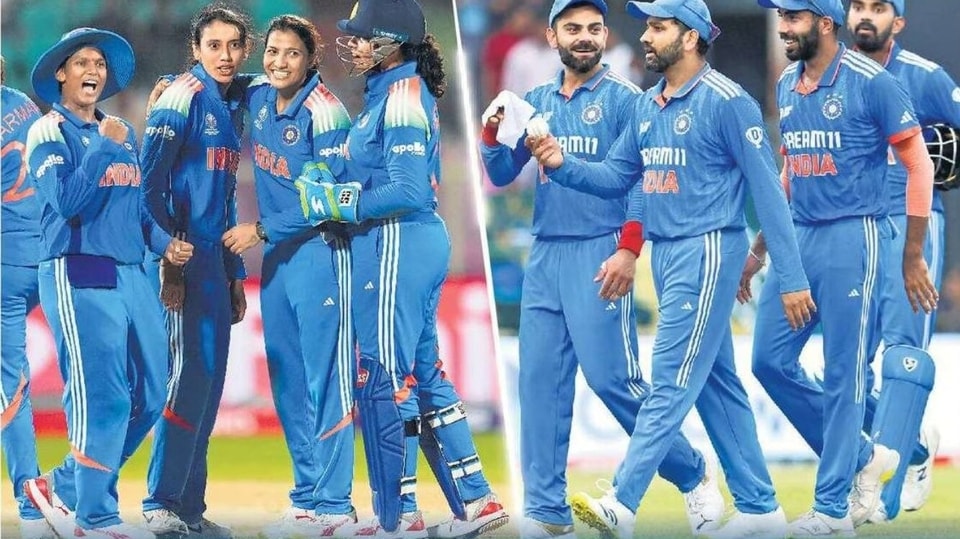
What stands out is the contrast in the evolution and relevance of the ODI format to men’s and women’s cricket. On the women’s side, ODI remains the gold standard by which women’s cricket is measured, and this is a golden period for women ODI records. On the men’s side, the ODI format is fighting for survival and its golden period for records is well in the past, and may never even return.
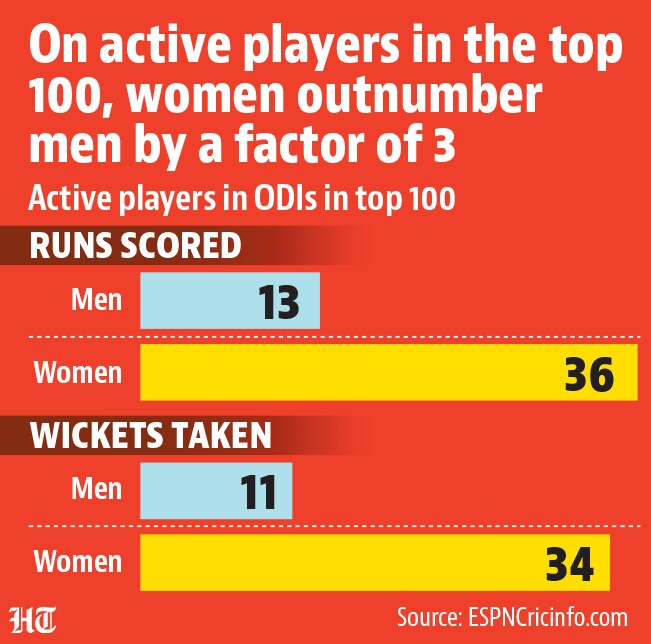
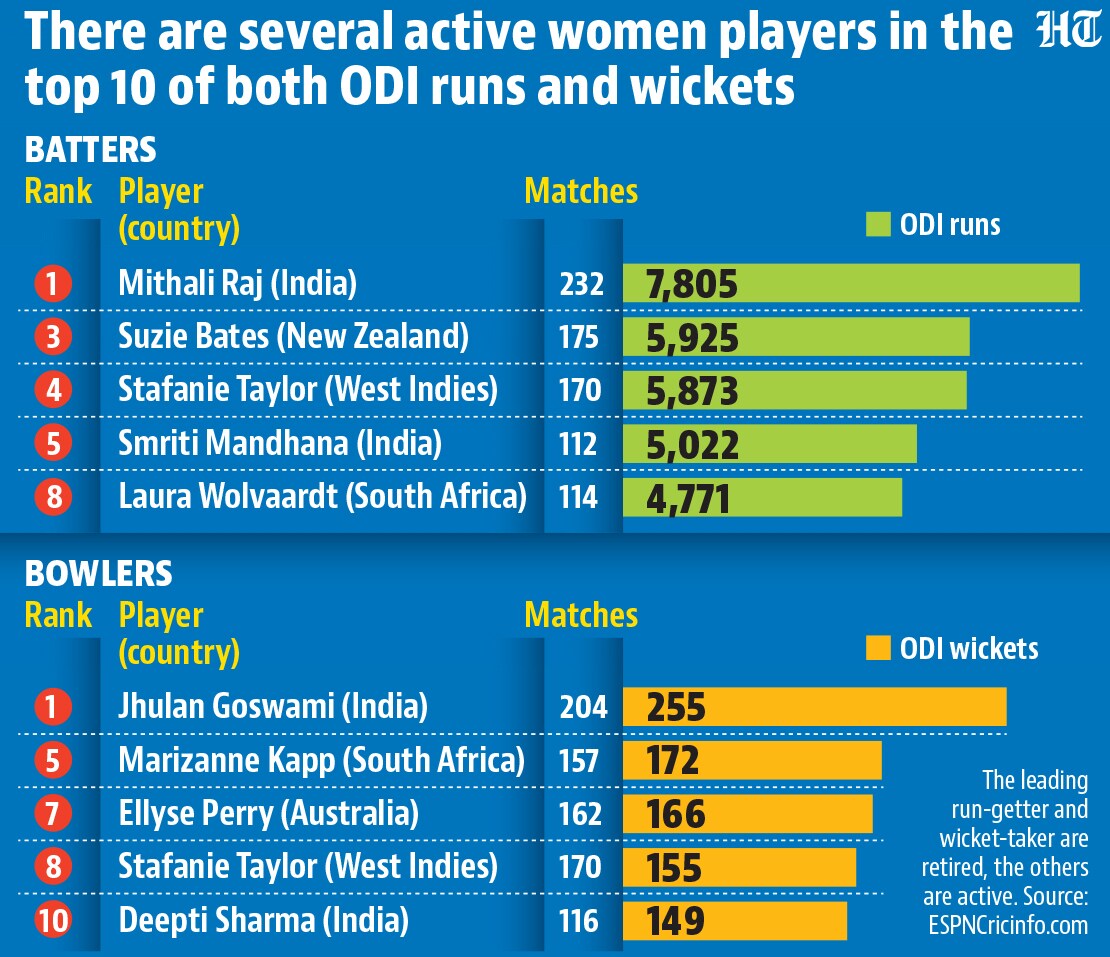
 Thin presentThis contrast is amply visible in the top bracket of ODI performance: the top 100 run-getters and the top 100 wicket-takers in this 50-over format. In this rarefied list, there is a very thin presence of current men players. Only 13 batters and 11 bowlers among each set of 100 played a match in 2025. By comparison, for women, about one-third of this set have played a match in 2025, and some of them are within range of rewriting the record books. Part of this reason is the different journeys taken by men’s ODI and women’s ODI. In general, men play more cricket than women today. In the past, the difference was even more pronounced. As a result, while the runs scored by the top 100 batters among men ranges from 4,780-18,426 runs, it ranges from 1,163-7,805 runs for women. A similar difference is seen on the wickets side.
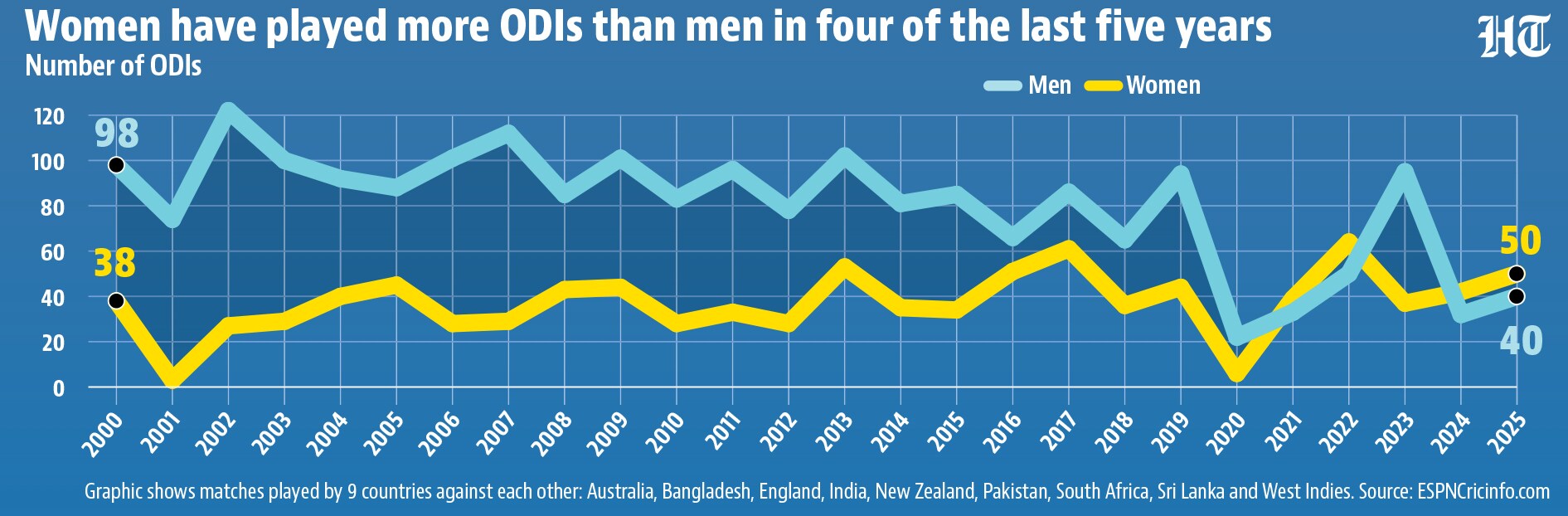
- Diminishing returnsThe first men’s ODI was played in 1971 and women’s ODI in 1973. While that is roughly at the same time, they took different trajectories. Men’s ODI received a push from the Kerry Packer’s rebel series and corporate money coming into the game beginning the mid-1980s. For men, the golden period of ODIs was the first decade of this century. In that decade, the nine leading test-playing nations averaged 96 ODIs against each other per year. But with the advent of the T20 format in the middle part of the decade, this declined to 78 in the next decade and is at a mere 45 this decade. ODI cricket among men now tends to surge in the ODI World Cup years (most recently, 2019 and 2023). In other years, it remains an orphan; so much so that, women ODIs played by these nine countries have exceeded men ODIs in four of the last five years.
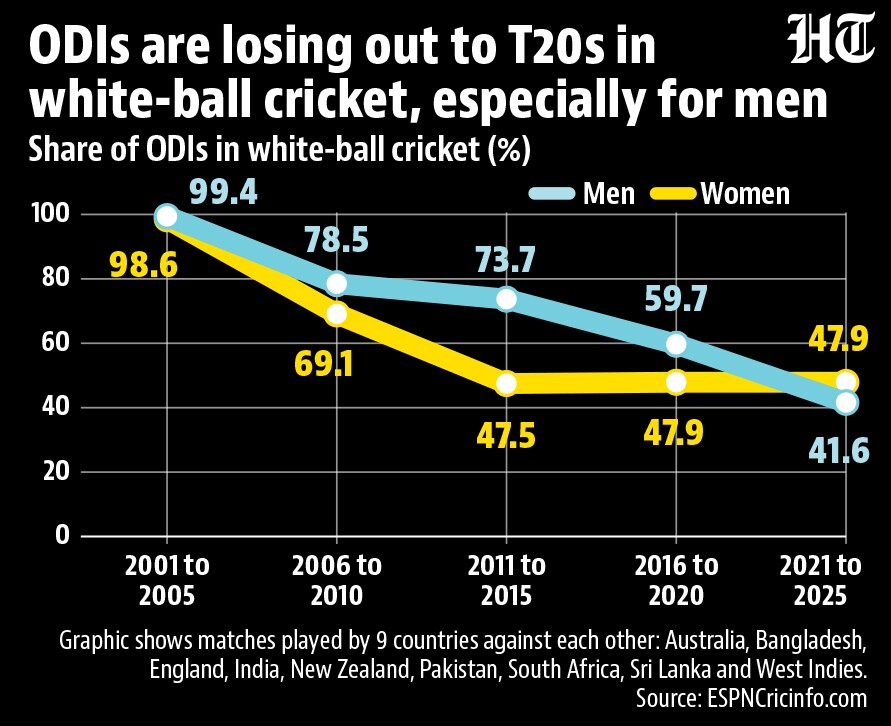
- White-ball reversalIn men’s cricket, and to some extent, even on the women’s side, there’s a tradeoff underway in white-ball cricket. Tests, the original cricketing format spread across five days, retains its primacy in the cricketing calendar—for now. At the same time, a surfeit of city-based T20 leagues have sprung up. In what’s left of the cricketing calendar, ODIs are competing against T20s in the whiteball format, and they are struggling to stay relevant. This tussle is especially pronounced on the men’s side. Of the white-ball matches played by these 9 teams between 2006 and 2010, about 79% were ODIs. This is down to 42% in the latest five-year period. On the women’s side, this has flatlined at roughly half in the last decade.
- Then and nowThis format rejig has many ramifications for individual ODI records. On the men’s side, the most-coveted ODI records may never be broken. The current contenders are far away from the summit. And chances are, the ODI format will never again be as prolific in terms of matches as it once was. On ODI runs, the nearest active player is Virat Kohli at number three, but he’s 4,245 runs away from Sachin Tendulkar. On ODI wickets, the nearest active player is Adil Rashid and he’s not even halfway to Muttiah Muralitharan tally of 534 wickets. The women’s side is completely different. On both runs and wickets, there are four active players apiece in the top 10. Some of them have lengthy careers. But there’s also a Smriti Mandhana in that list, all of 29 and in the prime of her game, and about 2,800 runs shy of Mithali Raj. The men have had their time in the ODI sun. The women’s time is now.

Unlock a world of Benefits with HT! From insightful newsletters to real-time news alerts and a personalized news feed – it's all here, just a click away! -Login Now!


