
 E-Paper



The growing debt of advanced economies | Number Theory
.
Published on: Apr 28, 2025, 08:47:12 IST

 Prefer HTon Google
Share via


Copy link

Debt is back at the centre of global economic debates, particularly in developed nations. In the United States, the Donald Trump administration is citing rising debt to justify spending cuts even as it pursues major tax cuts and new tariffs. In Europe, Germany has relaxed borrowing limits to reverse stagnation and reduce dependence on US security. Public debt is climbing again even as global trade tensions are adding new fiscal and economic risks. How high is rich nations’ debt? Who is funding it? And what does it mean for emerging economies like India? The charts below explore these questions.

The growing debt of advanced economies
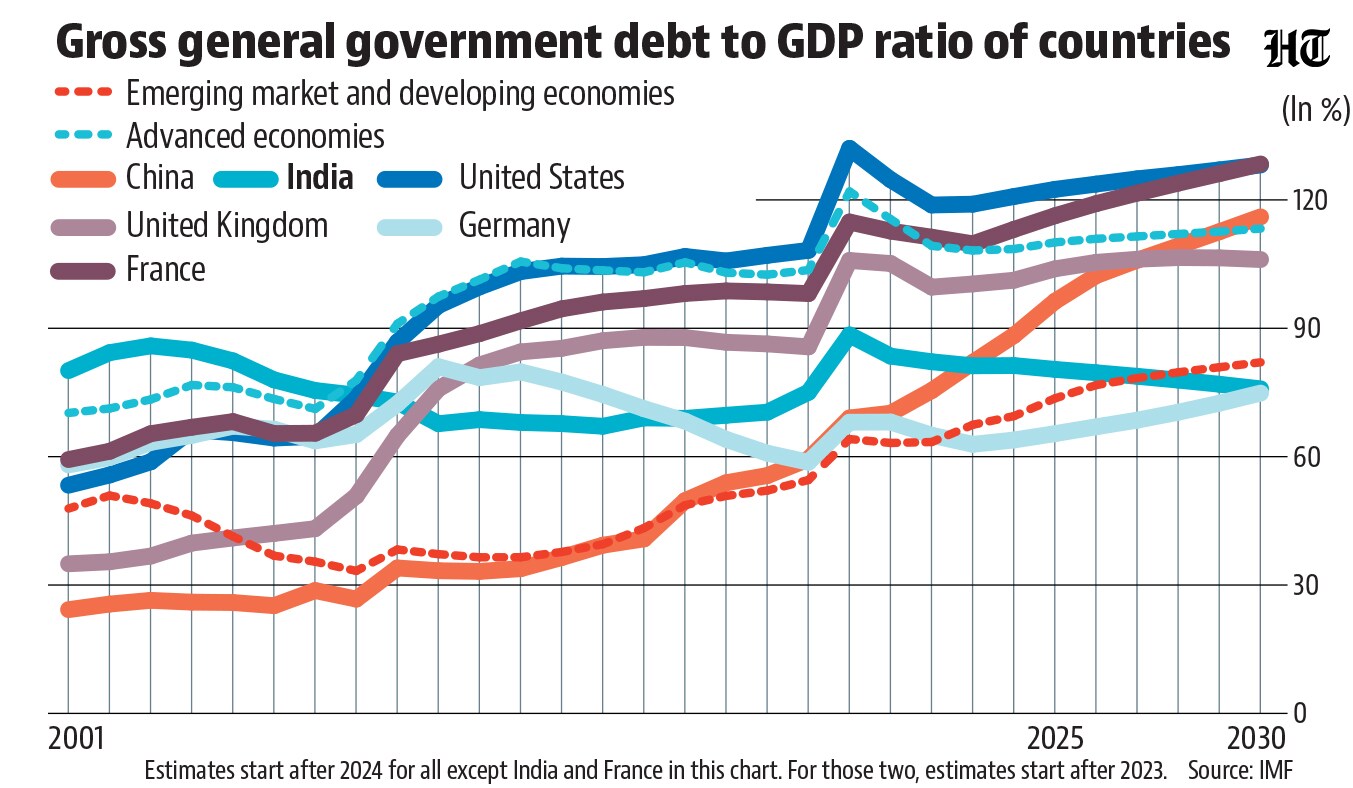
 Wealthy nations’ debt is rising againDebt issuance by advanced economies is set to reach $17 trillion this year, up from $15.7 trillion in 2024, according to the Organisation for Economic Co-operation and Development (OECD). Newer estimates from the International Monetary Fund (IMF) show that global public debt is projected to rise by an additional 2.8 percentage points of GDP in 2025, approaching nearly 100% of global GDP by 2030—surpassing even the peak levels seen during the Covid-19 pandemic. The general government debt to GDP ratio surged during the pandemic and, while it declined slightly in subsequent years, it remains elevated across major economies such as France, the United States, and the United Kingdom, driven by slowing growth, likely higher defence spending, and the fiscal impacts of geopolitical conflicts. The escalation of tariff barriers, particularly by the United States and its trading partners, have also now become a new source of risk as a slowdown in growth could make debt servicing more difficult. According to the IMF, the gross government debt to GDP ratio of advanced economies, will rise from 108.5% in 2024 to 113.3% in 2030. Meanwhile, that of the emerging economies will jump from 69.5% to 82% during the same period.
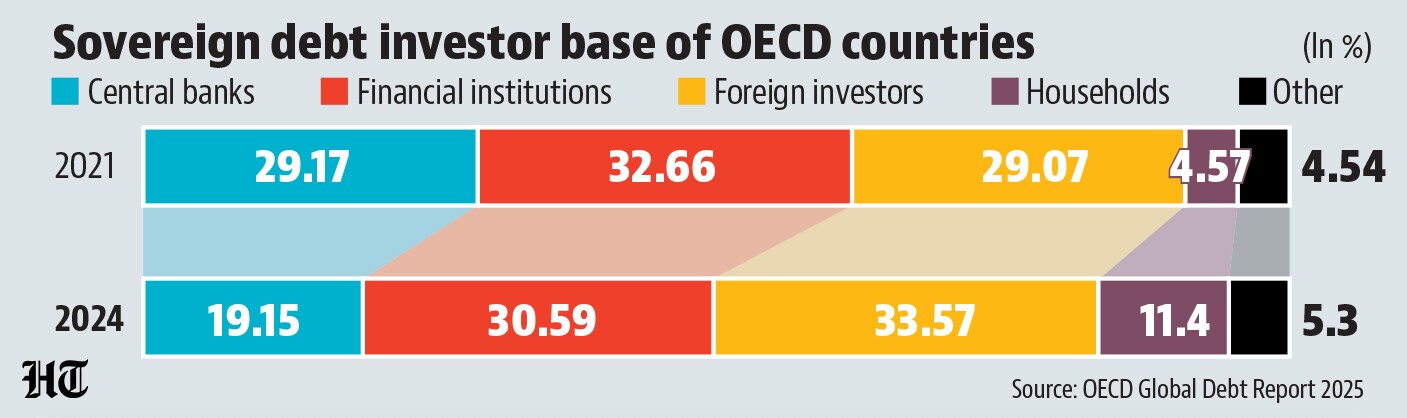
- Who is funding this debt?Who holds this growing debt of wealthy nations matters. The OECD’s Global Debt Report 2025 found that the share of sovereign debt held by foreign investors rose from 29% in 2021 to 34% in 2024, while central bank holdings declined from 29% to 19%. Households, too, have emerged as significant debt holders, with their share from just 4.6% to 11.4%. This shift is making sovereign debt markets more sensitive to sudden changes in sentiment. Unlike banks and central banks, foreign investors and households tend to react more sharply to shifts in economic outlook or policy uncertainty. The IMF’s 2025 Fiscal Monitor warns that higher financial market volatility, triggered by rising tariffs and geopolitical risks, has already led to wider sovereign bond spreads and spikes in yields. In this environment, wealthy nations face growing challenges in managing their borrowing costs. The 2022 UK bond market turmoil remains a cautionary tale. A rapid sell-off by investors drove yields sharply higher, forcing central bank intervention to stabilise markets, but the treasury market still bears the scars of that turmoil.
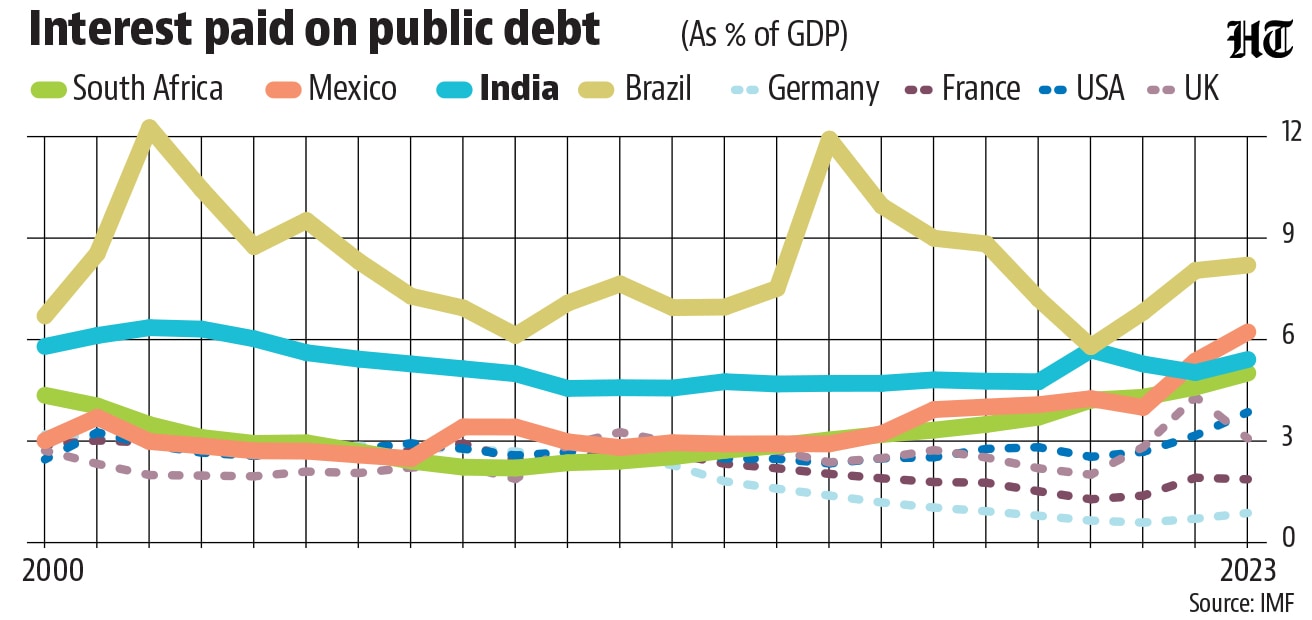
- What does this mean for emerging economies?The spillover effects of rising debt and volatile bond markets in rich nations are already visible in emerging economies. As bond yields in advanced economies rise, global investors tend to pull capital out of riskier assets, widening emerging market yield spreads and pushing up borrowing costs for governments. Emerging economies with high foreign currency-denominated debt are especially vulnerable, as refinancing under tighter conditions becomes costlier. According to the OECD, emerging economies must refinance $4.5 trillion by 2027, much of it issued when rates were significantly lower. India, however, remains relatively insulated. With most of its government debt denominated in rupees, it is less vulnerable to currency depreciation risks. IMF projections show India’s gross general government debt-to-GDP ratio holding steady at around 76% to 80% over the next five years. However, the rising share of government revenue devoted to interest payments can be a cause for worry. In many emerging economies, high interest expenses are crowding out investment in infrastructure, health, and education, undermining long-term growth prospects. Already, the IMF warns that over 23% of emerging markets are either in debt distress or at high risk of distress, a share that could rise if global financial conditions deteriorate further.


Unlock a world of Benefits with HT! From insightful newsletters to real-time news alerts and a personalized news feed – it's all here, just a click away! -Login Now!


