
 E-Paper



Why it's hard to placate or retaliate against the US | Number Theory
.
Updated on: Aug 1, 2025, 08:33:37 IST

 Prefer HTon Google
Share via


Copy link

US President Donald Trump is upset because the US has “over the years, done very little business” with India because of what he believes are high tariffs and non-monetary trade barriers. This is the primary reason Trump gave for imposing a tariff of 25% on India’s exports to the US. The tariffs will definitely hurt, given the fact that the US is India’s largest export market. What exactly is the nature of the US’s trade imbalance with India? Why could not India offer anything to placate Trump to get a better trade deal? Is retaliation an option? Here is a straight data driven take on this.
Why it's hard to placate or retaliate against the US
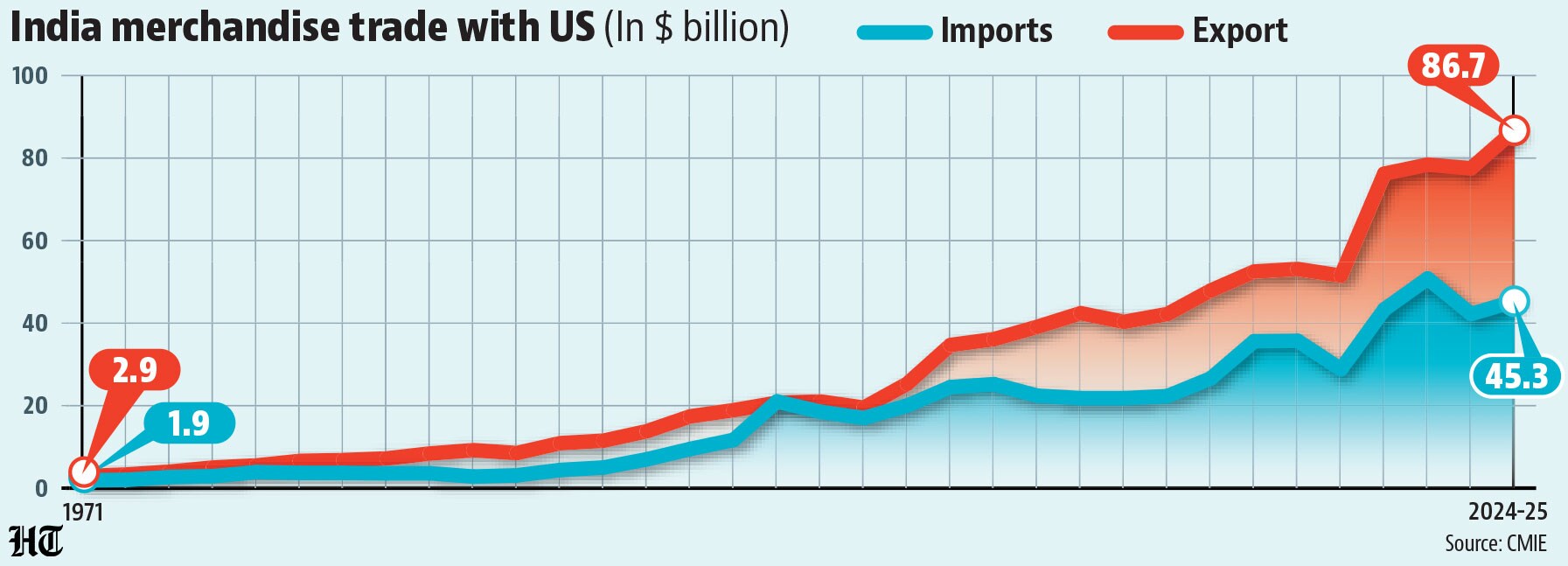
 US’s merchandise trade deficit with India has spiked post-pandemicIndia had a goods trade surplus of $41 billion with the US in 2024-25 according to Centre for Monitoring Indian Economy (CMIE) data. This number was significantly lower and had never crossed $20 billion except in 2014-15 until the pandemic. While both India’s exports to the US and India’s imports to the US have increased in the post-pandemic period, the former has increased more than the latter, taking India’s export-import ratio with the US to 1.9 in 2024-25 from just 1.5 in 2019-20.
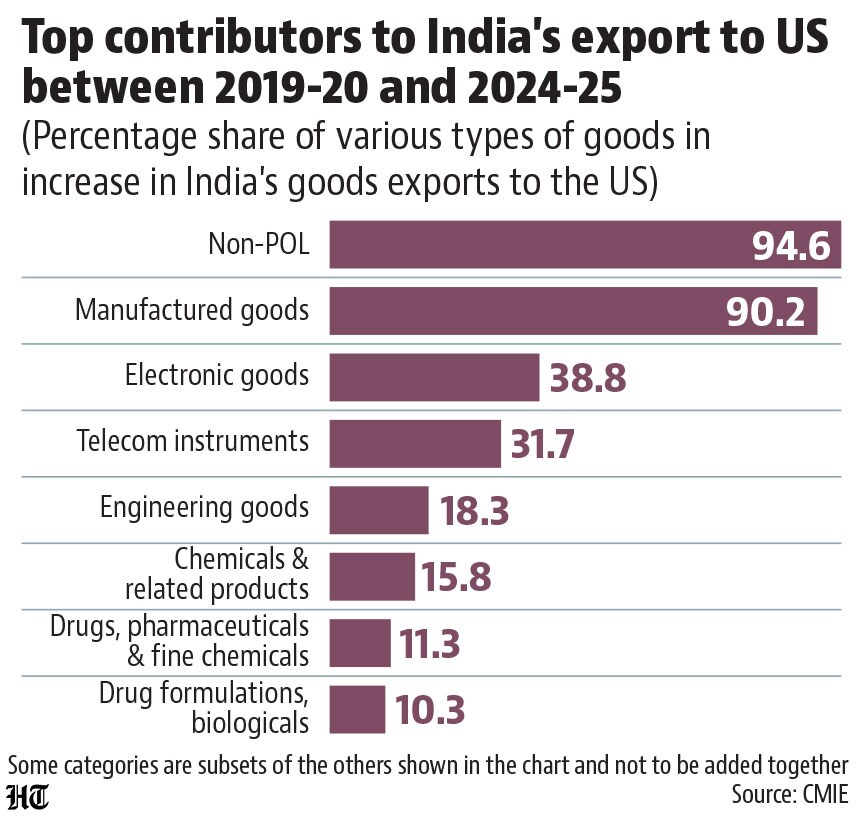
- Much of the recent increase in Indian exports to the US is because of China+1India’s exports to the US increased from $53 billion in 2019-20 to $87 billion in 2024-25. More than 90% of this increase is in manufactured exports to the US. Almost 40% of the increase during this period is just electronics. 32% ($10.6 billion) is just telecom instruments, a large part of which is likely to be iPhones made in India. In fact, this number is likely to have increased. Reuters reported in June this year that Foxconn exported iPhones worth $3.2 billion from India to the US between just March and May and almost all of the iPhones produced in India were being exported to the US, unlike just half of them in 2024. The problem, as far as the US is concerned, is that India’s recent prowess in exporting to the US is not a result of some protectionist strategy, as Trump is alleging, but a larger manifestation of the China+1 strategy leading to some relocation of erstwhile Chinese exports to the US to India. Telecom instrument exports to the US are still exempt from duties in the US unless Trump decides to make an exception and enforce them in India’s case. If that happens, Apple will hurt as much as India because it will have to build another supply line from scratch. Trump’s preferred option, Apple making its phones in the US, will make the product significantly, if not prohibitively expensive. Opening up markets such as agriculture, dairy etc. to protect these export interests would have amounted to punishing/exposing the poor in India to protect the really rich or even foreign players, notwithstanding the foreign exchange gains from this.
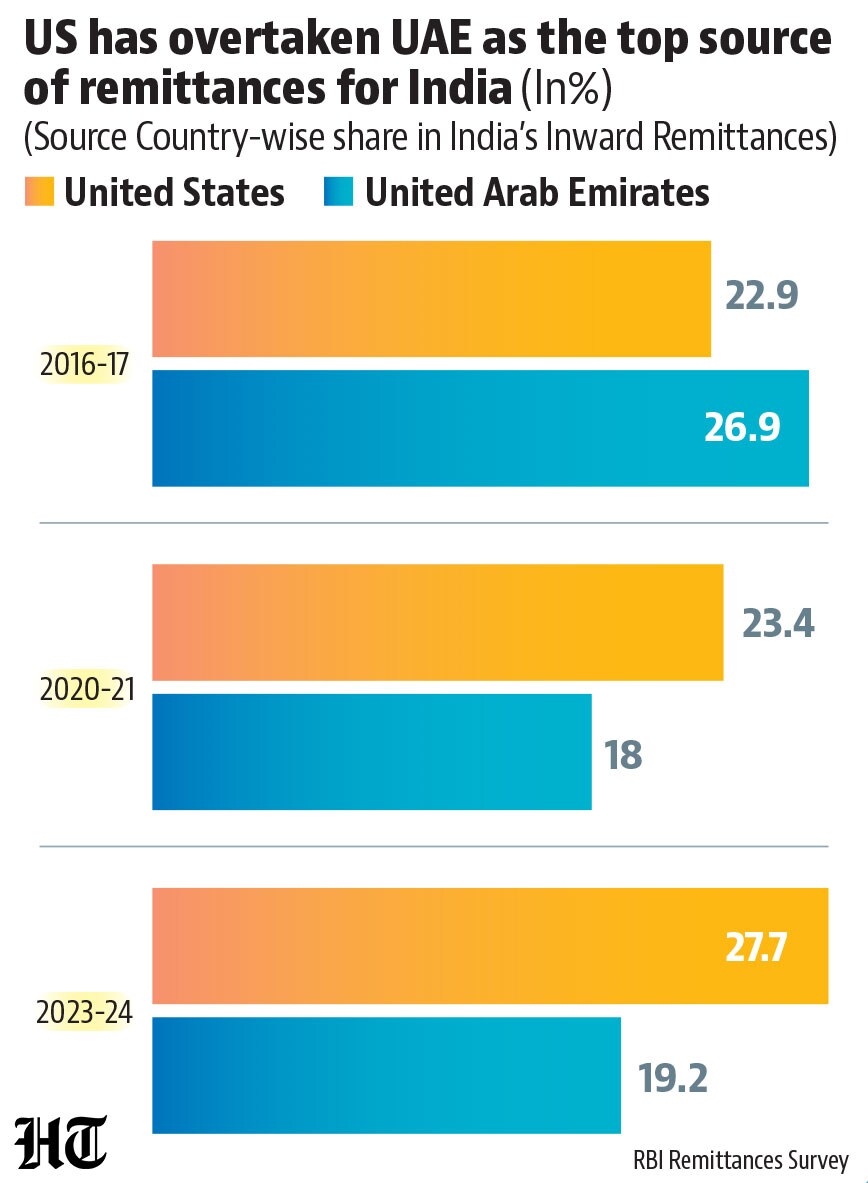
- Retaliation is also not a rewarding option at the momentCan India retaliate against the Trump announcement by, say, imposing counter-tariffs etc.? This is an option fraught with risks because of two reasons. Some of India’s most important exports to the US, such as pharmaceuticals and telecom instruments are still exempt from tariffs and any knee-jerk retaliatory action against the US could jeopardize them. To be sure, there is no guarantee that Trump will not revoke these exemptions, but even this does not justify provoking him further. Additionally, India also gains significantly from non-merchandise trade routes from the US such as remittances and services trade. Dealing with skilled immigrant workers – most Indians working in the US are in this category – is something which has always been a tension in Trump’s larger support group given the resentment against them among the non-educated and relatively poor supporters of Trump and a strong demand for not disrupting the status quo from his big-business supporters. It would be prudent to let these tensions play out rather than precipitate things in a way which strengthens the nativist stream.


Unlock a world of Benefits with HT! From insightful newsletters to real-time news alerts and a personalized news feed – it's all here, just a click away! -Login Now!


