
 E-Paper



A structured alternative to liberal arts: Shiv Nadar University unveils new interdisciplinary BA
SNU introduces a B.A. (Research) in Interdisciplinary Humanities and Social Sciences, integrating various disciplines with a focus on employability.

 Prefer HTon Google


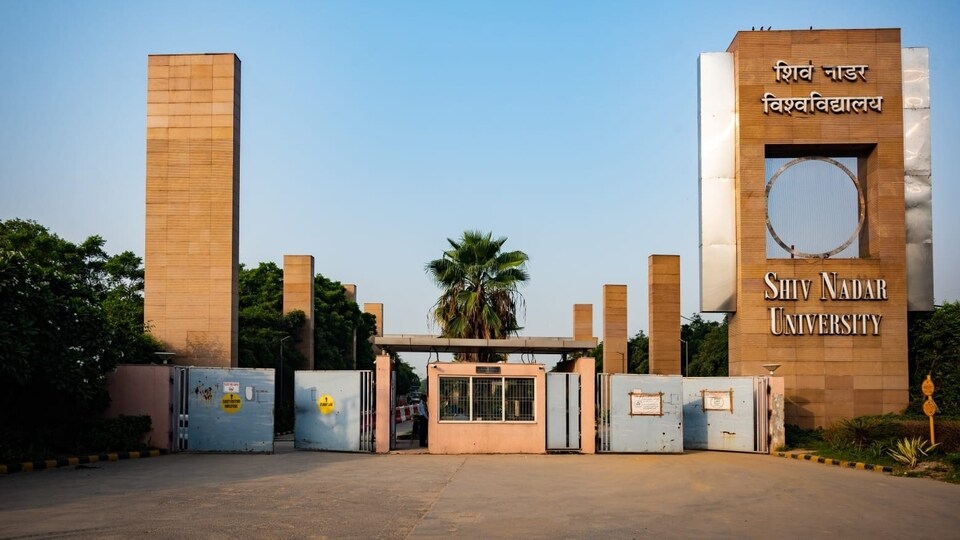
Shiv Nadar University Delhi-NCR has launched India’s first B.A. (Research) in Interdisciplinary Humanities and Social Sciences (IHS)—a four-year degree that aims to do something unusual in Indian higher education: offer the breadth of a liberal arts programme without the academic drift that often comes with complete free choice.
In a conversation with HT Digital, Vice-Chancellor Prof. Ananya Mukherjee said the idea for the programme came from three different constituencies who, surprisingly, wanted the same thing. “Bright school students who excel across subjects but don’t want to be boxed into traditional degrees. Parents who want meaningful education but worry about employability. And employers who keep saying: knowledge is fine, but what can the student actually do?” she said.
The result is a programme that blends humanities, social sciences, STEM, technology and hands-on learning—designed to produce graduates who can think across disciplines and apply their skills in real-world settings.
A structured, not scattered, interdisciplinary pathway
Prof. Mukherjee is clear that IHS is not a liberal arts degree where students roam freely across unrelated courses. The structure is deliberate.
In the first year, the entire cohort studies a common foundation—ethics, philosophy, writing, computational thinking, history and quantitative methods. Only in second year do students enter one of the three interdisciplinary majors:
Sustainability Studies
Archaeology, Heritage and Historical Studies
Society, Culture, Technology
Each major is co-designed and co-taught by faculty from different fields—an archaeologist with a mathematician, an engineer with a sociologist—ensuring students see problems from multiple lenses.
“We wanted to strike the right balance,” she said. “Enough structure so students don’t feel scattered, and enough flexibility so they can explore.”
AI from day one, and ‘experiential’ in every course
One of the standout features is a three-year compulsory AI module. Students begin with foundations in the first year, move to applied AI in the second, and design independent AI-driven projects in the third.
“AI can read documents or analyse data, but interpreting, contextualising and deciding—those remain human,” Prof. Mukherjee said. “We want our students to be able to use AI and think beyond it.”
Every course also includes an experiential component—lab work, field studies, practitioner-led sessions, internships, or project-based learning.
The university’s infrastructure supports this:
A dedicated archaeology lab
A virtual reality lab
An AI centre
Campus-based sustainability projects
Access to the broader Shiv Nadar ecosystem, including The Habitats Trust and the Kiran Nadar Museum of Art
Aligned with NEP, driven by employability
The programme fits squarely within the National Education Policy’s push for four-year degrees, interdisciplinarity, research, and global competitiveness. But for SNU, the real emphasis is employability.
Employers, Prof. Mukherjee said, increasingly expect graduates to articulate what they bring to a team—whether that’s contributing to a sustainability report, understanding digital transformation in SMEs, or analysing data for a policy brief. Being located in Greater Noida gives the university access to industry and corporate think tanks, and tie-ups with organisations such as CII help students work on live projects.
Who is this degree for?
Students from any stream can apply. The university is looking for learners who are curious, comfortable with navigating multiple fields, and excited by both technology and the humanities.
The annual tuition fee is ₹6 lakh, and the hostel and mess charges come to a little over ₹2 lakh per year, since it is a fully residential programme. For this degree alone, SNU is offering 10 full four-year scholarships, alongside its wider financial aid options.
Graduates can branch into corporate sustainability roles, heritage and museum work, policy analysis, legal-tech, communications, public administration, or pursue higher studies including Master’s, PhD, MBA or UPSC. “The programme opens more pathways than it closes,” she said.
At a time when the job market is shifting rapidly and AI is redrawing skill boundaries, SNU’s IHS programme positions itself as a structured, future-ready alternative to conventional BA degrees. “The strongest guarantee we can give students today,” Prof. Mukherjee said, “is deep knowledge, broad skills and the ability to connect technology with society. That is where tomorrow’s leadership will come from.”


Get latest news on Education along with Board Exam, Competitive Exam and Exam Result at Hindustan Times. Also get latest Job updates on Employment News


