
 E-Paper



JEE Mains Exam 2026: IIT Mandi student Rishang Yadav shares preparation tips for NTA JEE Session 1 exam
JEE Mains Exam 2026 Session 1 will begin tomorrow, January 21. Check the preparation tips shared by IIT Mandi student Rishang Yadav.

 Prefer HTon Google


The Joint Entrance Examination (JEE Mains exam 2026 will begin tomorrow, January 21, 2026. The exam will be held across the country in two shifts- first shift from 9 am to 12 noon and second shift from 3 pm to 6 pm.
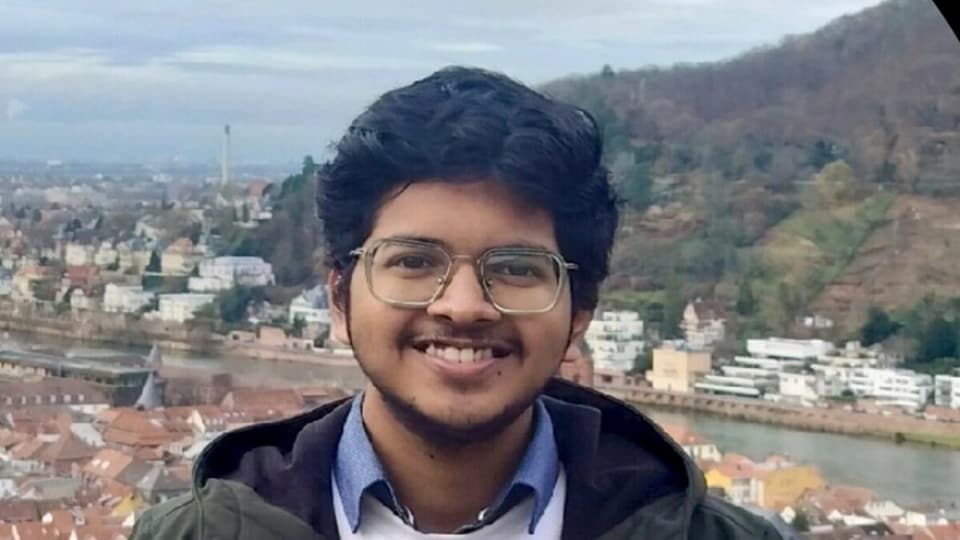
IIT Mandi student Rishang Yadav has shared preparation tips for aspirants ahead of the NTA JEE Mains Session 1 exam. Check here.
1. Start Early and Build Strong Fundamentals
Begin preparation from Class 11 to ensure sufficient time for concept-building across Physics, Chemistry, and Mathematics. Early preparation reduces pressure and allows steady progress rather than last-minute cramming.
2. Follow a Structured Daily Routine
Maintain a disciplined study schedule with focused study blocks of 2–3 hours. Avoid long, continuous sessions to prevent burnout. Regular breaks, physical activity, and short relaxation periods help maintain concentration over long preparation cycles.
3. Prioritise Conceptual Understanding
Focus on understanding concepts rather than memorising formulas. In Physics, visualisation and logical derivation of formulas strengthen problem-solving ability. In Mathematics, concept clarity combined with consistent practice is essential.
4. Adopt a Balanced Subject-Wise Approach
Physics: Visualise real-world applications and understand the reasoning behind formulas.
Chemistry: Combine conceptual learning with smart memorisation techniques; Organic Chemistry relies heavily on logic, while Physical Chemistry demands numerical practice and Inorganic Chemistry requires fact-based revision.
Mathematics: Improve accuracy and speed through regular problem-solving and exposure to diverse question types.
5. Use Previous Years’ Papers as Mock Tests
Attempt previous years’ JEE papers in exam-like conditions. These help in understanding the pattern, difficulty level, and time management required for the actual exam.
6. Analyse Every Mock Test Thoroughly
Mock tests are useful only when followed by detailed analysis. Identify mistakes, understand why they occurred, and practise similar questions from weak areas before moving ahead.
7. Increase Mock Test Frequency Gradually
Start with one mock test every two weeks and increase frequency as the exam approaches. In the final phase, attempting mock tests regularly helps build exam stamina and confidence.
8. Maintain Short Notes for Quick Revision
Prepare concise revision notes or “cheat sheets” for formulas, reactions, and key concepts. These notes are especially helpful during the final weeks before the exam.
9. Focus on Weak Topics Through Targeted Practice
Identify challenging chapters early and spend extra time strengthening them through conceptual clarity, doubt-solving, and repeated practice.
10. Treat the Actual Exam Like a Mock Test
Approach JEE Main with the same mind-set as a practice test. Familiarity with the exam pattern and confidence in preparation help keep anxiety under control on the exam day.
My JEE Preparation JOURNEY :
1. I started preparing for JEE in class 11th, my goal, just like many others, was to join an IIT after graduating from my school. JEE Main was a stepping stone in the process, so I prepared for that as well.
2. After school and coaching, it used to be around 6–7 hours. It was a bit difficult managing both attending classes and self-study, but dividing it into multiple smaller blocks helped me; I wouldn't study for more than 2–3 hours in one go, I took breaks, went out for exercises, and resumed after coming back. This helped me in avoiding any sort of burnouts and I could tackle problems with a fresh mind.
3. As the date of the exam neared, I would attempt previous year papers as mock tests every alternate day, then review my mistakes and up solve them. After that, for the next day, I would focus on the portion I felt less prepared for in that mock test. I used to attempt the mock test in the morning, then chill around for an hour or two, then get back to up solving them. The next day was typically used for revising the weak concepts, divided into three blocks for the three subjects.
4. Physics seemed a lot more intuitive to me than the other two, after all, it was about the rules of the physical world. I used to visualize the concepts in my mind, and derive the mathematical formulae myself to consolidate the understanding. Chemistry had both – a little bit of memorization and a little bit of understanding, the best way to memorize for me was to use acronyms and maintain short notes (or call them cheat sheets). Organic chemistry, particularly, was more or less based on logic and, hence, easier to prepare for. Physical chemistry was about solving numerical quickly, which just demanded practice, and inorganic was about remembering the facts and the know-how behind them.
5. Most difficult topics for me were Rigid body dynamics and Conic sections. My teachers helped me visualize the concepts in both chapters, only thing I did was ask a lot of questions, and once I understood the stuff, I did a lot of practice questions.
6. Apart from standard study material, I often used to do questions from Irodov (Physics), Organic Chemistry by M.S. Chauhan and Balaji's Black Book (Mathematics) by Vikas Gupta.
7. Attempted the paper, made a list of my mistakes, understood where I lacked and then practiced more questions from that portion.
8. It started with a mock test every two weeks. Then towards the end of my preparation, I used to attempt a mock test every single day.
9. I made short notes/cheat sheets which helped me in revising concepts in a relatively short period of time.
10. Treat the exam just like your mock tests, nothing is different except for a few checks at the entrance. Everything else remains the same. There won't be anything in the paper that you haven't seen or done during your preparation. This confidence helps in calming the nerves on the D-day.
(This article is written by Rishang Yadav, Bachelor of Technology - BTech, Computer Science and Engineering Bachelor of Technology (Aug 2023 - May 2027 Batch), IIT Mandi)


