
 E-Paper



Distribute tablets, ensure kids don’t watch inappropriate content: GoM on e-education
Group of ministers headed by Dharmendra Pradhan lists a series of measures to improve e-education


The government should consider distributing devices like electronic tablets to needy students to cover the digital divide even as attention should also be paid to inappropriate content on the internet, a group of ministers (GoM) formed to suggest ways to improve e-education has recommended.
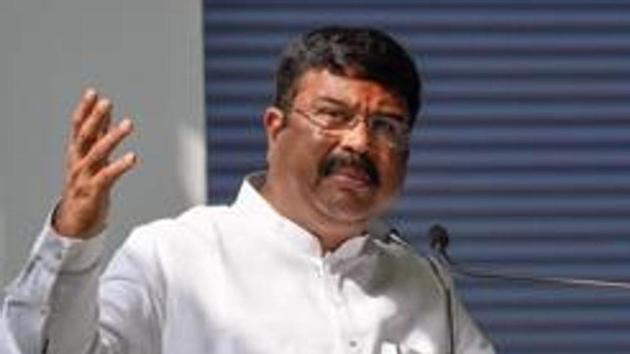
In its report, the panel of ministers headed by Union minister Dharmendra Pradhan has listed a series of measures.“Digital education facility needs to be extended to government and municipal schools in mission mode on a priority basis. It may be considered if capsule programmes of 1-2 hrs for students could be developed and telecast which could help students studying in government schools and in rural areas. It may also be considered if electronic tablets could be distributed to students,” the report has said.
The issue of students, especially from poorer and rural backgrounds, not having proper devices has repeatedly emerged as a key area during Covid-19 pandemic when education has largely been virtual.
In the report, the panel of ministers , which apart from Pradhan, has Arjun Ram Meghwal, Rao Inderjit Singh and Sanjay Dhotre, has also stressed that there is an apprehension in parents that broadband connectivity will be misused by the young where they might be exposed to inappropriate content.
“The Government should make a concerted effort to make such content unavailable through infrastructure meant for education by appropriate regulations,” the panel has recommended.
Among others measures, the panel has said that student-appropriate tools need to be promoted for fun-based learning, such as teaching Indian art and culture through games. The academia, Industry, and people associated with cultural and art-based institutions can be brought on one platform. It has also emphasised fast-tracking of the functioning of the National Educational Technology Forum (NETF) for promoting the use of technology and building a dedicated unit for creating world class digital infrastructure, educational content and capacity for school as well as higher education.
“Information and digital content relating to subjects like physics, chemistry, maths, botany, geology, earth sciences, health and behavioural sciences, civic sense, constitution i.e; non-controversial topics, may be imparted through a digital platform in an easy to access mode,” says the report.
It also pitches for virtual labs concept and technological intervention for promoting local languages of the educational ecosystem.
However, education components that are physical, emotional, and social should not be lost sight of in e-education implementation, the panel has said.
A system for certification of informal online skill courses may also be considered, it has suggested.
The panel has also sought that ways to measure student engagement be developed.This could be achieved by technologies like facial recognition and monitoring of eye movement, it has suggested.


