
 E-Paper





For over a decade, the Hindustan Times Digital Streams – Education Desk has been a trusted source for accurate, in-depth, and timely news on education and careers. We bring the latest updates on board exams, competitive exams, results, employment news, study abroad, scholarships, and school and college admissions, helping students, job seekers, and educators make informed decisions. Our Coverage Areas 1. Board Exams & Results: Comprehensive reporting on CBSE, CISCE, and state board exams (UP, Bihar, Maharashtra, West Bengal, Rajasthan, Andhra Pradesh, Telangana, Karnataka, Tamil Nadu, and others), including schedules, admit cards, answer keys, results, and career opportunities. 2. Competitive Exams: Insights into major exams like UPSC, JEE, NEET, GATE, CAT, SAT, and state and central government services. Exam Results: Timely updates on UPSC, SSC, SBI, IBPS, NTA, IIMs, and other competitive exam results. 3. Employment News: Notifications on government and private sector jobs, vacancies, eligibility, application processes, and results. 4. Study Abroad: Information on top universities, courses, tuition fees, scholarships, visa regulations, and career prospects for international students. Features & Analysis: Opinion pieces, expert explainers, deep-dive reports, and interviews with key figures in education. 5. Breaking Education News: Real-time updates on major policy changes, institutional reforms, and trends shaping the education sector. 6. With a commitment to factual, unbiased journalism, HT Digital’s Education Desk has seen continuous growth in readership, offering credible and engaging content tailored for students, parents, and professionals. Meet the Team 1. Nilesh Mathur – News Editor A journalist with 24 years of experience, including 18+ years at Hindustan Times, Nilesh leads editorial planning, ensures factual accuracy, and enhances audience engagement through strategic content. 2. Papri Chanda – Deputy Chief Content Producer With over a decade of experience in education journalism, Papri specializes in exam-related content, study abroad insights, and education trends. She also explores new opportunities in education that benefit students. 3. Bishal – Senior Content Producer Active in the education and jobs sector since 2019, Bishal focuses on tracking developments, analyzing trends, and crafting informative content for students and job aspirants. 4. Gaurav Sarma – Deputy Chief Content Producer A multimedia journalist with 9+ years of experience, Gaurav is skilled in research-based storytelling, feature writing, and reporting on competitive exams, online courses, and education trends. At Hindustan Times Digital Streams – Education Desk, we strive to be the go-to platform for students and professionals navigating the dynamic world of education and careers.
IIT Madras team develops simple technique to produce graphene platelets
Graphene -- an allotrope to use the technical term -- is a form of carbon that shot into fame in 2010 through the Nobel Prize it earned for Sir Andre Geim and Sir Kostya Novoselov of the University of Manchester.


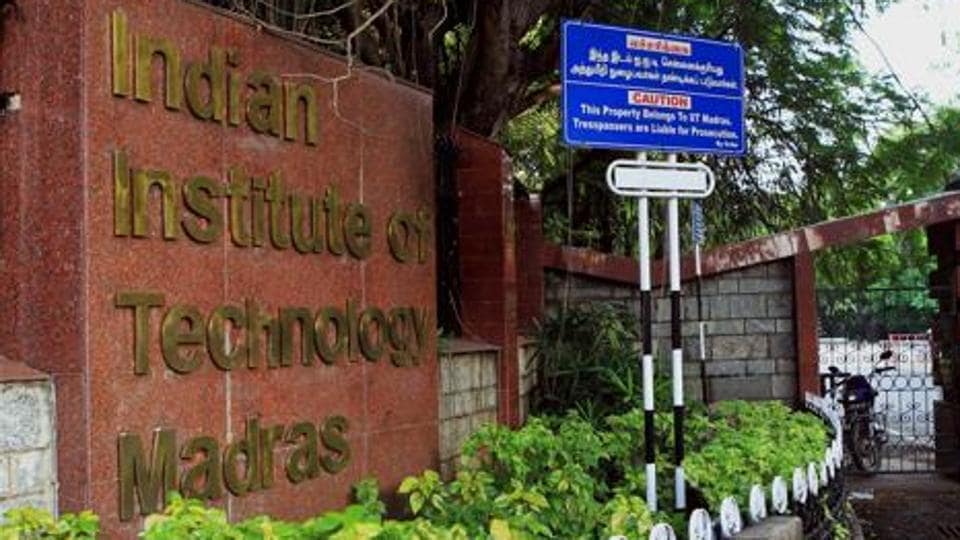
Indian Institute of Technology Madras (IITM) on Thursday claimed its researchers have shown a simple route to producing graphene platelets from graphite.
“They have found that when graphite is suspended in an appropriate fluid and subjected to intense shearing force of machining, the layers of graphite separate into graphene platelets,” a statement from IITM said.
The research was led by Sathyan Subbiah, Associate Professor, Department of Mechanical Engineering and his research student Wazeem Nishad.
Graphene -- an allotrope to use the technical term -- is a form of carbon that shot into fame in 2010 through the Nobel Prize it earned for Sir Andre Geim and Sir Kostya Novoselov of the University of Manchester.
The idea of graphene is, however, not new. The history of this two-dimensional honeycomb shaped carbon spans more than a century of worldwide research. Graphene is the building block of the more commonly known graphite; a one millimetre-thick sheet of graphite is made of 3 million layers of graphene.
“Superior quality graphene is commonly prepared by the exfoliation method,” said Subbiah.
Subbiah looked at exfoliation from an unconventional angle. “Graphite is a lubricant because it is made of layers of carbon that slide over one another. The lubricating action itself would shear the layers off, and cause separation of the 2-D graphene sheets,” he was quoted as saying in the statement.
The IITM researchers suspended graphite in a lubricant liquid containing sodium cholate to prevent the graphite particles from clumping together and subjected the suspension to machining of mild steel using oscillations of a carbide tool.
As Subbiah had expected, the oscillations trapped the graphite to produce graphene flakes as a byproduct of the lubricant with thicknesses in the range of a few nanometers - a nanometre being one billionth of a metre; to put this in perspective, a single human hair is about 60,000 nanometres in diameter.
“Graphene is considered a super material of the century,” said Subbiah. It is one of the strongest materials known; puncturing a pristine single layer of graphene with a pen would require the pen to be pushed by a large car in fifth gear.
In addition, it conducts electricity 13 times better than copper, forms an excellent barrier layer and has an extremely high surface area -- six grams of graphene could cover an entire soccer field, a property that makes it extremely useful in applications like catalysis.
The IITM team’s experiments showed that increasing the time of machining induces defects and disorders in the layers.
“We are now focusing on controlling the stresses and machining parameters to produce defect-free few-layer graphene,” said Subbiah on future directions of his research.


