
 E-Paper



In Darul Uloom, students get a close encounter with other religions too
Those pursuing higher studies get unbiased lessons in different faiths and their philosophies to better understand India’s heritage

 Prefer HTon Google


It may be surprising for many people to know that in one of the most influential Islamic institutions in the world and Asia’s biggest seminary, the Darul Uloom of Deoband, students recite ‘shlokas’ from the Geeta and Ramayana along with Quranic verses to develop a holistic understanding about the religions, culture and heritage of India.
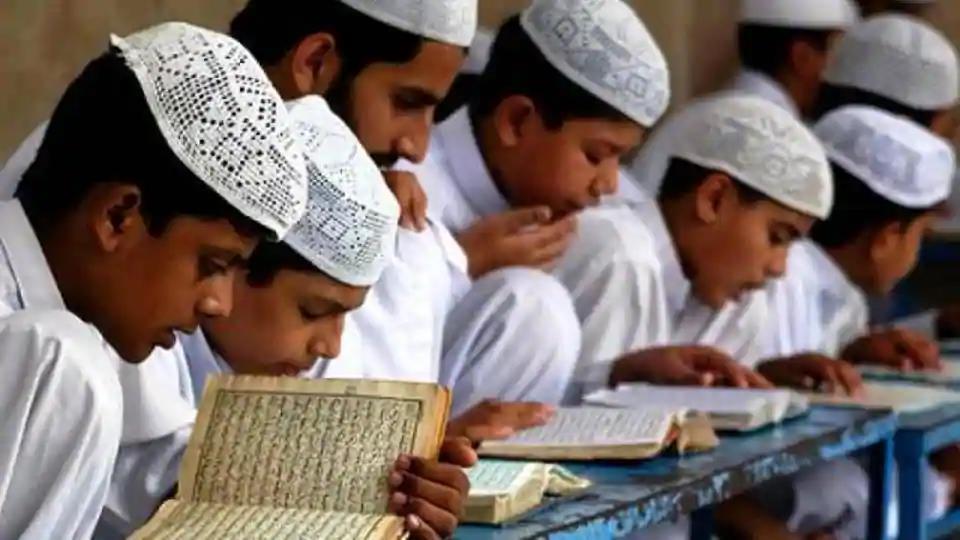
This teaching about Hindu religion is a part of the seminary’s curriculum and is compulsory for those students who pursue specialization course after obtaining the degree of Maulviet (equivalent to graduation).
The seminary’s media in charge Ashraf Usmani proudly said that Darul had 34 departments and over 4,000 students pursued studies here. A student got a degree of maulviet( maulana ) after 8 years of studies and thereafter successful students opted for specialization in literature, fatwa, tafseer (explanation of Quran), Hadith, English, computers etc. It was mandatory for these students to undergo weekly classes about Hindu religion and philosophy to develop a holistic approach about the country’s religions, culture and heritage, including Islam.
Maulana Abdul Hamid Nomani, who also received his degree of Fazil from Darul Uloom and studied all 12 Upnishads, four Vedas, Geeta and the Ramayana, was given the responsibility to develop a syllabus for teaching Hindu religion and philosophy to students. He visits the seminary every week to conduct three-hour classes to enlighten students about Hinduism and its philosophy.
Nomani explained that almost 24 years ago, the Shoora ( executive committee) of the seminary discussed the issue of developing a holistic approach among students about different faiths so that they may develop a better understanding about religions, including Islam, which largely followed what was explained and taught through the eyes and wisdom of Arab culture. It was appreciated by all and this paved the way to teach Hinduism and also other religions, including Christinity and Judaism, in the seminary.
Nomani compiled two books in Urdu named ‘Hinduism Taaruf Motala’ and ‘Hindu Religion: Introduction and Studies’, which were introduced in the syllabus. He has been teaching Hinduism to students for the past 24 years. “ I have compiled the teachings and philosophy of Hindu scriptures like the Vedas, Purana, and Geeta in these books and students easily grasp them because they are in Urdu,” explained Nomani, adding “ The students recite ‘shlokas’ of the Geeta and the Vedas along with the verses of Quran.”
Nomani also claimed that he had 12 Upnishads, 18 Puranas, Valmiki Ramayan, Kamban Ramayan, Indonesian edition of Ramayan and the Vedas in his personal library and had studied them thoroughly before compiling the book in Urdu for students.
Media in charge Ashraf Usmani explained that the course was designed only for students who went in for specialization because they were mature enough to understand the philosophy. Specialization courses are of two to three years and 250 to 300 students opt for them every year.
Maulana Qasim Nanautvi established the seminary on May 30, 1866 and it has a big library with a collection of two lakh books and over 1,500 manuscripts. Librarian Mohammad Shafeeq proudly showed the collection of Rigveda, Yajurveda, Valmiki Ramayan, Tulsidas’ Ramcharitmanas, Manu Smriti, Vishnu Smriti and many other books on Hindu religion in the library, which have been adequately displayed.
“Students who study Hindu religion in their course frequently visit the library to have a look at these books which are in Urdu, Hindi and Sanskrit,” explained Shafeeq.
The idea of the Shoora to develop a holistic approach and understanding among students seems to have paid dividends, as they are excelling in doing a comparative study of Hinduism and Islam.
A young Maulana Ishtiyaque Qasmi suffixed ‘Chaturvedi’ to his name because after acquiring a degree of Maulana from Darul Uloom he studied all four Vedas, Geeta and other Hindu scriptures. He is now acclaimed of being a Sanskrit scholar. Presently, he is doing his research on the philosophy of Geeta and Quran.
“What I have learnt after reading all these religious books is that they all talk about peace and harmony and one God which Muslims call ‘Allah’ and Hindus ‘Param Brahma’. In class, we are always taught to respect other religions and to live in harmony and peace,” Qasmi said.
Another student Maulana Abdul Malik Qasmi said, “Reading these religious books was an eye-opener. It changed my perspective and I found amazing similarity in the teachings and philosophy of both religions.”


