
 E-Paper



Just 24% of Indian households have internet facility to access e-education: UNICEF
The Remote Learning Reachability report, issued by UNICEF on Thursday, expressed concerns over children from economically disadvantaged families struggling with access to remote learning.

 Prefer HTon Google


Just 24 per cent of Indian households have internet connections to access e-education, and there is a large rural-urban and gender divide that is likely to widen the learning gap across high, middle and low-income families, according to a new UNICEF report.
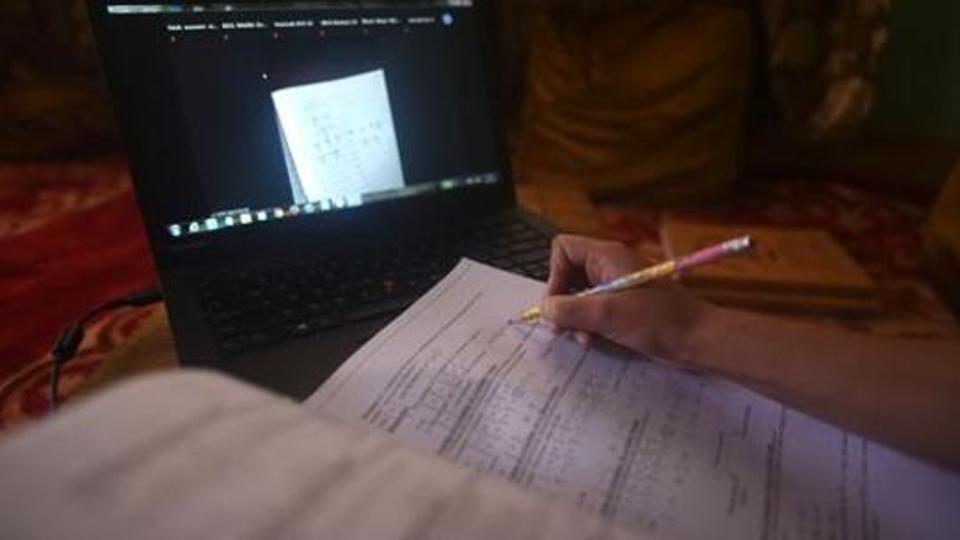
The Remote Learning Reachability report, issued by UNICEF on Thursday, expressed concerns over children from economically disadvantaged families struggling with access to remote learning.
“Available data indicates that approximately a quarter of households (24 per cent) in India have access to the internet and there is a large rural-urban and gender divide. The learning gap is likely to widen across high, middle and low-income families, as children from economically disadvantaged families cannot access remote learning,” it said.
The report further said that students, especially girls, from most marginalised communities do not have easy access to smartphones, and even if they do, internet connectivity is poor, and quality education content is often not available in vernacular languages.
“In India, over 1.5 million (15 lakh) schools have been closed due to the pandemic affecting 286 million (28.6 crore) children from pre-primary to secondary levels, (of which 49 per cent girls) This adds to the 6 million (60 lakh) girls and boys who were already out of school prior to the COVID-19,” the report said.
Noting that the Centre and the state governments have put in place several initiatives through digital and non-digital platforms to facilitate continuity of learning at home, the UNICEF called for multiple pathways and outreach strategies to improve access and use of learning materials by children/students, especially in reaching the unreached because of the digital divide.
UNICEF India Representative Yasmin Ali Haque called for blended approaches involving communities, parents and volunteers to reach children and support their learning in these times.
“We know that in any crisis, the young and the most vulnerable suffer disproportionately. Schools are closed, parents are out of work and families are under growing strain. An entire generation of children have seen their education and learning interrupted,” Haque said.
“Access to digital education is limited and by itself cannot solve the learning gap. Blended approaches are needed involving communities, parents, volunteers to reach children and support their learning in these times,” she said. At least a third of the world’s schoolchildren – 46.3 crore children globally – were unable to access remote learning when COVID-19 shuttered their schools, according to the new UNICEF report released as countries across the world grapple with their ‘back-to-school’ plans.
The report uses a globally representative analysis on the availability of home-based technology and tools needed for remote learning among pre-primary, primary, lower-secondary and upper-secondary schoolchildren, with data from 100 countries. The data include access to television, radio and internet, and the availability of curriculum delivered across these platforms during school closures.
Although the numbers in the report present a concerning picture on the lack of remote learning during school closures, UNICEF warns that the situation is likely far worse.
“Even when children have the technology and tools at home, they may not be able to learn remotely through those platforms due to competing factors in the home, including pressure to do chores, being forced to work, a poor environment for learning and lack of support in using the online or broadcast curriculum,” it said.
The UNICEF urged governments to prioritise the safe re-opening of schools when they begin easing lockdown restrictions.
When reopening is not possible, UNICEF urged governments to incorporate compensatory learning for lost instructional time into school continuity and reopening plans.
“School opening policies and practices must include expanding access to education, including remote learning, especially for marginalised groups. Education systems must also be adapted and built to withstand future crises,” the report said.


