E-Paper



MP: ‘Revolver Rani’ fights corruption in education sector
Rambai is no Kangana Ranaut but the 36-year-old panchayat secretary in Madhya Pradesh’s Damoh district is matching the ‘Revolver Rani’ word for word and action for menacing action.


Rambai is no Kangana Ranaut but the 36-year-old panchayat secretary in Madhya Pradesh’s Damoh district is matching the ‘Revolver Rani’ word for word and action for menacing action.
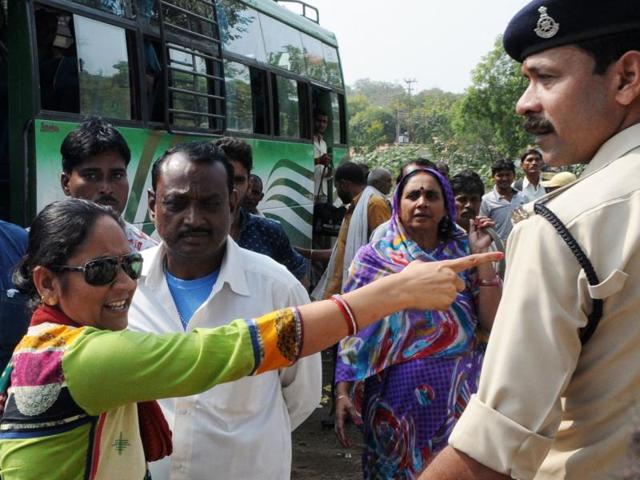
Claiming to be fighting corrupt government officials and anti-socials, Rambai has even earned the nickname of Revolver Rani, a reference to Ranaut’s tough-woman character in the film of the same name.
The 2014 Bollywood film, which met with moderate success at the box office, is also set in the backdrop of Madhya Pradesh’s Gwalior city and the Chambal region, once infamous as a breeding ground of dacoits.
A mother of two, Rambai is the vice-president of the district panchayat in Damoh, around 264 km east of Bhopal. And she makes no bones about her unusual way of taking up issues.
“I fight with conviction that whatever I am doing is right and beneficial for the people. I feel illiteracy and corruption are the major causes of backwardness and even lawlessness. I want to redress these at any cost,” she told HT recently. She had studied up to class ten.
She took up the cudgels against corruption in the education department after she was appointed as the chairperson of the district education committee.
A member of the Mayawati’s Bahujan Samaj Party (BSP), Rambai recently forced the authorities of a government school hostel to return the money they had allegedly taken from boarders for allotting rooms. The video of Rambai went viral on social media in the state.
Then she “forced” a school headmaster in Magron village to return all the money he had allegedly accepted from scheduled caste and scheduled tribe students as ‘gurudakshina’.
A video clip of the episode, which took place in front of the Damoh sub-divisional magistrate, also went viral, adding to her Robinhood image. The SDM was not available for comments.
Though criticised by many for her alleged arm-twisting methods, there are no dearth of fans of Rambai, always dressed in a sari or a salwar.
“I have never seen any public representative like Rambai. She never cares about legal cases she might face because of her activism. Due to her effort, the face of school education has started changing in the town,” said Umakant Pauranik, 65, a resident of the town.
Sushma Jain, another local resident, too said that Rambai “is improving school education not on paper but by visiting different villages and schools of the district.”
Even the district project coordinator in the education department Rajendra Patel defended her “good work” saying that it was not possible for government officials to address all problems.
However, not everyone is impressed by Rambai’s methods.
Many people say that Rambai often abuses and assaults people besides threatening them. Her husband, a farmer, is also facing several cases including one of murder. Police had also recently slapped a case against her for obstructing government officials.
“She is working in the field of education with the help of the muscle power of her husband. There is a terror of this family,” said Damoh MLA Lakhan Singh of the BJP.