
 E-Paper



Survey: 94% child beggars in Jaipur don’t go to schools
The survey by Pratham, an NGO working for the welfare of underprivileged children, found that the child beggars were mostly in the age group of 6 to 14 years.


A survey has found that 94% child beggars in Jaipur do not go to schools, earn between ₹50 and ₹500 a day and spend a major part of their earnings on tobacco addiction.
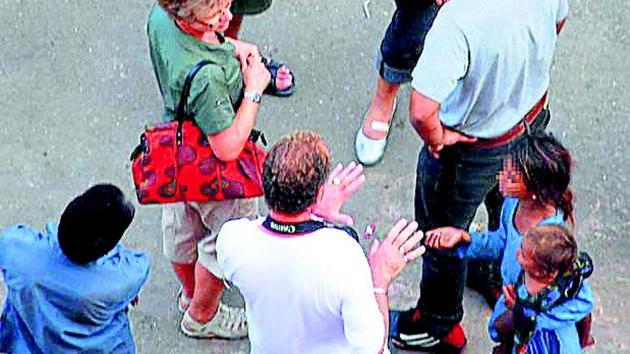
The survey by Pratham, an NGO working for the welfare of underprivileged children, found that the child beggars were mostly in the age group of 6 to 14 years. A majority of them were found begging at traffic lights, shopping malls, temples and tourist places in the city. The survey marked GT mall, Mansarovar footpath, JLN Marg and Shashtri Nagar as major points in the city attracting child beggars.
Krishna Kanwar, city coordinator for Pratham Council for Vulnerable Children, said that the survey found that people of the city are more inclined to give money to the child beggars instead of adult beggars. This tendency encourages child begging and plays with the future of the children, she said. “Child begging is not only a common phenomenon, but also a threat to children as it goes on to restrict them from enjoying their basic fundamental rights,” she said.
Kanwar said, “Begging leads to displacement and frequent migration of children, along with their families, does not allow them to continue their education, eventually forcing them to drop out of schools. This leads to a graver uncertainty of their future, thus forcing them into the vicious cycle of poverty and exploitation.”
According to the survey, about 95% of the child beggars gave their daily income to their parents and guardians. The trend indicates that many children are forced into begging by their families and guardians, as people feel pity towards children and give them alms more readily as compared to adults.
The survey covered 704 child beggars in the city, out of which 171 were of 3 to 5 years of age, 522 were of 6 to 14 years, while 11 were of 15 to 18 years of age. Of them, 41.9% were found to be locals, 42.7% belonged to different districts in the state, while 15.3% were migrants from other states including Madhya Pradesh, Kolkata, Gujarat, Uttar Pradesh and Delhi.
About half of the total number of child beggars (50%) begged for more than six hours a day and 95% begged along with their siblings or parents, the survey stated.


