
 E-Paper



Made for $4 million; earned $4 billion: How world's most profitable film beat Avatar, Avengers; yet never had a sequel
This film from eight decades ago kept on increasing its box office gross courtesy of subsequent re-releases and inflation-adjusted earnings.

 Prefer HTon Google


Which is the most profitable film ever? The answer depends on how exactly you crunch the numbers. Is it the film that earned the most money for its studio or producers, or the one that earned the most in comparison to its budget? Both approaches are correct depending on what you are looking for. But somewhere in between is a third way that looks at a film's earnings over the years and decades. On this parameter, an all-time classic from over eight decades ago sits at the top.
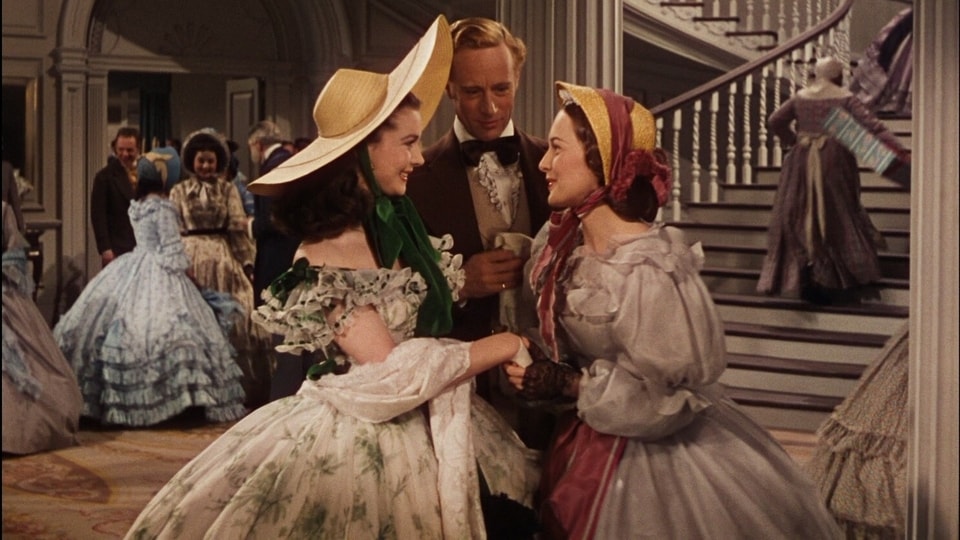
The world's most profitable film
Based on Margaret Mitchell's novel, the 1939 Victor Fleming film Gone With The Wind is regarded as one of the greatest and most influential films ever made. Set against the backdrop of the American Civil War and the Reconstruction era, the film starred Clark Gable, Vivien Leigh, Leslie Howard, and Olivia de Havilland. Made on a budget of $3.9 million, it was among the most expensive films produced at the time. But despite the high budget, it was a runaway hit, earning several times its budget with a final gross of $39 million. But that was not all. The film saw several subsequent re-releases, raking in an additional $165 million over the years.
In 2014, the Guinness Book of World Records estimated that its total inflation-adjusted box office gross was around $3.44 billion. Today, that would be close to $4 billion. This would make it an even bigger hit than Avatar ($2.9 billion) and Avengers: Endgame ($2.7 billion), the two highest-grossing films of all time.
Why was there never a sequel
Despite being an era-defining success, Gone With The Wind never had a sequel. The author Margaret Mitchell was flooded with requests for a sequel for the novel, but she said she left Scarlett and Rhett "to their ultimate fate". The author resisted pressure for a sequel till her death in 1948. In 1975, her brother, who had control of her estate, authorised a sequel that was to be jointly produced by MGM and Universal Studios. Anne Edwards wrote a screenplay that MGM did not like, and the deal collapsed.
In the end, a continuation of sorts was produced in 1994, but in the form of a television miniseries. Titled Scarlett, the series was based on the novel by Alexandra Ripley, itself a sequel to Mitchell's book.


