
 E-Paper



Does your teenager love fast food? Study says brain wiring may be to blame



A new study reveals that adolescents, who are at an increased risk of obesity, have progressively less neural activity in circuits of the brain that support self-regulation and attention.
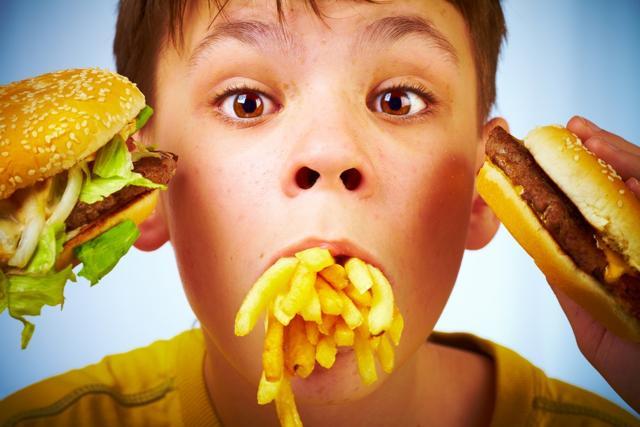
Don’t blame your adolescent kid for eating high-calorie food. A new study says teenagers hooked to high-calorie food may be unable to control the urge for burgers, pizzas and french fries due to an impairment in the brain region linked to self-regulation.
The findings have revealed that adolescents, who are at an increased risk of obesity, have progressively less neural activity in circuits of the brain that support self-regulation and attention.
“The study establishes that risk for obesity isn’t driven exclusively by the absence or presence of urges to eat high-calorie foods, but also, and perhaps most importantly, by the ability to control those urges,” said Bradley Peterson, professor at the University of Southern California.
For the study, reported in the journal NeuroImage, the team used fMRI to observe relationship between neurological activity and risk for obesity in overweight teens compared with lean adolescents.
In adolescents who were obese or who were lean but at high familial risk for obesity, they observed less activation in attention and self-regulation circuits.
Brain circuits that support attention and self-regulation showed the greatest activation in lean/low-risk adolescents, less activity in lean/high-risk participants and least activation in the overweight/obese group.
Catch your daily dose of Fashion, Taylor Swift, Health, Festivals, Travel, Relationship, Recipe and all the other Latest Lifestyle News on Hindustan Times Website and APPs.


