
 E-Paper



78 of 128 blocks in Haryana now in over-exploited category
Faridabad, Gurugram, Kurukshetra, Kaithal, Panipat, Palwal and Sirsa districts are in the category of “over-exploited” now, while most blocks of remaining districts fall in either “critical” or “semi-critical” category.


An alarming situation of fast depleting water tables stares at Haryana with as many as 78 of total 128 blocks in the state are sliding down to the “over-exploited” category — worst stage in the context — due to exhaustion of the groundwater by farmers, especially in the paddy growing areas, reveals a recent assessment of data.
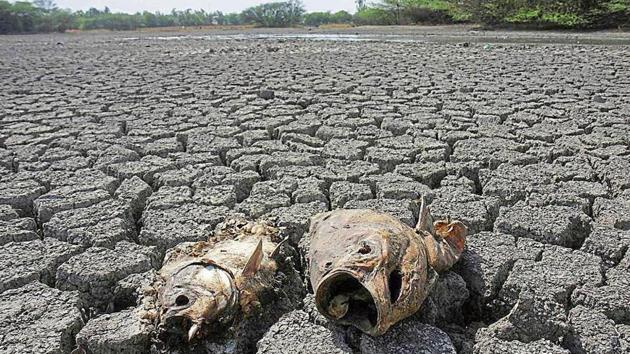
In 2013, Haryana’s 64 blocks out of 119 in the then 21 districts were almost entirely under the category of “over-exploited”. The number of the same has now risen to 78 blocks in 22 districts (Charkhi Dadri was formed by the ruling BJP government in 2016), states the latest assessment conducted on the data collected from 2013 to 2017 by the Central Ground Water Board (CGWB) with the help of groundwater wing of the state agriculture department. Such an assessment is done every four years.
A block is considered to be in “over-exploited” category when depletion of groundwater is more than 100%. The situation is termed “critical” when the exploitation is 90%-100%, “semi-critical” when it is 70%-90% and ”safe” when depletion of groundwater is less than 70%.
According to the said assessment, Faridabad, Gurugram, Kurukshetra, Kaithal, Panipat, Palwal and Sirsa districts are in the category of “over-exploited” now, while most blocks of remaining districts fall in either “critical” or “semi-critical” category. According to the assessment report, while 80 of total 128 blocks have “poor” quality of water, only 26 meet the “safe” standard.
Top officials admit that the fast depletion of fresh groundwater zones due to over-exploitation is “a very serious problem”.
The data shows that state’s average decline in water table from June 1999 to June 2018 has been 18.02 metre, while annual is 0.95 metre. In Kurukshetra, Karnal, Kaithal, Bhiwani, Fatehabad, Panipat, Rewari, Sirsa and Mahendragarh, the depletion of groundwater is due to over-exploitation as well as paddy irrigation.
SALINITY: ANOTHER GRAVE THREAT
Ironically enough, while 19 districts suffer from different degrees of over-exploitation of groundwater, the remaining three districts — Sonepat, Rohtak and Jhajjar — are afflicted with waterlogging and salinity. These are caused by intensive flood irrigation by canal water, less withdrawal of groundwater, canal-water infiltrations, unfavourable sub-soil geology, transportation of groundwater from nearby canals to saline areas, broad syncline-shaped topography and high salinity of groundwater at moderate and deeper depths.
MEASURES REQUIRED
The experts espouse conjunctive use of water (mixing of fresh water with saline groundwater for irrigation), strict check on flood irrigation, tabs on overuse of chemical fertilisers, pesticides, promotion of fish farming, micro irrigation and a strict check on transportation of canal water into fields.
DIVERSIFICATION
Navraj Sandhu, additional chief secretary, agriculture department, admits the seriousness of the situation and says it is in this wake that the state government has also laid a major emphasis on diversification: Shifting from water-guzzling paddy to other crops.
“That was why chief minister Manohar Lal Khattar had announced Rs 2,000 per acre on maize and arhar crops in place of paddy in 50,000 hectare area in seven blocks of Karnal, Kaithal, Jind, Kurukshetra, Ambala, Yamunanagar and Sonepat districts,” she says, while stressing on several other incentives of drip-irrigation method.


Stay updated with all the Breaking News and Latest News from Mumbai. Click here for comprehensive coverage of top Cities including Bengaluru, Delhi, Hyderabad, and more across India along with Stay informed on the latest happenings in World News.


