
 E-Paper



Festivals, fairs significant part of Gurugram’s intangible heritage
Lord Gugga is revered by both the Hindu and the Muslim communities, and though originally a Rajput himself, he is said to even have practised both religions.


Most of us living in urban areas of Gurugram are not aware of the famous festival falling in the Hindu month of Bhadra (August-September) called Gugga Naumi, which has been celebrated in Gurugram and surrounding regions of Haryana for centuries.
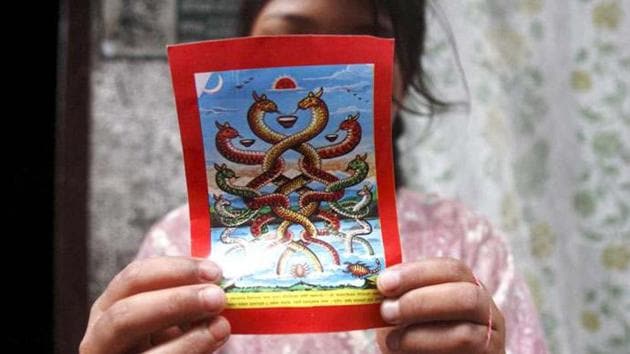
Gugga Naumi is a celebration held in reverence of snakes. This religious celebration is commended all around Haryana in the period of August and September, and even celebrated in some other parts of north and west India, including Rajasthan, Uttar Pradesh, Himachal Pradesh and Punjab. The Gurgaon District Gazetteer of India mentions its celebration in various towns of the Gurgaon district namely, Gurugram, Farrukhnagar, Pataudi, Nanu kalan, Gurarora and Islampur, besides Bissar, Akbarpur, Rethaura and Hathin in the surrounding districts.
The Gugga Naumi festival held in Farrukhnagar at Khurampur Khera last week was elaborately organised by the local committee and included several wrestling (dangal) competitions with participants from nearby villages.
Fairs are held in all surrounding villages around Gugga’s shrine every year on the day of Gugga Naumi. Locals who believe in Gugga and who are not able to attend the fair or visit his shrine even go out to find snake holes where they offer kacchchi lassi and sewian.
Architecturally, Gugga’s shrine can be distinguished in the village areas as a square shaped shrine with minarets on four sides and a dome in the central area. It is called Mari as also mentioned in the Gurgaon Gazetteer. Various pujas and processions are organised on this day in Gugga Mari temples. Gugga Katha, stories about his birth and life as well as his valour, are narrated as part of the puja.
It is also said that some devotees take the earth from the area around Gugga’s shrine and keep it in their houses as it is said to provide protection from snakes.
This religious festival is associated with snake worship on Krishnapaksha, 9th day of Bhadra month usually falling nine days after the festival of Rakhi. It fell on August 25 this year. Some Hindu devotees also untie their rakhis or raksha sutra on the 9th day and then tie it to Lord Gugga as an assurance of protection from any injury or harm. Hence, it also has a strong association with the Rakhi festival.
Several stories related to Gugga are linked with this festival. He is called as Gugga Pir by some, and Zahir Pir by others or even Baggarwala by few more who associate him with Bagar near Ganganagar in Rajasthan where he said to have ruled in the 12th century. He is revered by both the Hindu and Muslim communities in these areas and though originally a Rajput himself, he is said to even have practised both religions during his lifetime as per the gazetteer. The name may refer to as Gugga Bir (Veer meaning hero) or Gugga Pir (Pir meaning saint). He is said to have an extraordinary power of curing dangerous snake bites.
Such festivals are significant part of Gurugram’s intangible heritage. While their practice and relevance in urban life may not be much, they need to be recorded and documented in detail as part of our folklore and history. INTACH’s intangible heritage division is focusing on documenting this intangible heritage of Gurugram and Haryana as part of a nationwide initiative to map the country’s intangible heritage. Oral recordings and video recordings of such local festivals are extremely important and provide valuable, authentic records for Gurugram’s cultural heritage.
(Shikha Jain is state convener, INTACH Haryana Chapter and member of Heritage Committees under ministries of culture and HRD. She is co-editor of book ‘Haryana: Cultural Heritage Guide’, and director, DRONAH (Development and Research Organisation for Nature, Arts and Heritage)

Stay updated with all the Breaking News and Latest News from Mumbai. Click here for comprehensive coverage of top Cities including Bengaluru, Delhi, Hyderabad, and more across India along with Stay informed on the latest happenings in World News.


