
Sign in

Gurugram streets most unsafe between 6pm and 11pm, shows police data

The Gurugram police have decided to increase vigilance, patrolling and set up additional checkpoints to control these crimes, following the crime mapping exercise. Also, they cited lack of streetlights as major cause of petty crimes after dark.

Updated on: Jun 29, 2018, 11:04:47 IST
Hindustan Times, Gurugram | By
Share
Share via
  • facebook
  • twitter
  • linkedin
Copy link
  • copy link

The police are going to increase their vigil on city roads and streets between 6pm and 11pm, as most of the street crimes take place during this interval, as per data collated and analysed by the Gurugram police.
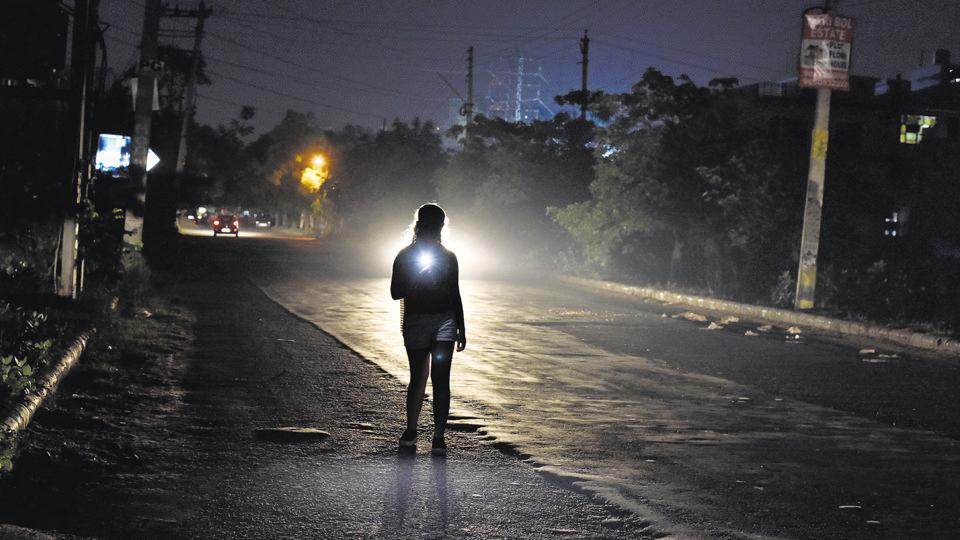
Lack of streetlights cited as a major reason for increasing petty crimes after dark. (Sanjeev Verma/HT PHOTO)

The police have decided to increase vigilance, patrolling and set up additional checkpoints to control these crimes, following the crime mapping exercise.

The major crimes identified were carjacking, snatching, and robbing people on the pretext of offering them a lift.

Station house officers (SHOS) of 37 police stations across the city have submitted their report to the commissioner of police, KK Rao, highlighting the petty crimes in their areas and crime-prone spots in their jurisdiction.

Immediately after taking charge, Rao stressed on a crime mapping exercise to identify areas where incidents of snatching, vehicle lifting, robberies and thefts are taking place frequently.

Rao had held a meeting with all the crime teams and SHOS of the police station and were directed to submit their report after conducting crime mapping of their respective areas.

According to the report, incidents of snatching are regularly witnessed and reported from Old Delhi Gurgaon Road, Railway Road, Civil Lines, MG Road and Golf Course Road, and these have been marked snatching-prone areas.

“As per my directions, police teams are working on different methods and technology to curb crime on streets and the results are good. Incidents of vehicle theft are down by 50% and people will witness significant changes soon,” Rao said.

The police said that a reason that such activities take place from 6pm-11pm could be that people leave their offices after 6pm and residents go for walks after 8pm. Also, the city lacks streetlights, which is a major cause of petty crimes after dark, police said.

Article image

Rao has directed all crime teams and station staff, including the station house officers, sub-inspectors and assistant sub-inspectors, to conduct intensive patrolling in their respective areas in the given time period. The 18 assistant commissioners of police (ACP) and seven DCPS have been directed to make random inspections to ensure their teams are on the street and are undertaking regular patrolling.

Around 1,400 constables have joined the city police in last two months and another 1,000 special police officer units are likely to join soon.

With the increase in their strength, the police have increased checking and patrolling across the city, including areas where there is high footfall, such as Sector 29, Golf Course Road, Sohna Road and near Metro stations.

As many as 84 checkpoints have been set up across the city.

Also, to streamline traffic flow in the city, Rao announced the installation of 40 traffic booths across the city. Around 100 traffic officials will be deployed in these booths.

  • Leena Dhankhar
    ABOUT THE AUTHOR
    Leena Dhankhar

    Leena Dhankhar is Senior Editor and Bureau Chief, Gurugram, at Hindustan Times, where she has spent over 17 years chronicling the transformation of one of India's fastest-growing urban regions. From starting her career as a crime reporter to leading the Gurugram bureau, her journalism has been defined by investigative reporting, in-depth storytelling and an unwavering focus on public interest. Over nearly two decades, she has reported extensively across crime, politics, civic governance, elections, real estate, environment, courts, sports, education and entertainment, covering Gurugram, Faridabad, Nuh and Palwal. Her reporting has exposed several major scams and systemic failures, including insurance frauds, waste management irregularities, illegal arms manufacturing units in Nuh, illegal mining in the Aravallis, organised crime networks and governance lapses affecting millions of residents. Known for her investigative work and exclusive stories, Leena has reported on high-impact national issues, including the Nicaragua charter flight carrying Indian migrants that was turned back amid allegations of human trafficking, exposing the growing network of illegal immigration rackets. Her work has also focused on gang wars, prison administration, juvenile crime, women and child protection systems, the functioning of the Juvenile Justice Board and Child Welfare Committee, and environmental challenges such as pollution, waterlogging and deteriorating civic infrastructure. Beyond hard news, Leena has extensively documented Haryana's rich heritage, forests and wildlife, bringing attention to the state's historical landmarks, biodiversity, conservation efforts and ecological challenges through immersive reportage and feature writing. Her journalism has consistently gone beyond breaking news. She has documented Gurugram's rapid urbanisation through long-form narratives and enterprise reporting on issues ranging from pothole-ridden roads, flooding and waste management to the changing social fabric of India's Millennium City. She also writes widely read feature columns, including The Outsider, Changemaker, and Concern for Gurugram, profiling people, places and ideas shaping the city's identity. Leena is the author of Gurugram School Murder, published by Juggernaut Books, a deeply reported account of one of India's most high-profile school murder investigations. She is currently working on her second book, an investigative work exploring some of India's most significant scams and fraud investigations. Beyond print journalism, she has expanded her storytelling through public speaking and digital media. She is a TEDx speaker and has produced podcasts exploring Gurugram's transformation, civic challenges and untold stories. Her work reflects a commitment to narrative journalism that combines rigorous reporting with compelling storytelling. A law graduate with an MBA in Human Resources, Leena brings a multidisciplinary perspective to her reporting, particularly on governance, public policy and legal affairs. She has travelled extensively across India to pursue investigative assignments, often reporting from remote locations and conflict-prone areas in search of stories that matter.Read More