
 E-Paper



A promising technique could make blood types mutually compatible
That would ease the demand for type-O donors


EVERYONE HAS a blood group, defined by the characteristic chains of sugar molecules, or antigens, that protrude from their red blood cells like spikes on a hedgehog’s back. Not all these groups are created equal. In the roughly 50% of people with type O, the sugars are harmless, allowing their blood to be transfused into any needy body. In those with A and B blood groups, however, the antigens can trigger harmful immune reactions in someone with a different group. Those with AB blood, who have both types of antigen, can only donate blood to one another.
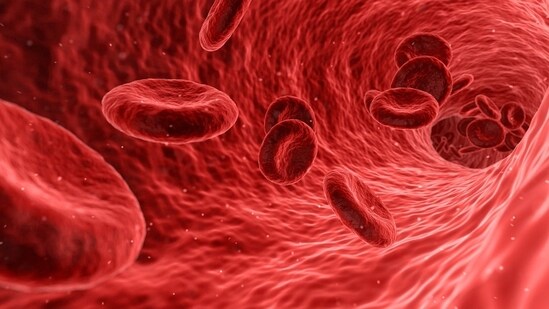
Supplies of O are therefore in very high demand. If other groups could be transformed into O, the supply of universal donors could be instantly doubled. Now researchers reckon they might have found a way to do it, thanks to a new mix of enzymes found inside gut bacteria.
Scientists have experimented with enzymes, biological molecules that facilitate biochemical reactions, to remove A and B antigens to make O-type blood for decades. But enzyme-treated blood can still be incompatible. Writing in Nature Microbiology on April 29th, Martin Olsson, a transfusion-medicine consultant at Lund University in Sweden, and Maher Abou Hachem from Denmark’s Technical University argue that the problem could stem from lengthened antigen sugar chains, called extensions, that are not targeted by current enzymes. That led the team to hunt for enzymes capable of removing the antigens as well as their extensions. They settled on enzymes from Akkermansia muciniphila, a bacterium that feasts on the protective mucus lining the gut because mucus contains sugars similar to those on red blood cells.
Their idea held up: using a mix of different A. muciniphila enzymes, the team removed both the antigens and their known extensions. To test if that made any difference to compatibility, they ran tests that combined the treated red blood cells with plasma, the watery component of blood, from other blood groups. If antibodies in the plasma bind to antigens in the treated blood, the test yields a positive result, indicating incompatibility. A negative result suggests donation is safe. When type B blood cells were treated with the enzyme mix, the negative rate was between 91% to 96%. When the extension-targeting enzymes were left out, the rate was around 80%, implying that the new extensions were at least partly responsible for the difficulty in making universal blood. Though rates of 100% would be ideal, some margin of error may be acceptable if negative results only produce weak immune reactions—something clinical trials could establish.
But the job is not yet done. When A blood group cells were treated with the enzymes, the negative rate was closer to 50%. This is better than the 17-20% they achieved without extension-targeting enzymes, but is “not really the universal concept”, says Dr Olsson. It is possible that some type-A extensions may be resistant to the current mix of enzymes; Dr Olsson reckons an improved recipe may prove more effective. But there are other limitations too: some people’s blood also contains Rh, a group of undesirable but less dangerous protein antigens whose presence turns a “negative” blood type such as AB- into a “positive”, such as AB+. As they contain no sugar molecules, they are unaffected by the enzymes. Removing Rh as well may need another approach entirely.
If these hurdles can be overcome, the benefits could be substantial. Several countries, including America and Britain, have faced serious blood shortages in recent years, and ageing populations are expected to increase the demand for blood yet further; in high-income countries, more than half of transfusions go to people over 60. Being able to dispense with group-matching would allow blood banks to call on donors of all kinds when faced with an urgent shortage, not just those with O-group blood. Waiting lists for organ transplants could also be shortened, as organ donors and recipients currently need to have compatible blood groups. Never would a sudden rush of blood lead to more justified excitement.
© 2023, The Economist Newspaper Limited. All rights reserved. From The Economist, published under licence. The original content can be found on www.economist.com

Catch your daily dose of Fashion, Health, Festivals, Travel, Relationship, Recipe and all the other Latest Lifestyle News on Hindustan Times Website and APPs.


