E-Paper



India is making steady progress in healthcare, says UNICEF’s Yasmin Ali

 Prefer HTon Google


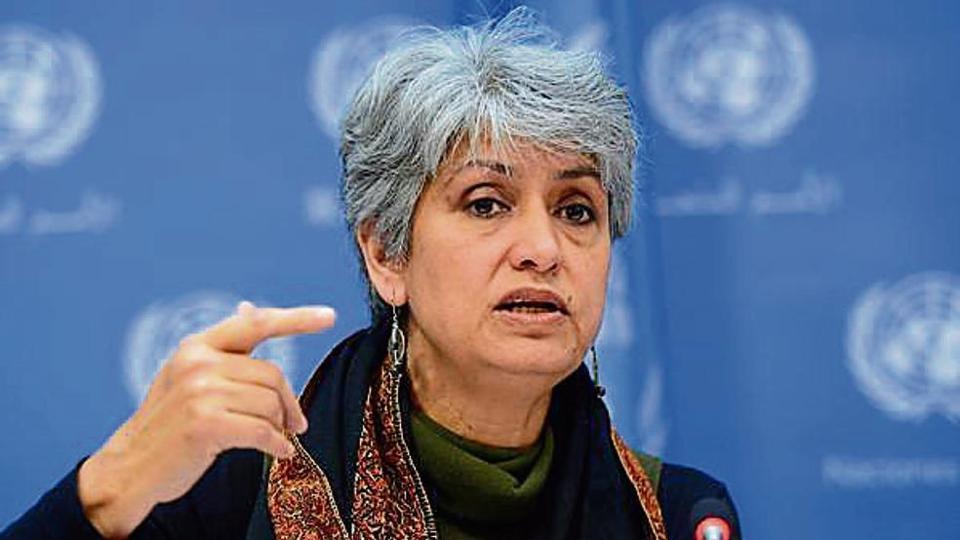
Dr Yasmin Ali Haque, Unicef’s country representative in India speaks to Rhythma Kaul on the recent sample registration system data released by registrar general of India that shows sharp decline in country’s maternal mortality ratio
Dr Yasmin Ali Haque, Unicef’s country representative in India speaks to Rhythma Kaul on the recent sample registration system (SRS) data released by registrar general of India that shows sharp decline in country’s maternal mortality ratio (MMR). Nearly 1,000 fewer women are now dying of pregnancy-related complications each month compared to 2013.
Of course, it is a great achievement for a country like India. What is more impressive is the rate of decline, which makes us believe that India will meet the target it has set for 2030 (bringing it under 100 per 100,000 live births) under the sustainable development goals.
Saving a woman’s life depends on the family, community and healthcare facility; and India has managed to make steady progress in these three areas.
The significant decline in maternal deaths is proof that people’s mind-set is beginning to change; more pregnant women are now visiting a hospital and most families are now not okay about a woman delivering at home.
The quality of care has improved and in remote areas we have adequately trained auxiliary nurse midwives and mid-wives, which is a big factor.
Also, providing transportation facility to the hospital and back is a big plus.
It’s true that pregnancy during adolescence is riskier but the largest number of pregnant women in India is still between the age group of 22 and 45. We have to focus on adolescences and beyond. We must understand that a pregnant woman can develop complications any time, and in most cases we cannot predict it so there has to be a sustained effort.
I have a lot of confidence in India’s data collection system; it’s a huge cohort to be able to follow and India has managed quite well. Last mile is always a challenge; while nearly 80% women now deliver in a hospital, there still is about 20% left. There are good examples of states like Kerala, Maharashtra and Tamil Nadu and we must see what they did right and follow their practices.