
 E-Paper


Arctic polar vortex is weakening unusually early. What does it mean for winter weather?
The Arctic polar vortex is weakening unusually early this year. Here's what is causing it and how it could affect winter weather worldwide.

 Prefer HTon Google


The Arctic polar vortex, a ring of strong winds that circles the North Pole and helps keep extremely cold air contained over the Arctic, is weakening unusually early this year, meteorologists have said.
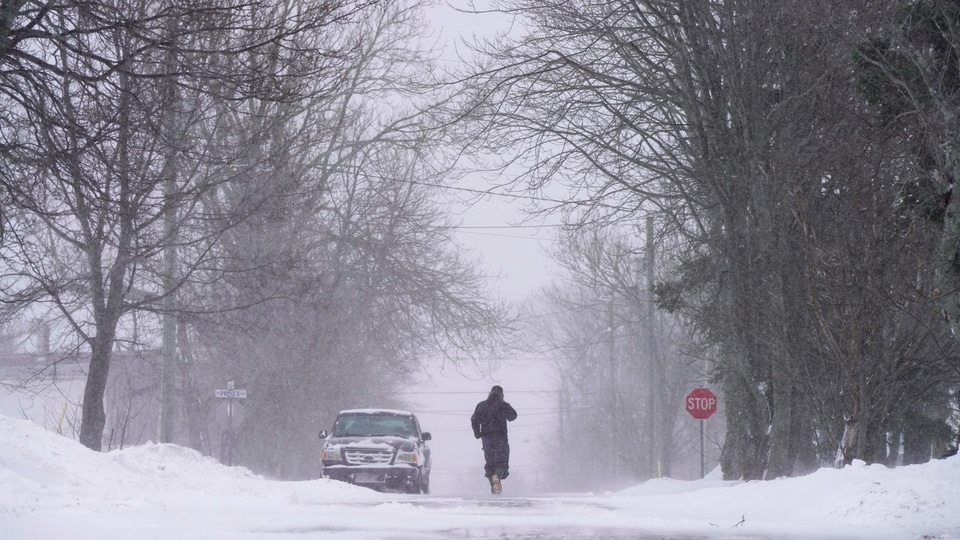
A weakening or disrupted polar vortex can allow cold Arctic air to move southwards, potentially bringing severe winter weather to parts of Europe and North America. It can also disrupt the usual flow of winds, increasing the risk of freezing temperatures, frost and snow in some regions.
But what exactly is the Arctic polar vortex, why is it weakening so early this year, and does it necessarily mean a colder winter?
What is the Arctic polar vortex?
The term polar vortex can refer to two different weather systems: the stratospheric polar vortex and the tropospheric polar vortex.
The stratospheric polar vortex, which is the system currently in the news, is a ring of strong west-to-east winds that circles the Arctic and helps trap extremely cold air above the North Pole.
It typically exists around 10 to 50 kilometres above the Earth's surface. Its strength can influence weather patterns much lower in the atmosphere, potentially bringing colder weather to parts of Europe and North America during winter.
The polar vortex is closely associated with the polar jet stream, a band of strong winds found around 8 to 15 kilometres above the Earth's surface.
When the polar vortex is stable, its winds help keep the coldest Arctic air contained farther north. When it weakens or becomes disrupted, the flow can become more wavy, allowing cold air to move southwards and warmer air to travel north.
What happens when the polar vortex weakens?
The polar vortex usually remains strong over the Arctic, keeping the cold air contained and having relatively little impact on weather elsewhere.
However, it can weaken or become disturbed during some winters, much like a spinning top being knocked off balance.
When this happens, severe winter weather in Eurasia and North America often follows because the cold polar air is displaced southwards.
One of the main causes of this weakening is a phenomenon known as sudden stratospheric warming, in which temperatures high above the Arctic rise rapidly.
A weakened polar vortex can also affect winds closer to the ground. It allows cold air from the east to move into Europe, disrupting the usual mild, moist westerly winds that arrive from the Atlantic.
This can increase the risk of freezing temperatures, frost and snow. Such disruptions are more common in January and February, but this year's weakening has come unusually early.
Why is the polar vortex weakening so early this year?
An unusually early weakening of the polar vortex means the conditions that can disrupt it have developed earlier in the winter than normal, according to the UK's National Centre for Atmospheric Science.
Experts have pointed to three possible contributing factors:
1. Atmospheric disturbances and warm Arctic ocean temperatures
A combination of atmospheric disturbances and unusually warm ocean temperatures in the Arctic could be contributing to the weakening of the polar vortex.
2. A strong El Nino developing this year
The exceptionally strong El Nino developing this year could also be influencing atmospheric conditions.
El Nino changes rainfall patterns over the Pacific, triggering large atmospheric waves that can travel towards the North Pole and push against the polar vortex, weakening its winds.
However, this influence is generally strongest later in winter, making it less likely to explain the unusually early disruption on its own.
3. Warmer ocean water north of Scandinavia and western Russia
Warm ocean water north of Scandinavia and western Russia could be another factor.
Recent research suggests that declining sea ice in this region allows the ocean to release more heat into the atmosphere. This additional heat could potentially disturb the polar vortex.
Also read: What is Polar Vortex, weather phenomenon that triggered ‘life-threatening’ cold in parts of US?
Does a weak polar vortex always mean a cold winter?
Not necessarily.
Research suggests that roughly two-thirds of sudden stratospheric warming events are followed by colder-than-normal and drier-than-normal conditions across northern and northwestern Europe.
This means that a weakened polar vortex can increase the likelihood of colder winter conditions in certain regions, but it does not guarantee a cold winter everywhere.
The resulting weather depends on how the disruption affects atmospheric circulation and where the displaced cold air moves.
A weakening polar vortex can therefore have consequences for winter weather across parts of the Northern Hemisphere, but its effects are not uniform across the world.


