E-Paper



Isro returns to the launch pad: The satellite lost in 2021, and the second attempt at it
GSLV-F17 lifts off at 2.55am on Friday carrying EOS-05. EOS-03 was lost when a valve leaked in the rocket’s cryogenic stage.

 Prefer HTon Google


The Indian Space Research Organisation (Isro) will launch its EOS-05 Earth observation satellite from Sriharikota at 2.55am on Friday, its first flight in nearly eight months and an attempt at a capability that a failed mission could not deliver five years ago.
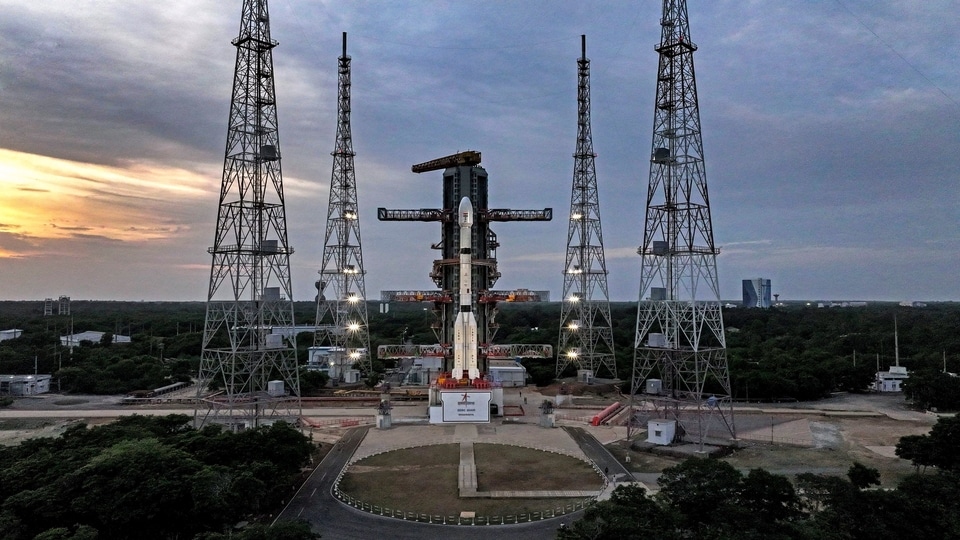
The GSLV-F17 rocket will lift off from the Second Launch Pad at the Satish Dhawan Space Centre in Andhra Pradesh, Isro said. It is the 19th flight of the Geosynchronous Satellite Launch Vehicle, and will place EOS-05 in a sub-geosynchronous transfer orbit.
Also called GISAT-1A, EOS-05 is meant to replace EOS-03 (GISAT-1), which was lost when a GSLV failed in August 2021.
What EOS-05 will do
Isro says EOS-05 will be India's first ever imaging satellite from geosynchronous orbit.
Conventional Earth observation satellites orbit at low altitude and pass over any given region only once every few days. EOS-05 will operate roughly 36,000 km above the equator, circling at the same rate the planet rotates. This will keep it over the same stretch of Earth and let it photograph the Indian landmass every 30 minutes.
From that height, the satellite gets a wider field of view and repeated looks at areas changing quickly, among them cyclones, floods, cloudbursts and forest fires.
Isro's National Remote Sensing Centre has described Earth observation as increasingly important for resource planning, disaster management, and weather and climate modelling, and satellite imagery has become a near-real-time input for emergency response teams and decision-makers. EOS-05 data is also expected to feed agriculture and forestry applications, where large areas need watching repeatedly.
Why it replaces the 2021 satellite
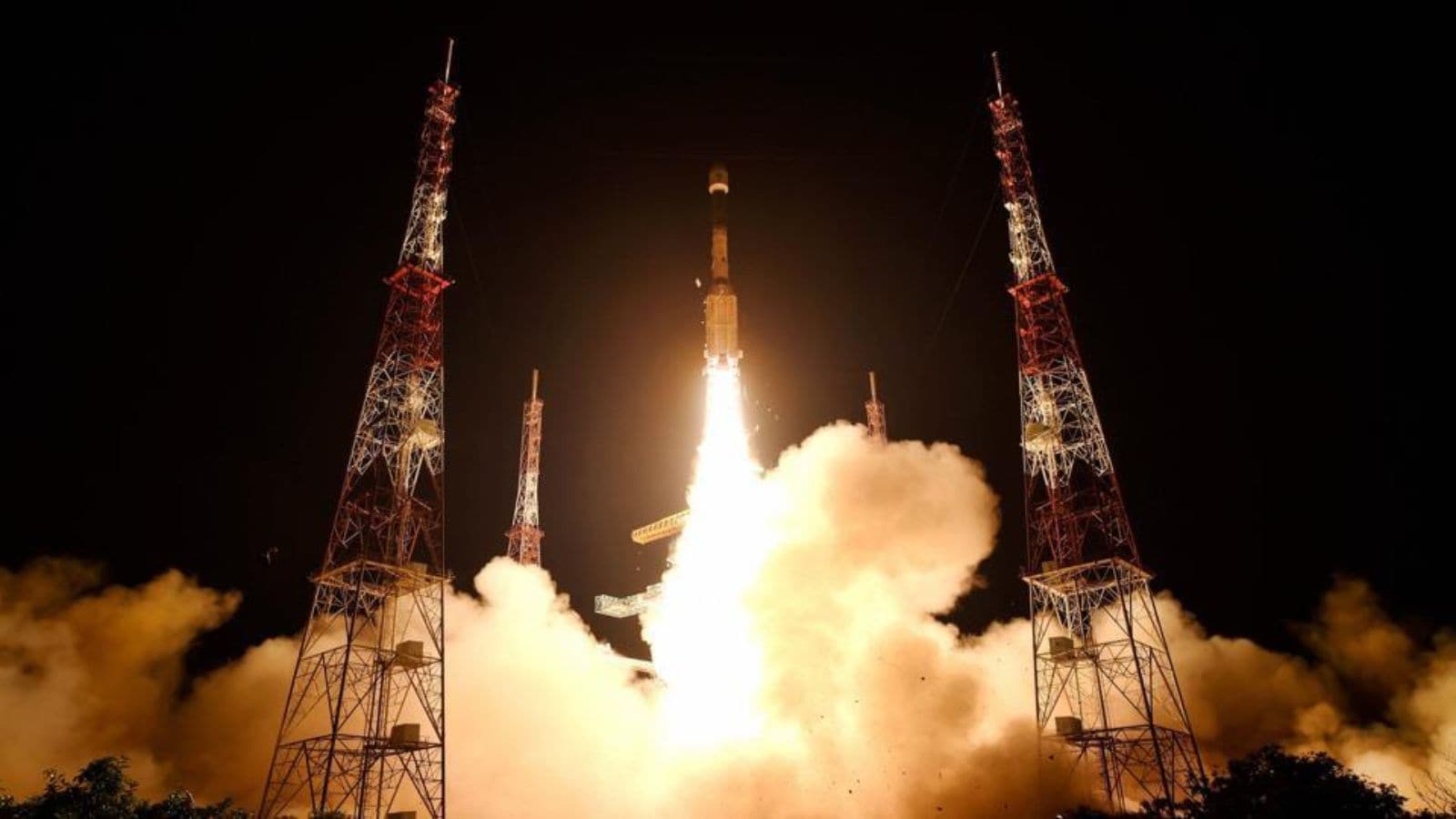
On August 12, 2021, GSLV-F10 lifted off carrying EOS-03. The first and second stages performed as expected. But the mission failed when the cryogenic upper stage, which burns liquid hydrogen and liquid oxygen at very low temperatures, did not operate as intended.
An Isro Failure Analysis Committee traced the failure to a leak in the vent and relief valve, most likely caused by damage to a soft seal inside it.
The leak left the liquid hydrogen tank under-pressurised at the moment the cryogenic engine was due to ignite, which in turn caused the fuel booster turbo pump inside the tank to malfunction. The engine never lit, and the mission was aborted 307 seconds after liftoff.
The committee recommended an active liquid-hydrogen tank pressurisation system, strengthening of the vent and relief valve and associated fluid circuits, and automatic checks on more of the cryogenic stage’s readings before liftoff is cleared.
It is not clear which of these changes were made to GSLV-F17.
Also read: PSLV-C62 deviates from flight path after anomaly
How EOS-05 reaches its orbit
GSLV-F17 will inject the satellite into a sub-geosynchronous transfer orbit, from where it will fire its own engine to climb towards geosynchronous altitude. Isro's mission brochure puts the injection orbit at a nominal 170 km at its closest approach to Earth and 28,934 km at its farthest, inclined at 19.28 degrees. The 2,367 kg spacecraft has to make up the remaining distance itself.
The GSLV-F17 is a three-stage vehicle standing 51.7m tall and weighing 420.5 tonnes at liftoff, flying in the GSLV Mk II configuration with a four-metre-diameter composite payload fairing. Its third stage is cryogenic, the same class of system that failed in 2021.
What is at stake
Isro's last two PSLV launches failed. PSLV-C62 did not place EOS-N1 in the intended orbit on January 12, 2026, after an anomaly in the rocket's third stage.
PSLV-C61 had failed with EOS-09 in May 2025.
Isro paused launches while investigations and corrective measures were carried out. The failure analysis report for the January mission has not been made public.
Both of those were PSLV missions, and F17 flies a different rocket. The GSLV has launched four times since 2021 — with the navigation satellite NVS-01 in May 2023, the weather satellite INSAT-3DS in February 2024, the navigation satellite NVS-02 in January 2025 and the Isro-Nasa radar satellite NISAR in July 2025. Each flight put its payload in the intended orbit.
The harder test comes after the rocket's work is done.
GSLV-F15 placed NVS-02 in a transfer orbit of 170 x 37,785 km in January 2025, exactly as planned, but the satellite then failed to climb any higher. Isro said in February that the engine meant to lift NVS-02 could not start until a valve opened to let oxidiser through, and the electrical signal that should have opened that valve didn't arrive, most likely because a contact worked loose inside a connector, and inside its backup as well. The engine never fired, so NVS-02 is still sitting in the orbit the rocket left it in.
The fixes that followed were built into the CMS-03 communications satellite launched last November, which reached its intended orbit. Isro says they will be applied to later missions where relevant.
Also read: A call to reenergise the Indian space ecosystem
EOS-05 must now make the climb that NVS-02 could not.
NVS-02 was meant to reinforce NavIC, India's own satellite navigation system, which is now down to three working satellites — IRNSS-1B, IRNSS-1I and NVS-01 — after IRNSS-1F reached the end of its ten-year life. Four is the minimum needed to fix a position.
Union minister of state for space Jitendra Singh told the Lok Sabha in a written reply on July 29 that NavIC therefore cannot tell a user where they are without help from other systems, though it still keeps time accurately, and that the armed forces are using a mix of navigation systems, including NavIC.
The replacement satellite, NVS-03, is ready to fly, he said, and NVS-04 and NVS-05 are close behind. Both second-generation NavIC satellites launched so far went up on GSLVs.