
 E-Paper



Livestreamed firing squad, failed lethal injections, and the legal questions they raise for US death penalties
The Pentagon plans to broadcast a Fort Hood shooter's death as Tennessee weighs a second attempt to execute Christa Pike, who survived lethal drugs.

 Prefer HTon Google


The US Department of Defense said on Thursday that the firing-squad execution of Nidal Hasan, the former Army psychiatrist who killed 13 people at the Fort Hood military base in Texas in 2009, will be livestreamed. No execution in the US has been broadcast to the public, and experts say no other country is known to televise or livestream a legal execution.

The announcement followed a failed execution in Tennessee on September 30, in which the state gave Christa Pike, 50, two doses of the execution drug pentobarbital. She survived, and is now walking with assistance and eating in hospital, her lawyers said.
The Death Penalty Information Center (DPIC), which publishes data and analysis on capital punishment in the US, says she is the only person to have survived after receiving lethal injection drugs.
The two cases raise questions US courts have not settled in the modern era: whether a government can make an execution a public broadcast, and whether a state can try a second time to kill a prisoner who has already been given lethal drugs.
The US carried out 30 executions this year up to October 7, all by lethal injection, according to news agencies Associated Press and AFP. The death penalty has been abolished in 23 of the 50 American states, and California, Oregon and Pennsylvania have moratoriums in place.
The Fort Hood execution
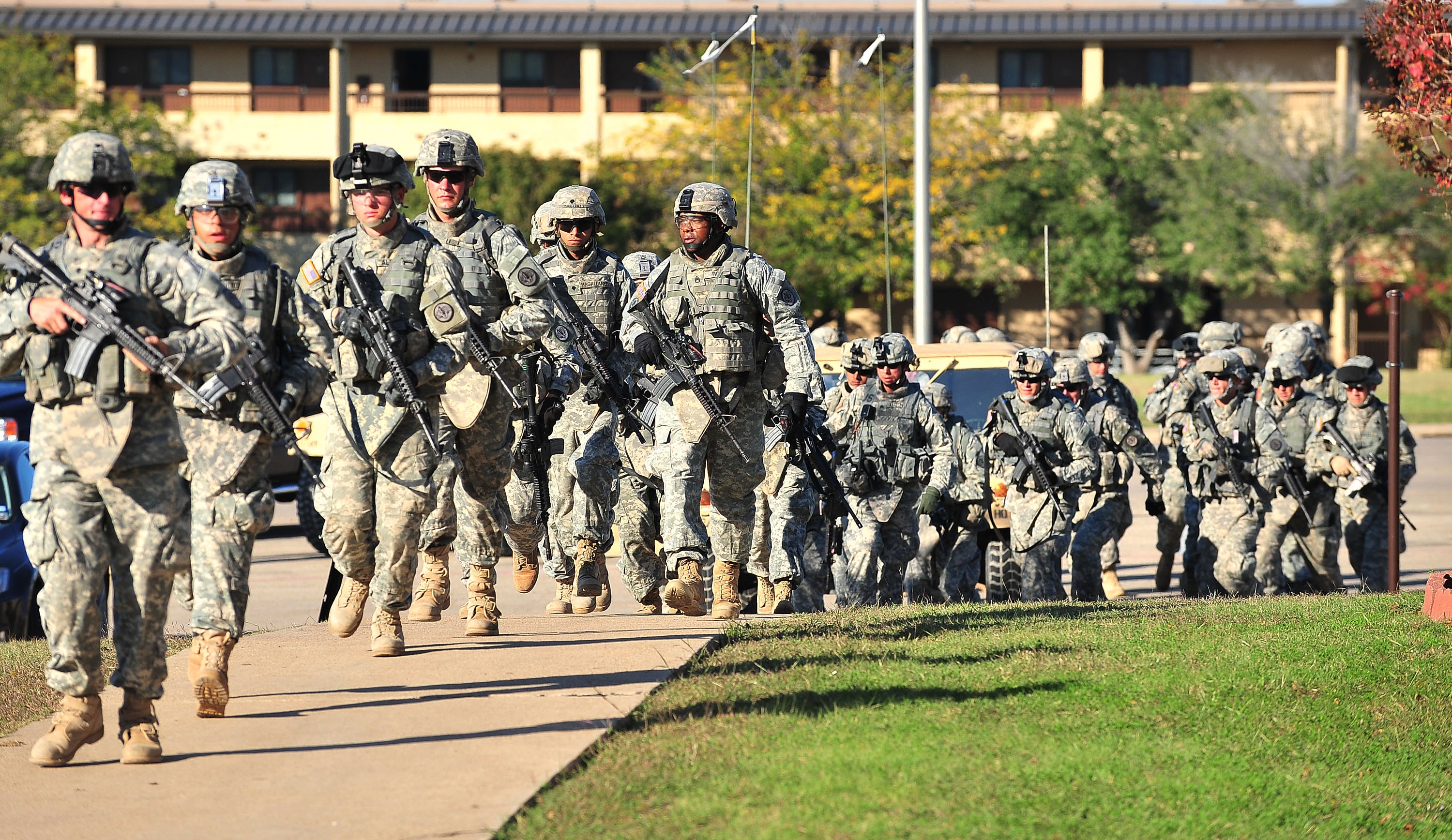
Hasan, then an Army major, opened fire inside a medical building at Fort Hood on November 5, 2009, where soldiers were queuing for vaccinations and clearance before deploying. Thirteen people were killed and 32 injured. Hasan said he wanted to stop the soldiers from going to Afghanistan to kill fellow Muslims, but a military judge did not allow him to present that as a defence at his 2013 trial. A military jury sentenced him to death in August that year after convicting him on 45 counts of premeditated murder and attempted premeditated murder.
Under US military law, an execution by firing squad needs the President's approval. President Donald Trump gave it on the recommendation of defence secretary Pete Hegseth, the Pentagon said on October 5.
The execution is set for December 3, a Thursday, at 1pm at Fort Hood, matching the day of the week, approximate time and location of the 2009 shooting.
Hegseth called the choice a "no-brainer", Reuters reported.
"It will be livestreamed. Details will follow," a Pentagon official told Reuters on condition of anonymity. Hegseth confirmed the plan in a post on X.
In a television interview this week, he said: "We'll make sure that people are able to watch it, that it's public. Because people need to understand that ... there's serious consequences for these types of things." The White House declined to say whether Trump supports the livestream and referred questions to the Pentagon.
Hasan could still delay the execution by filing a habeas petition, a request for a civilian court to examine whether his detention is lawful, experts told AP. He may not want to. At his trial he dismissed his lawyers, represented himself, called no witnesses and made no closing argument, and his court-appointed standby lawyers concluded that his only goal was a death sentence.
Why the plan has no precedent
The DPIC has no record of any execution being livestreamed, its executive director Robin Maher told AP. And US courts have blocked earlier attempts by media organisations to televise executions.
The closest that the US has come was the 2001 execution of the Oklahoma City bomber, Timothy McVeigh, which then attorney general John Ashcroft allowed victims to watch on closed-circuit television.
"There is currently no regulation or precedent for an execution to be livestreamed on the internet or otherwise made widely available to the public," Maher said in a statement.
The US military's last known executions by firing squad were in 1945, according to the DPIC. Its last execution of any kind was the hanging of Army Private John Bennett on April 13, 1961.
Amnesty International recorded at least 17 public executions worldwide in 2025, 11 in Iran and six in Afghanistan, according to its report on executions.
The Economist | What happens when states combine ineptitude with the death penalty
America's last public executions
Executions in the US have been held out of public view for about nine decades. Before that, hangings drew crowds and served as both deterrent and ceremony, according to Michael Radelet, professor emeritus at the University of Colorado Boulder, who has researched executions extensively. Parents and teachers brought children along to learn a lesson, and the events could include a choir, a preacher delivering an "execution sermon" and a long speech from the condemned man.
The 1936 hanging of Rainey Bethea in Owensboro, Kentucky, is often considered the country's last public execution. Thousands attended, according to the DPIC, which says Bethea, a Black man, reportedly confessed to raping and killing a 70-year-old white woman but was never charged with murder. In Missouri the following year, hundreds watched the hanging of Roscoe "Red" Jackson. Outside the law, lynchings, often carried out by white mobs against Black Americans, remained public spectacles well into the 20th century, Reuters reported.
States moved executions out of sight as more people witnessed botched hangings and grew uneasy about the crowds, Radelet said, adding: "Instead of promoting the sanctity of life and how solemn the circumstance was, with people applauding and having a carnival-like atmosphere, that really turned people off."
Pike and the question of a second attempt
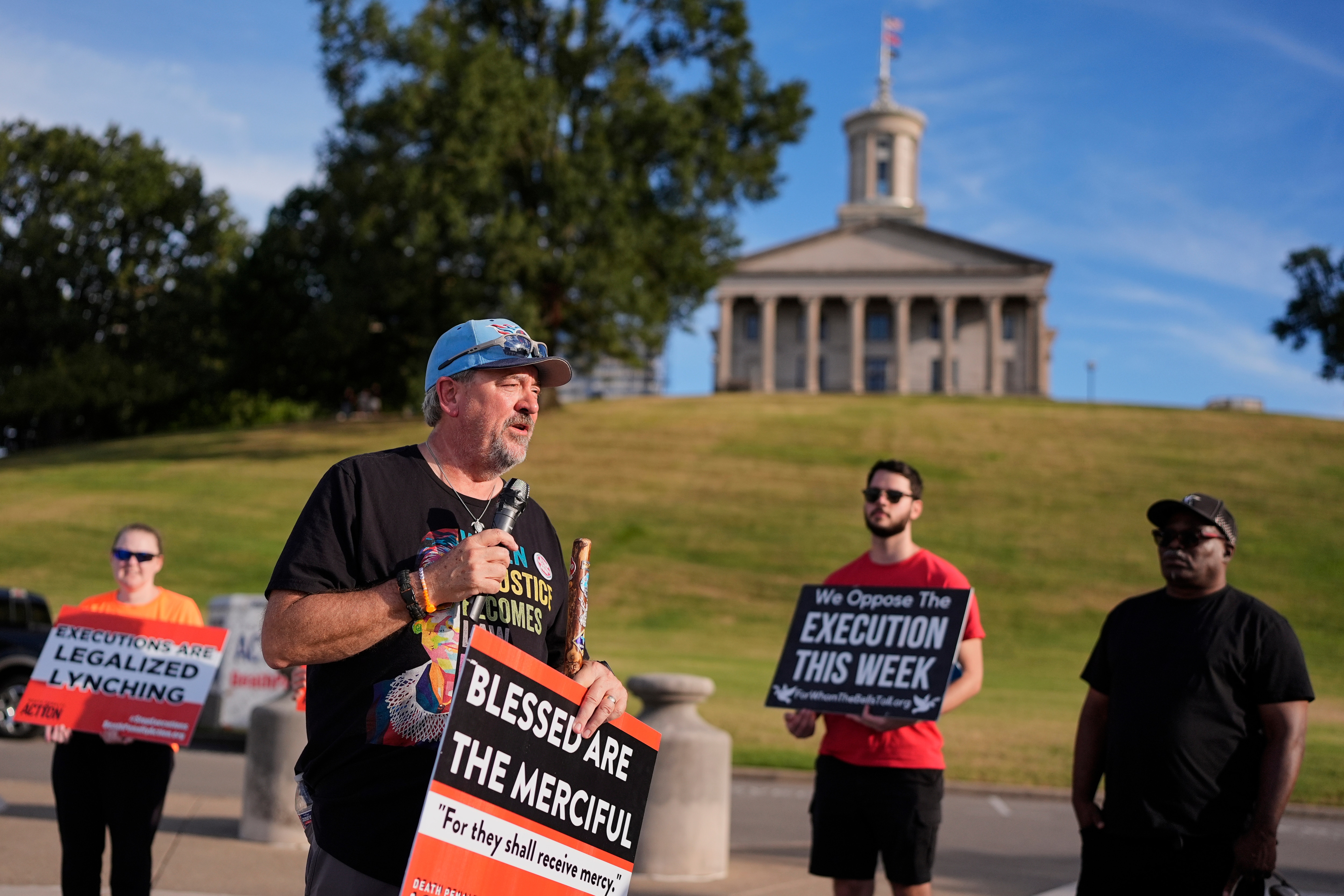
Pike was 18 when she and her boyfriend beat and killed 19-year-old Colleen Slemmer, a classmate at a job training camp, in 1995. She would have been the first woman executed by Tennessee in more than 200 years.
Medical experts told AP that the IV line may have been placed incorrectly, or her veins may have ruptured, letting the drug seep into surrounding tissue instead of entering her bloodstream. State officials have not explained what went wrong. Tennessee's correction department has maintained that it followed established protocol, AFP reported.
Governor Bill Lee has paused executions in Tennessee and ordered an independent review, and the state's prison chief has resigned. Whether the state will try to execute Pike again is unclear. "We are very much in uncharted waters," Stephen Ferrell, one of her lawyers, told the BBC, according to AFP.
The closest precedent is a 1946 case. In 1946, an improperly prepared electric chair in Louisiana failed to kill 17-year-old Willie Francis. The court ruled that a second attempt was neither double jeopardy nor cruel and unusual punishment, and Francis was electrocuted the following year. "Accidents happen for which no man is to blame," the court said.
A dissenting justice described a second attempt as "death by installments".
More recently, Alabama failed to execute Alan Miller and Kenneth Smith by lethal injection in 2022 and put both to death with nitrogen gas in 2024. In those cases, and in every other failed modern execution the DPIC has recorded, the process was stopped before any drug was administered. Pike is the only one who received the drugs.
Experts told AP they knew of no state or federal law that explicitly bars a second attempt. Stephen Johnson, a Tennessee criminal defence lawyer and president-elect of the National Association of Criminal Defense Lawyers, said Pike's legal team would examine whether she is "now legally competent to even be executed", likely through neuropsychological and forensic psychiatric evaluations, and that litigation over those issues could take years. Her lawyers say she continues to struggle with concentration and memory.
A second test is the Eighth Amendment to the US Constitution, which bars cruel and unusual punishment.
Jordan Steiker, co-director of the Capital Punishment Center at the University of Texas, told AP that the Supreme Court has not revisited the Francis ruling under its modern "evolving standards of decency" approach, and that Pike's case differs from earlier second attempts because she "bore the brunt of lethal drugs".
"So I think the guide today would be whether or not it would be viewed as repulsive according to contemporary community standards to attempt a second execution," he said.
Steiker said the most obvious way to avoid litigation would be for the governor to commute the sentence. Pike's lawyers have asked Lee to commute it to life without parole. "She should never be subjected to another execution attempt," they said in a statement on October 8.
The debate over watching
Deborah Denno, a death penalty expert and law professor at Fordham University, told AP that a livestream could make the process "much more transparent" and show the public what capital punishment involves, at a time when Pike's case has raised fresh questions about how executions are carried out. "I think it could possibly be a good idea because it would be transparent and the public would be fully aware that it's happening," she said.
Elisabeth Semel, co-director of the Death Penalty Clinic at UC Berkeley Law, told AP the plan raises questions about the dignity of the condemned man, about who will be eligible to watch and about the government's motive. "This is a President who's about spectacle and that's, I think, precisely the message that he intends to deliver," she said.
The Pentagon has yet to release details of the broadcast, it is unclear whether Hasan will go to court, and Lee has not said whether he will commute Pike's sentence. Eugene Fidell, a visiting lecturer at Yale Law School who specialises in military law, told AP that a habeas challenge could stretch Hasan's case out considerably. "It frankly might outlast the current administration, and who knows if the next one will have the same penchant for executions," he said.


