E-Paper



Lula wins Brazil runoff amid last-minute voting extension; Flávio Bolsonaro seeks annulment | Explained
A last-minute Supreme Court order extended voting at some Brazilian polling stations, causing confusion and briefly suspending ballot counting.

 Prefer HTon Google


Brazil's presidential election ran into controversy after a last-minute Supreme Court decision extended voting by two hours on Sunday, even as electoral authorities had begun counting ballots.
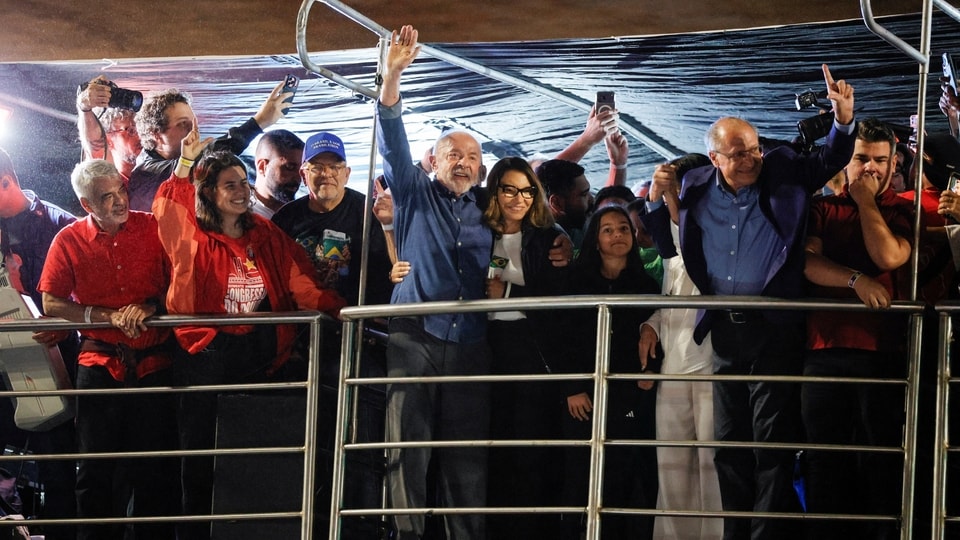
According to official results cited by news agency AFP, President Luiz Inácio Lula da Silva secured 51.8% of the vote against Bolsonaro's 48.2%, a margin of approximately 4.4 million votes. After Lula's re-election, rival Flávio Bolsonaro refused to accept the result and announced plans to seek its annulment.
The dispute centres on a court order that allowed voting to continue beyond the scheduled closing time, following separate requests from both candidates. While Lula cited disruptions to public transport, Flávio Bolsonaro pointed to heavy rainfall in several states.
Who extended voting hours, and what happened?
Brazil's Supreme Court Justice Cristiano Zanin ordered voting to be extended from 5 pm to 7 pm local time on Sunday, October 25, according to Bloomberg. The order came minutes after polling stations were scheduled to close, when electoral authorities had already begun counting votes.
After approximately 0.25% of ballots had been tallied, the count was suspended following Zanin's decision, Bloomberg reported.
The sequence created confusion because the extension was announced after voting had already ended at some polling stations. Electoral authorities subsequently resumed counting after the extended voting period ended.
Why was voting extended?
The northeast has traditionally been a stronghold of Lula's political movement, making voter access in the region particularly significant during the closely contested runoff.
Bolsonaro, meanwhile, requested additional time in states where he said adverse weather conditions had delayed voters. These included Minas Gerais, a major electoral battleground, and Rio Grande do Sul in southern Brazil, where the right-wing senator enjoyed stronger support.
While both candidates had requested extensions, Lula sought additional voting time nationwide, whereas Bolsonaro's request concerned particular regions affected by heavy rain.
Also read: From rare earths to trade and the Global South: What Lula’s re-election in Brazil means for India
Why did the decision become controversial?
The timing of the Supreme Court's intervention raised questions about how the extension would be implemented, particularly at polling stations that had already closed.
According to Brazil's public news agency Agência Brasil, Zanin subsequently clarified that the two-hour extension would apply only to polling stations where voting machines had not already been shut down. Polling stations that had closed at 5 pm would not reopen, and votes cast there would be counted normally.
The decision also drew attention to Zanin's previous professional relationship with Lula. According to Bloomberg, the justice had served as the president's personal lawyer before joining the Supreme Court. Bloomberg also reported that another Supreme Court justice, appointed by Flávio Bolsonaro's father, former president Jair Bolsonaro, appeared to have delayed the decision.
The sequence became particularly contentious because Brazil's electoral system is known for its rapid vote counting, and the extension interrupted a process already underway. After approximately 0.25% of votes had been tallied, electoral authorities suspended counting following Zanin's order, Bloomberg reported.
The confusion came amid an already closely contested election, raising the prospect of legal challenges over the voting process and its eventual outcome.
What did Flávio Bolsonaro say?
According to Agência Brasil, Bolsonaro claimed that the decision had created unequal conditions for voters in different cities and states, as some polling stations remained open while others had already closed.
He announced his intention to seek annulment of the election, although this did not mean that the results had been legally invalidated.
Also read: Brazil’s love affair with cellphones turns theft into an election flashpoint
Why does the controversy matter?
The dispute has raised questions about the administration of a closely contested election and whether the last-minute changes could become the basis for a legal challenge.
Bloomberg reported that the interruption to counting and the extension of voting hours risked prompting challenges to the result, including demands for a recount or annulment. However, electoral authorities said the extension did not affect the outcome, according to the Associated Press. Legal experts also questioned whether Bolsonaro had sufficient grounds to overturn the election.
The dispute comes against the backdrop of Brazil's turbulent electoral history.
Flávio Bolsonaro is the son of former president Jair Bolsonaro, who is serving a 27-year prison sentence for attempting a coup following his defeat to Lula in the 2022 presidential election, AFP reported.
Sunday's result also marked a significant political comeback for Lula. The 80-year-old president became the first candidate since Brazil restored direct presidential elections in 1989 to overturn a first-round defeat and win the runoff.
In his first comments following the victory, Lula said: “People went to vote because we managed to convince them that voting was very important for ensuring democracy in the country.”
With Bolsonaro refusing to concede, attention now turns to whether his campaign formally files a challenge and how Brazil's courts respond.