
 E-Paper



The heat is coming for the IPL
This article is authored by Kruti Munot, climate and development professional and Kapil Kanungo, investment professional.

 Prefer HTon Google


Cricket is India’s religion, and the Indian Premier League is its biggest festival. For two months each year, over 500 million people arrange their lives around it. Appointments, family functions, even movie calendars follow the rhythm of IPL. From tea stalls to office canteens, on phones between strangers in local trains, nobody can escape it (not that anyone tries). Valued at over $18 billion, the IPL ecosystem is also serious business. But it is a business that relies on a climate still hospitable enough for outdoor play.
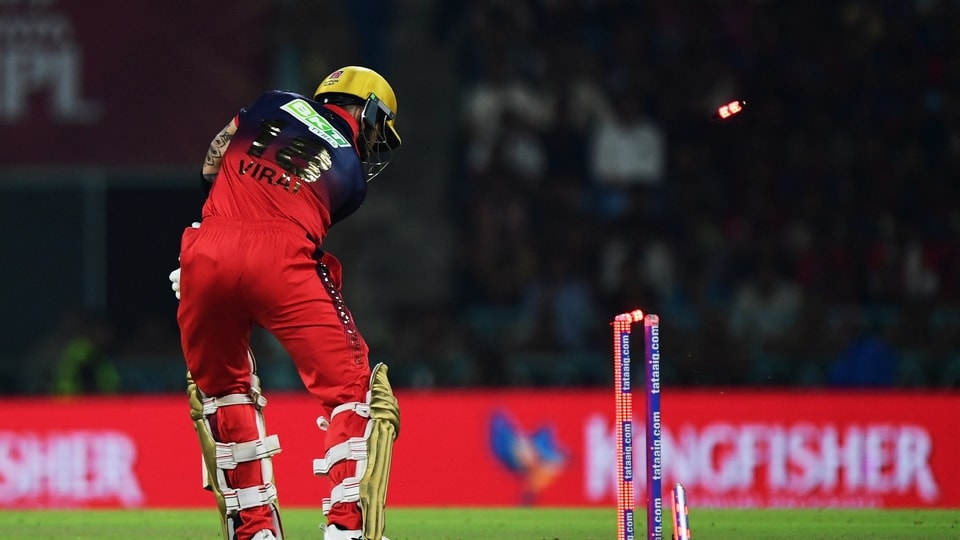
Right now, the IPL is being played across India in the middle of one of the country's most ferocious early-summer heatwaves. In late April, of the hundred hottest cities on earth, 95 were in India per AQI.in data. Temperatures in Delhi reached 42.8 degrees last week. In Jaipur, a match started in the evening at 37 degrees, down from 42 that afternoon. This counted as a good evening for cricket, given the heatwave conditions already declared by the IMD. With a Super El Nino developing over the Pacific Ocean, days with these temperature spikes will not be exceptions anymore, they are the new baseline.
Hit for Six, a report tracking climate impact, found that in 2025, more than half of the IPL matches were played in conditions classified as extreme caution or danger on the heat index. This is a combination of humidity and temperature at the threshold above which heatstroke becomes a realistic risk. Former West Indies captain Daren Ganga, writing in the report, recalls playing in heat so oppressive that "players were cramping by the second session. I remember feeling disoriented.”
The broadcast of the sport cuts away from the coping tactics. For instance, about 80% of the energy used in exercise is released as heat. This means that a batsman in full pads and helmet is like a furnace before the first ball is even bowled. Players arrive at grounds as late as possible to limit heat exposure, warm up in shorter windows, and reach for ice towels and neck wraps before taking the field. Team nutritionists build personalised hydration plans based on players’ sweat rates and sodium loss. The league has also relied on the evening game as the safe window, but that assumption is failing as nights start holding on to the heat and humidity from the day.
The burden of this heat does not fall on the players alone. An entire economy runs alongside the IPL: Vendors selling jerseys in the sun, transport workers, informal laborers clustering around every major ground on match day. None of them have team doctors or cooling protocols. The picture is grimmer at the grassroots where the sports infrastructure is non-existent. A coach observed in the report: "If we want to keep the game alive for future generations, we have to protect it where it begins, with the kids." The children playing gully cricket in Indian cities, who will become the next generation of players and fans, are the most exposed and the least protected.
Other sports have looked at the same problem and acted. At the 2026 Australian Open, high temperatures triggered the tournament's extreme heat policy, suspending play on outside courts and moving matches into covered arenas. Qatar built stadiums with energy-efficient cooling technology that maintained pitch and stand temperatures around 20 degrees Celsius for the 2022 FIFA World Cup. At the Paris 2024 Olympics, organisers rescheduled marathon and triathlon events to early mornings, and the Athletes' Village relied on a Seine-water cooling system.
Cricket Australia introduced a heat policy in 2018 that allows umpires to suspend play when conditions cross a defined risk threshold. The England and Wales Cricket Board added its own sustainability plan in 2023 with guidance on protecting players and spectators from extreme heat. The ICC and the BCCI have been slower to follow officially.
There are also the more difficult commercial challenges. The IPL's April-May window exists because the monsoon arrives in June and the international calendar leaves no other space. Shifting schedules or venues would have implications on sponsorships, broadcasting contracts, and associated ancillary sectors. Relocating matches to cooler cities or countries would also mean acknowledging that the climate crisis has already altered where and when cricket can be played. That is a hard admission for any sport to make, but as one of the world’s most valuable sports leagues, the IPL is well placed to make a start.
The league has the means, the data, and the audience. It just needs a serious reckoning with our new climate reality.
The question that the heat raises is larger than a two-month tournament. Cricket has been a game of patience and survival, but the climate crisis is rewriting the terms of that endurance. The future of sport in heating climates cannot belong only to those formats that can move indoors. Across the subcontinent, hundreds of millions of children still run out into dusty streets with a bat and ball. If cricket is truly India's religion, its temples are those streets, the children in our outdoor commons. They are worth protecting.
(The views expressed are personal)
This article is authored by Kruti Munot, climate and development professional and Kapil Kanungo, investment professional.


