
 E-Paper



Why we must act to face the growing threat of extreme heat and floods
This article is authored by Sriparna Pathak, professor, OP Jindal Global University, Sonipat.

 Prefer HTon Google


Natural calamites do not adhere to notions of borders or sovereignty or levels of economic development. Across the world, heat waves are becoming more common, along with frequent instances of flooding leading to unprecedented levels of devastation. In 2024, the Central European floods, caused by a record heavy rainfall generated by Storm Boris, saw devastation across Austria, Czech Republic, Poland, Romania, Slovakia, Germany and Hungary. The total estimated damage was estimated to be about $ 4.3 billion. In the US, flooding and related devastation has been to such an extent that 2025 is being referred to as the year of the flood. The tragic July 4 flooding in Central Texas was the deadliest in the last 50 years in the US. In fact, the National Weather Service offices in the US have issued more flood warnings this year than any other year on record, dating back to 1986. Life threatening flooding and record rainfall has also been reported in New Mexico, North Carolina and other East Coast states in July this year.
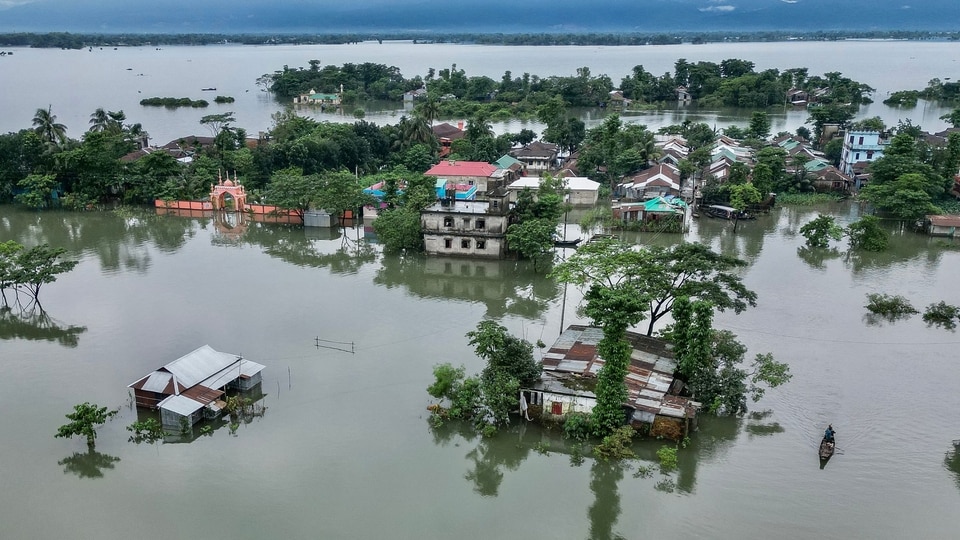
In countries of the Global South, South Sudan faced record high levels of the White Nile in February this year, which severely impacted livelihoods and access to basic needs. Last year, an estimated 300,000 people across Niger, Benin, Ghana and Nigeria were heavily impacted. In mid-May 2025, Bangladesh experienced significant flooding due to heavy monsoon rainfall, and a deep depression in the Bay of Bengal, which caused widespread inundation, causing loss of lives, displacement and damage to agriculture and infrastructure. In China, particularly in the southern and southwestern regions, there were exceptionally large floods. The total economic losses from natural disasters in the first half of 2025 in China reached approximately $ 7.55 billion.
In India, in stated like Uttar Pradesh, Bihar and Jharkhand, severe storms and heavy rainfall led to at least 47 casualties. Floods in Chennai and Bengaluru impacted production, services and logistics, further adding to devastation. Amidst escalating frequency of natural disasters, the need to combat the climate crisis is definitely felt. However, proactive preparedness to protect communities is yet difficult to come by.
In the Global North, despite the resources and historical emissions, there is still a lack of coordinated and ambitious climate action and preparedness measures; which hinders progress towards mitigating and adapting to the climate crisis. There has been insufficient progress on climate finance commitments, in addition to the slow pace of emissions reduction, even among countries with net zero targets. In the Global South, there is also a lack of coordinated, ambitious climate action and preparedness measures, and this gap leaves many vulnerable communities exposed to the impacts of the climate crisis, thereby exacerbating existing inequalities. An acute problem in several developing countries also lies in weak governance structures and limited devolution of powers to local governments. This has severe implications in the implementation of climate policies.
While the climate crisis and associated devastation in the form of flooding or heat waves has become an unfortunate reality for communities across the globe in the 21st century, the mechanisms to reduce devastations is either not yet envisaged or not implemented. There is an urgent need for investment in resilient infrastructure, of which green spaces to mitigate heat is one example, while updated flood defences are another. An example worthy of emulation, after fine-tuning to countries’ and communities’ needs, is from the Netherlands. Two-thirds of the population in the Netherlands is vulnerable to flooding due to low elevation levels. The Delta Works is a series of dams, sluices, dikes, and storm surge barriers, and it represents one of the most sophisticated flood management systems in the world. The system first came up as a response to the devastating North Sea Flood of 1953. A key aspect of the system is the Oosterscheldekering, which is a movable barrier that can be closed to protect against storm surges, while preserving tidal ecosystems. Additionally, the Room for the River program was initiated in the 2000s to take a sustainable approach by widening the rivers, lowering the floodplains, and relocating dikes to allow for controlled flooding in less populated areas.
Additionally, a shift to renewable energy is urgently needed. An example in this context is from Denmark, which has effectively utilized renewable energy, particularly wind power, to combat climate change. As a low-lying country, which is vulnerable to storm surges and to rising sea levels, Denmark prioritises renewable energy to mitigate climate-driven flooding. The country generates more than 50% of its electricity from wind, and major offshore wind farms like Horns Rev and Anholt have cut carbon dioxide emissions by about 10 million tonnes annually. India’s Pavagada Solar Park in Karnataka is also worthy of mention in this context. It generates 2050 MW of solar energy and is one of the world’s largest solar parks, helping to cut down carbon dioxide emissions by millions of tons annually. However, there is a need to adapt similar methods in other parts of India on an urgent basis. Proactive leadership and emulation of successful examples, in tune with prevailing local conditions, are urgently needed and can mitigate future disasters and protect lives. But the urgency needs to be heeded.
This article is authored by Sriparna Pathak, professor, China Studies and International Relations, Jindal School of International Affairs, OP Jindal Global University, Sonipat.


