
 E-Paper



Why protecting gig workers will strengthen India’s growth story
This article is authored by Shaonli Chakraborty, CEO, Upfront.

 Prefer HTon Google


India is racing toward becoming a $10-trillion economy by 2047, powered by digital platforms, e-commerce, and app-based services. Yet a contradiction sits at the heart of this growth story: the workers who sustain India’s platform economy remain among its most insecure.
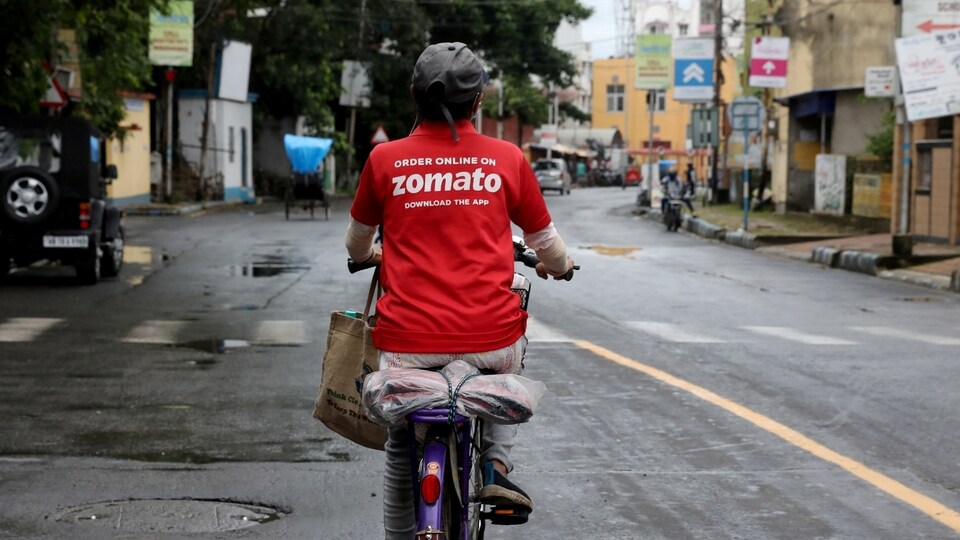
We already have over 7.7 million gig and platform workers, a number expected by NITI Aayog to cross 23.5 million by 2029–30. Gig workers are expected to form 6.7% of the non-agricultural workforce or 4.1% of the total workforce in India by 2029-30. Despite the rapid growth in this sector, income and the nature of job security are volatile, relying mostly on part-time or temporary positions with contractors and freelancers, rather than full-time workers. This offers flexibility at work but without any job security.
They deliver our food, move our cities, and run our warehouses, often without health insurance, accident cover, pensions, or income security. The future of work is, for many, a digital return to informality.
A delivery worker can rush 120 km a day with no accident protection. A ride-hail driver can be deactivated by an algorithm without explanation. A warehouse worker has no right to sick leave or maternity benefits. Women face even sharper barriers: safety risks, lack of childcare, and maternity protection keep participation low, with India’s female labour force participation at just 32–33%. The ILO has warned that platform work often misclassifies labour, eroding rights and protections. In a country where over 90% of work is informal, poorly governed gig work deepens this problem rather than solving it. Therefore, this is not merely a labour issue; it is a development challenge.
Viksit Bharat requires healthy, secure, and productive workers. Recent policy and legal developments, including the Social Security Code, 2020, by the central Government as well as a few states passing the Platform-Based Gig Workers (Registration and Welfare) Act are a start, but implementation is urgent. Welfare boards in each state, aggregator contributions, portable social security, minimum earnings, effective grievance redressal, and strong linkages to health, safety, and care are essential.
Encouraging stances like the recent intervention by the Central government to roll back the 10-minute delivery promises of the e-commerce platforms, following public concern and government scrutiny shows that responsible business practices and regulation can work together. Platform owners must embed worker wellbeing into their business models, while the government must continue setting clear guardrails.
There is a strong need for a solution framework to support the wellbeing of the gig workforce, which can be further developed in consultation with relevant stakeholders and gig workers themselves. Here is a draft approach based on the existing gaps within the gig sector, as well as taking into account previous experience of working on workforce wellbeing in the gig as well as other sectors, including manufacturing, textile, garment, spice, and so on.
At the policy level, an enabling architecture is needed to make gig work viable, fair, and secure at scale. This includes establishing and operationalising Gig and Platform Worker Welfare Boards across states, as envisaged under the Social Security Code, 2020, with representation of gig workers, women workers, platforms, and civil society, and clear mechanisms for transparent use of welfare funds. Mandatory aggregator contributions, structured as a fixed percentage of transaction value or revenue, can finance insurance, skilling, maternity benefits, and emergency relief. Integrating gig workers into portable social security systems through e-Shram and Aadhaar-linked frameworks would enable continuity of health insurance, accident and disability cover, and pension and savings schemes across platforms and state boundaries. Minimum earning benchmarks linked to time, distance, and real costs of work, along with transparency in pay and deactivation algorithms, form an essential part of this architecture.
At the level of platform practices, responsible ecosystems depend on how work is organised and governed on a daily basis. Core requirements include health and safety measures such as mandatory accident insurance, access to safety gear, realistic delivery timelines, and periodic audits. Platform design also needs to be gender-inclusive, with onboarding processes, grievance systems, and internal policies that address harassment, discrimination, maternity needs, and flexible work arrangements. Effective grievance redressal benefits from time-bound mechanisms, human oversight in account suspensions and deactivations, and appeals processes that are accessible in local languages.
At the service level, direct support systems can help translate policy intent into worker experience. Digital health and wellbeing services such as subsidised telemedicine, preventive check-ups, specialist referrals, and mobile-based health alerts can be complemented by confidential mental health counselling, stress management support, crisis helplines, and local-language awareness modules, with linkages to primary and secondary care. Social protection can be strengthened through multilingual digital help desks that support workers with welfare information, registration, documentation, and grievance filing, including assisted access for those digitally excluded. Social inclusion initiatives covering gender sensitisation, safe workplace protocols, peer support for women workers, and legal and financial literacy related to contracts, insurance, savings, pensions, and social security complete this framework.
This framework will require various actors and stakeholders, including platforms, policymakers, and civil society, to further shape, implement, and act together with a clear mandate for making the workforce healthier and more productive, platforms to become more stable and trusted, and the country to be closer to its vision. The future of work in India must be digital, dignified, and just; however, India’s digital economy will be truly developed only when growth is both competitive and humane.
This article is authored by Shaonli Chakraborty, CEO, Upfront.


