
 E-Paper



Safety begins long before a woman boards the bus
This article is authored by Sonal Jaitly, associate partner and Nancy P Biju, associate, MicroSave Consulting (MSC).

 Prefer HTon Google


Among women who use motorised transport in India, the public bus remains a top choice. A bus can be safe, but is that enough? A typical day of an Indian woman can begin with a walk to the bus stop, a wait on a poorly lit street, or a crowded ride. Another walk often follows to work, college, a hospital, or home. Each part of that journey determines whether she feels safe enough to travel.
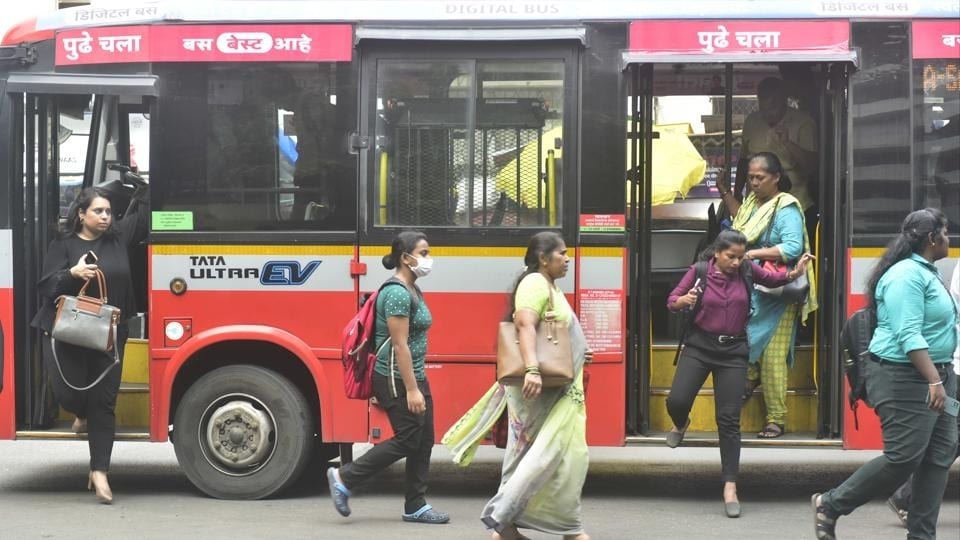
A 2025 National Commission for Women survey found that transit ranks as the second most common harassment hotspot for women after neighborhoods, and two-thirds of incidents go unreported. The problem extends past the bus itself.
States have responded with women-focused programmes, including Delhi’s fare-free scheme, Karnataka’s Shakti Buses, and Bihar’s Pink Bus fleet. A recent impact assessment of Bihar’s Pink Buses, which covered Patna, Muzaffarpur, and Gaya, found that 93% of surveyed commuters chose the service for safety reasons. Nearly a third said their families now “permit” solo travel.
This shift in family permission changes what a woman’s day can include. Most riders are young women and salaried workers, and most trips are for education, healthcare, and work. Safe, reliable transportation can remove one of the barriers to reaching a job, college, or clinic.
India’s economy is worth ₹323.12 lakh crore ($ 3.39 trillion). Yet women’s labor force participation lags far behind that of men. The World Bank estimates that closing this gap to 50% could add a full percentage point to India’s annual GDP growth. Public mobility alone will not unlock that potential, but safety will. When women and girls can move through their cities without calculating risk at every stop, they stop choosing the “safe” job over the better one, the nearby college over the right one. Constrained mobility limits choice; safety multiplies it.
A recent experiment in Bihar is already demonstrating the economic and social impact of safer mobility. A May 2026 report found that nearly 574,000 women used Pink Buses in Patna between June 2025 and April 2026, which generated about ₹1.25 crore ($ 131,161) in revenue. Across six cities, nearly 1 million women passengers used the service during the same period. These buses move women and employ them. Bihar’s first-ever cohort of six women bus drivers comes from the Musahar community, which has historically been one of the state’s most marginalised communities.
Women, in the Bihar assessment, identified other women, such as fellow passengers and conductors, as their strongest source of felt safety, well ahead of cameras or panic buttons. Nearly all surveyed women said they never felt unsafe around a driver, and none reported witnessing harassment on board.
But safer buses alone are not enough. Nearly half of women do not know bus schedules, and irregular service remains a top complaint. Conductors lack fixed duty hours, creches, restrooms, or responsive grievance-redressal channels. We can look outside the country, in Vienna, for another lesson. The city found that the fear rarely started on the bus. It started soon after leaving home. Vienna responded by widening sidewalks, adding lighting, and installing mirrors at blind corners near transit stops. Safety did not stop at providing the bus.
This distinction matters for India. Transport agencies measure buses, routes, and ridership. Women experience journeys. They experience the walk to the stop, the wait, the ride, the transfer, the walk home, and what happens when something goes wrong. When policy focuses only on assets and ride metrics rather than journeys, it can make individual parts safer while leaving the overall experience uncertain.
If one safe bus can change a family’s decision about whether a daughter travels alone, a reliable and accountable transportation system could change far more. Published schedules, safe access to stops, supported staff, functioning safety mechanisms, more women on the supply side of transport, and formal grievance channels can help turn mobility from a negotiated privilege into a dependable part of everyday life.
The question is how India can make every stage of the journey safe, predictable, and dignified. Because when women can travel safely, they gain access to more than destinations. They gain access to work, education, health care, and the freedom to make choices about their own lives.
(The views expressed are personal)
This article is authored by Sonal Jaitly, associate partner and Nancy P Biju, associate, MicroSave Consulting (MSC).


