
 E-Paper



Rural mobility in India: Roads built, services missing
This article is authored by Nikhil Ali, senior associate, research (urban), Centre for Public Policy Research (CPPR), Kochi.

 Prefer HTon Google


Over the last two decades, India has invested massively in rural roads. Today, more than 70% of the country’s road network runs through rural areas, connecting villages that were once physically isolated. Yet for millions of rural residents, mobility remains constrained, not because roads are absent, but because affordable and reliable transport services are missing. This disconnect between infrastructure development and service provision has quietly emerged as one of India’s most critical rural development challenges.
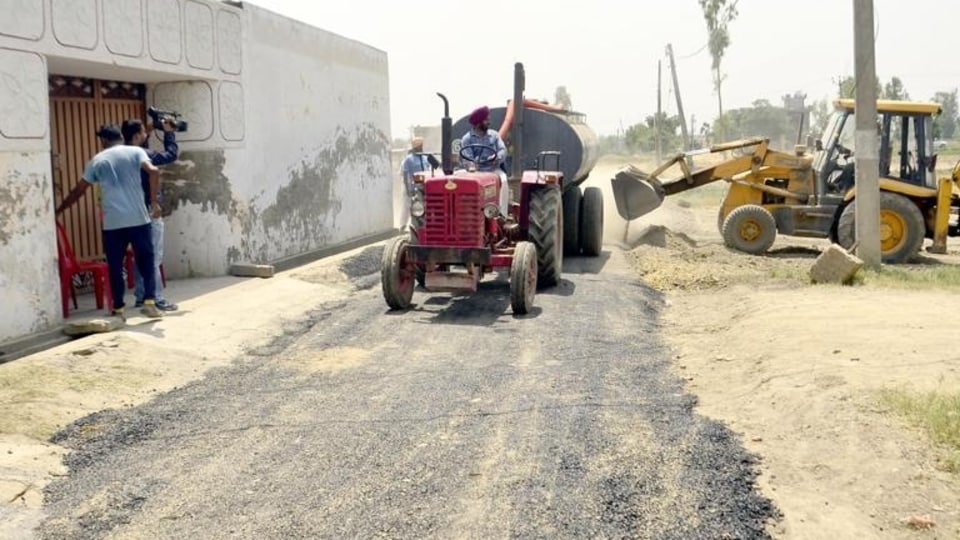
Rural India is home to nearly two-thirds of the country’s population and will continue to host the world’s largest rural population even in 2050. While the nation toddles to diversify the rural livelihood beyond agriculture into construction, manufacturing, services, and transport-linked activities, these transitions depend heavily on everyday mobility—access to markets, education, health care, and jobs.
Despite improved road connectivity, rural commutes continue to rely overwhelmingly on walking and cycling. Public transport services in rural areas are sparse, irregular, and often financially unviable. In Maharashtra, where more than half the population lives in rural areas, 8,700 out of 14,000 state transport buses operate in urban areas, leaving just 37% for rural services. Similar patterns are visible across India.
The consequences of this disparity are visible in household expenditures. As per the Household Consumption Expenditure Survey report by the ministry of statistics and programme implementation (MoSPI), rural conveyance expenditure has risen sharply, increasing from just over 4% of total spending in 2011–12 to nearly 8% in 2023–24. In states such as Kerala, Tamil Nadu, and Andhra Pradesh, transport accounts for almost one-fifth of the non-food expenditure in rural households—signalling not just the abundance of mobility in rural areas, but also distress-driven spending in the absence of public services.
In India, the State Transport Undertakings (STUs) operate around 1.15 lakh mofussil buses compared to just over 23,000 urban buses. On paper, this may appear reasonable, but when examined against road length, the imbalance becomes stark. As per MoRTH, rural roads span nearly 45 lakh kilometres, over eight times the length of urban roads (5.48 lakh kilometres). The bus density on rural roads is just 26 buses per 1,000 km, compared to 42 buses per 1,000 km in urban areas. This gap is not merely a transport issue; it limits access to education, health care, and employment, reinforcing existing social and gender inequalities.
The policy imbalance is most evident in Central Government investments. The Pradhan Mantri Gram Sadak Yojana (PMGSY) has transformed rural connectivity, receiving cumulative funding of nearly ₹4 lakh crore. Over 1.6 lakh habitations have been connected, and new phases continue to expand coverage. In contrast, India’s only dedicated rural transport service initiative, the Aajeevika Grameen Express Yojana (AGEY), has received just ₹127.5 crore nationwide. For every rupee spent on rural transport services, more than ₹3,000 has been spent on building rural roads (CPPR, 2025).
AGEY supports community-owned transport services, prioritises women entrepreneurs, and links mobility with livelihood generation, making it a promising design for rural connectivity. Impact studies indicate improved access to markets and healthcare, especially in remote areas. Yet its limited scale and positioning as a sub-scheme under livelihood missions have severely constrained its reach.
AGEY also exposes a deeper structural issue. Most vehicles affordable under the scheme (e-rickshaws, autorickshaws, and small vans) fall under contract carriage regulations as per the Motor Vehicles Act, which legally prohibit shared boarding and alighting. This directly contradicts AGEY’s objective of providing affordable shared transport. In practice, many such services operate through informal administrative relaxations rather than legally recognised permits. While the 2019 Amendment to the Motor Vehicles Act empowers states to design flexible permit frameworks, most have yet to operationalise this authority for rural mobility.
Several states have attempted to fill the gap left by national policy. Tamil Nadu’s long-running minibus scheme, Bihar’s vehicle subsidy programmes, Himachal Pradesh’s small-bus entrepreneurship model, and Odisha’s heavily subsidised rural bus services all reflect different strategies. Each of these initiatives offers important lessons and clear warnings. In Tamil Nadu, reduced fare structures have rendered minibus operations financially unviable. Odisha’s experience shows that heavily subsidised rural bus services can lead to substantial and recurring fiscal losses. Bihar and Himachal Pradesh, in contrast, have focused on promoting vehicle ownership and transport entrepreneurship, thereby expanding basic connectivity while generating livelihoods.
The key learnings from these initiatives are:
Larger bus-based public transport and conventional stage carriage permit framework struggles in low-demand rural contexts.
Subsidised rural public transport services are unsustainable in the long run.
Rural transport entrepreneurship offers a more sustainable pathway for addressing rural mobility challenges.
Rural mobility cannot be treated as a scaled-down version of urban transport. Demand is dispersed, peak periods are limited, and trip purposes vary widely. As a result, large buses with rigid schedules are often inefficient and financially unsustainable.
A more viable approach is small-vehicle, demand-responsive services that are legally permitted to operate as shared services during peak hours and for individual hire during off-peak periods (CPPR, 2024). This hybrid model improves vehicle utilisation, enhances operator incomes, and expands service availability without heavy fiscal subsidies. To enable this, states must actively exercise their regulatory powers to create dedicated rural shared-mobility permit categories, moving beyond the restrictive binary of contract and stage carriage permits.
As India prepares to roll out its proposed Rural Prosperity and Resilience Programme, mobility must be recognised as a foundational enabler, not an afterthought. Roads alone do not create access; transport services do. Bridging India’s rural mobility gap will require shifting policy attention from kilometres built to services delivered. Without this shift, rural roads will continue to exist without mobility—and rural aspirations, without access.
This article is authored by Nikhil Ali, senior associate, research (urban), Centre for Public Policy Research (CPPR), Kochi.


