
 E-Paper



As the Arctic opens, Greenland rises
This article is authored by B Bala Bhaskar, former ambassador to Norway and specialist, Arctic affairs, New Delhi.

 Prefer HTon Google


In an era of hardening geopolitical rivalries—where major powers jostle for advantage in trade, technology and security—a quieter but consequential shift is underway at the top of the world. The climate crisis is altering the physical geography of the Arctic, and in doing so, reshaping the map of global commerce and strategic competition. Sea ice that once served as a permanent barrier is retreating, opening maritime corridors and exposing mineral-rich terrain. The result is that the Arctic is no longer a remote frontier; it is becoming a new theatre of power politics. At the centre of this emerging contest lies Greenland.
The most visible symbol of the Arctic’s economic opening is the Northern Sea Route (NSR), a 5,600-km shipping corridor running along Russia’s northern coastline from the Barents Sea to the Bering Strait. By cutting Asia- Europe travel distances by as much as 40% compared to routes through the Suez Canal, the NSR offers an alternative to the world’s increasingly vulnerable southern chokepoints. As of now, around 38 million tonnes of cargo are already traversing through this corridor.
This emerging route in the east is complemented by the North West Passage (NWP), a complex web of sea lanes through the Canadian Arctic archipelago in the west. Once deemed commercially impractical due to ice and navigational risks, the NWP is becoming seasonally accessible as Arctic ice recedes, serving as an alternative trans-Atlantic–Pacific corridor and adding a new dimension to Arctic geopolitics. While the NSR and NWP do not physically connect on land, they are linked functionally through the Bering Strait, where routes converge into a broader Arctic maritime system.
While Greenland does not directly connect the Northern Sea Route (NSR) and the Northwest Passage (NWP), it provides a critical land-based link between them. If the NSR and NWP are the Arctic’s arteries, Greenland is fast emerging as its strategic gateway. Positioned between North America and Europe, it flanks key entry points to the North Atlantic and lies adjacent to the GIUK Gap (Greenland–Iceland–UK), a zone vital for monitoring naval movement between the Arctic and the Atlantic. As Arctic navigation becomes increasingly viable, Greenland’s geography is shifting from peripheral to pivotal.
Yet Greenland’s rising value is not limited to sea routes. As the new great game intensifies over rare earth elements (REEs) and other critical materials, indispensable for an array of applications from Defence systems to electric vehicles, wind turbines, and semiconductors, supporting hi-tech manufacturing, Greenland is emerging as the West’s answer to China’s dominance in this arena. China has established unparalleled superiority in the materials, REE chain, and refining capacity. According to various estimates, Greenland contains about 36–38 million tonnes of rare earth minerals in the form of exotic alkaline granite rocks. And the weathered scree in their slopes. Alongside these rare earths, there are other critical minerals such as high-grade graphite, nickel, copper, tungsten, zinc, molybdenum, niobium, zirconium, hafnium, tantalum, and titanium, gallium and vanadium, embedded in these lands.
These economic currents are now being matched by geopolitical hard power. Russia has expanded its Arctic posture with bases and military infrastructure intended to secure the NSR and project power across the High North. China, despite its geographic distance, has branded itself a “near-Arctic State” and sought influence through its “Polar Silk Road” through its 2018 Arctic Policy white paper. China has outlined plans for a the Polar Silk Road, emphasising scientific research, resource extraction, infrastructure development, and enhanced shipping routes, and dispatching icebreakers like the Xue Long. Beijing’s dual-use research stations and mining bids in Greenland underscore its ambitions.
Given Greenland's rising strategic importance, the US is keen to upgrade its Pituffik Space Base (formerly Thule Air Base), which supports missile warning, space surveillance, and Arctic monitoring, and is set up under the 1951 US–Denmark defence framework.
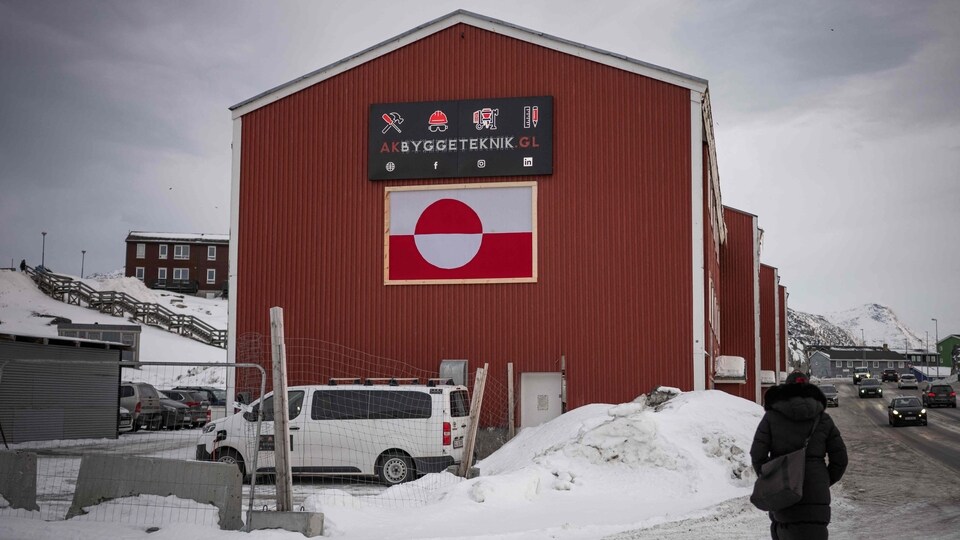
For Greenland, vast at 2.16 million sq km yet home to just 56,000 people, mostly Inuit, history may be on the verge of repeating itself. Greenland’s history is marked by survival and disappearance. Inuit societies, migrating from North America, endured through ecological knowledge and resilience. Subsequently, Norse Vikings from Scandinavia, led by Erik the Red, also arrived in the 10th century but vanished by the 15th century due to climate stress and isolation. In the early 18th century, Denmark–Norway reasserted control over Greenland. After the union’s breakup in 1814, Greenland remained under Danish rule, laying the foundations for later struggles over autonomy, identity, and self-determination. As Greenland’s strategic value rises again, these political questions are returning with fresh urgency.
As the Arctic and Greenland gain strategic importance, Svalbard, in Norway, another Arctic Nation, has emerged as a critical node in Arctic space and security infrastructure. Its high-latitude location enables polar-orbiting satellites to pass over Svalbard up to 12 times a day, out of roughly 14 orbits around the Earth, compared to just 2 to 3 daily passes at other parts of the Earth. Several western countries have built a dense network of ground stations there. While China was excluded from this facility by the West, India, recognising its strategic value, upgraded Himadri to a permanent Arctic station and decided to establish a ground station in Svalbard in 2022–23.
These developments will sharpen the focus on Arctic research, which is significant to India’s food security. Though geographically distant, the Arctic and the Himalayas—the Third Pole—are closely linked through atmospheric teleconnections. The Arctic is warming nearly four times faster than the global average, altering monsoon behaviour and river systems, with profound implications for India’s food security. The rising incidence of cloudbursts and flash floods in the Himalayas is among the clearest manifestations of these changes.
As Greenland solidifies its role as a western bulwark against Russian militarisation and Chinese influence in the Arctic, it has also sparked tensions between the US and Europe. Despite initial bickerings, Europe may have little choice but to align more closely with American priorities, in the backdrop of shared security and resource interests over independent diplomacy. The only concern is that indigenous rights, biodiversity preservation, and sustainable extraction must anchor any development, lest the great game devolve into exploitation.
This article is authored by B Bala Bhaskar, former ambassador to Norway and specialist, Arctic affairs, New Delhi.


