
 E-Paper



Partners on the communiqué, competitors on the map
This article is authored by Sriparna Pathak.

 Prefer HTon Google


The 18th BRICS summit in New Delhi produced the images that diplomacy exists to manufacture. After seven years, President Xi Jinping was again on Indian soil. Prime Minister (PM) Narendra Modi met him on the sidelines. The two sides spoke of a strategic, long-term view of the relationship, of differences that should not become disputes, and of partners rather than rivals. Flights are returning. Institutional contacts have thickened. A New Delhi Declaration was adopted without a public rupture. For a relationship that reached a six-decade low after Galwan in 2020, this is not trivial. It is also not friendship.
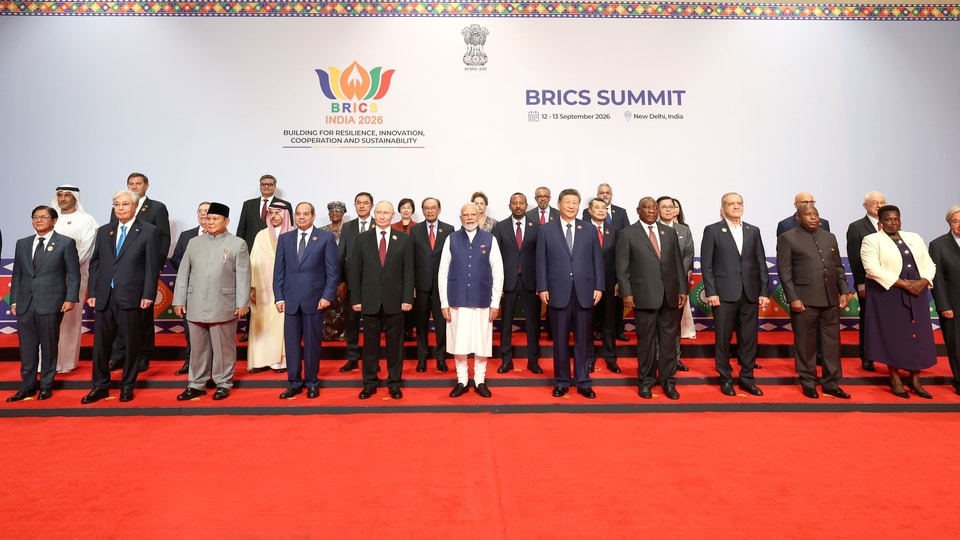
Friendship, in the language of States, is a thick claim. It implies aligned core interests, a shared hierarchy of threats, and a willingness to subordinate tactical advantage to mutual trust. What New Delhi hosted last weekend was something more familiar and more durable in Asian statecraft: a managed reset under conditions that India itself continues to set.
The official record is the proper starting point. In the Indian readout of the September 12 bilateral, Modi placed peace and tranquillity along the frontier at the centre of any further opening. Border calm, he said, remains an “essential basis” for the development of ties; existing agreements must be observed; both sides should be guided by mutual respect, mutual sensitivity and mutual interest. Beijing’s formulation was characteristically different. It preferred to treat the boundary question and the broader relationship as tracks that can run in parallel, and to recast the two countries as development opportunities rather than threats. Those are not two translations of the same sentence. They are two theories of the relationship. India insists that the Himalaya is the test of political intent. China prefers to isolate the dispute so that trade, BRICS choreography and Global South rhetoric can proceed around it. A summit can paper over that disagreement. It cannot abolish it.
The ground still illustrates the gap. Reporting before the bilateral noted that even after the October 2024 announcement of disengagement from “all friction points,” Indian officials continued to describe residual pressure on the Line of Actual Control, including forward PLA presence and tented positions in the Taksing sector of Arunachal Pradesh after a confrontation in July. That is not an argument against engagement. It is an argument against mistaking engagement for settlement. In the days after the summit, Indian coverage of the Army’s annual report recorded a reduction in PLA deployment opposite the northern borders in 2025, with around ten combined-arms brigade-sized formations along the LAC and in traditional training areas, and with military dialogue and border personnel meetings resumed. The same reporting was careful to add that India’s own posture remains robust and prepared for contingency. Stability purchased by vigilance is not the same thing as reconciliation.
Economic structure points in the same direction. Bilateral trade has grown large enough to generate its own constituency for calm, but the imbalance remains heavily in China’s favour. Supply-chain dependence, river data, and the political meaning of Chinese activity in India’s neighbourhood were never going to be dissolved by a 45-minute meeting. Analysts who described a “thaw with limits” after the summit were not being cynical. They were reading the two readouts against one another.
BRICS itself was the other arena in which India’s terms were visible. As chair, New Delhi framed the grouping as a platform of the Global South, not as an anti-western caucus and not as a vehicle for a single alternative reserve currency. Indian officials stated plainly that there is no proposal for a BRICS currency “as of now.” The New Delhi Declaration endorsed local-currency settlement and work on interoperable payments, while inserting the decisive caveats: national priorities, no one-size-fits-all approach. That is incremental financial diplomacy, not a project to dethrone the dollar or to enthrone the yuan. Independent commentary after the summit noted that the declaration stopped well short of the common-currency ambition some members have periodically floated, and that India’s distance from any scheme that would substitute one sovereign currency for another was deliberate.
Social-media narratives that followed the visit should be handled with the caution they deserve. Chinese-language posts circulated video of arrival protocol and treated ministerial reception, a pause in the motorcade, and the visibility of security details as political text. Other commentary claimed that a yuan-settlement arrangement had been expected and was not concluded, and that special reception demands had soured the atmosphere. Still other accounts mixed interpretation of a microphone moment on the floor with speculation about the evening schedule and with a more careful point: that the summit advanced multi-currency settlement rather than the displacement of the dollar by the renminbi, and that India has been wary of stitching its UPI architecture to Chinese payment rails. Viral reconstruction is not a substitute for the joint texts. What can be said in an academic register is narrower. India hosted as a peer, not as a supplicant. It did not allow the chair’s gavel to become a conveyor belt for another country’s monetary hierarchy. That is consistent with a long doctrine of strategic autonomy, not with a sudden conversion to amity.
The temptation, after any high-level visit, is to over-read the handshake. Xi’s presence in New Delhi mattered because absence had become the story. It matters because India has no interest in a permanent freeze with its largest neighbour, and ideally prefers a conflict free border. Shared irritation with tariff shocks and with an unpredictable Washington supplies a temporary overlapping interest. None of that rearranges the map. China still sees India as a competitor in Asia and in the institutions of the Global South. India still sees an unresolved boundary, an asymmetric trade relationship, and a partner whose military infrastructure in the high Himalaya was built faster than its political vocabulary of partnership. The modest progress since the 2024 disengagement and the 2025 meetings in Tianjin is real. So is the Indian insistence that it remain reversible if the frontier is not quiet.
Are India and China friends again after BRICS? The accurate answer is that they are talking again, trading at scale, and sitting in the same photograph. Friendship would require a boundary settlement that is more than an “early harvest,” a trade relationship that is less one-sided, and a security environment in which Indian forces would not still need to remain “well-poised” along the LAC. Until those conditions exist, the wiser description is the one New Delhi itself has used for years: a relationship to be managed with respect, sensitivity and interest, not a reconciliation to be announced because a summit went smoothly. BRICS can convene rivals. It cannot, by itself, turn them into friends.
(The views expressed are personal)
This article is authored by Sriparna Pathak, professor, China Studies and International Relations, Jindal School of International Affairs, OP Jindal Global University, Sonipat.


